Erin J. Campbell – författare
Visar alla böcker från författaren Erin J. Campbell. Handla med fri frakt och snabb leverans.
12 produkter
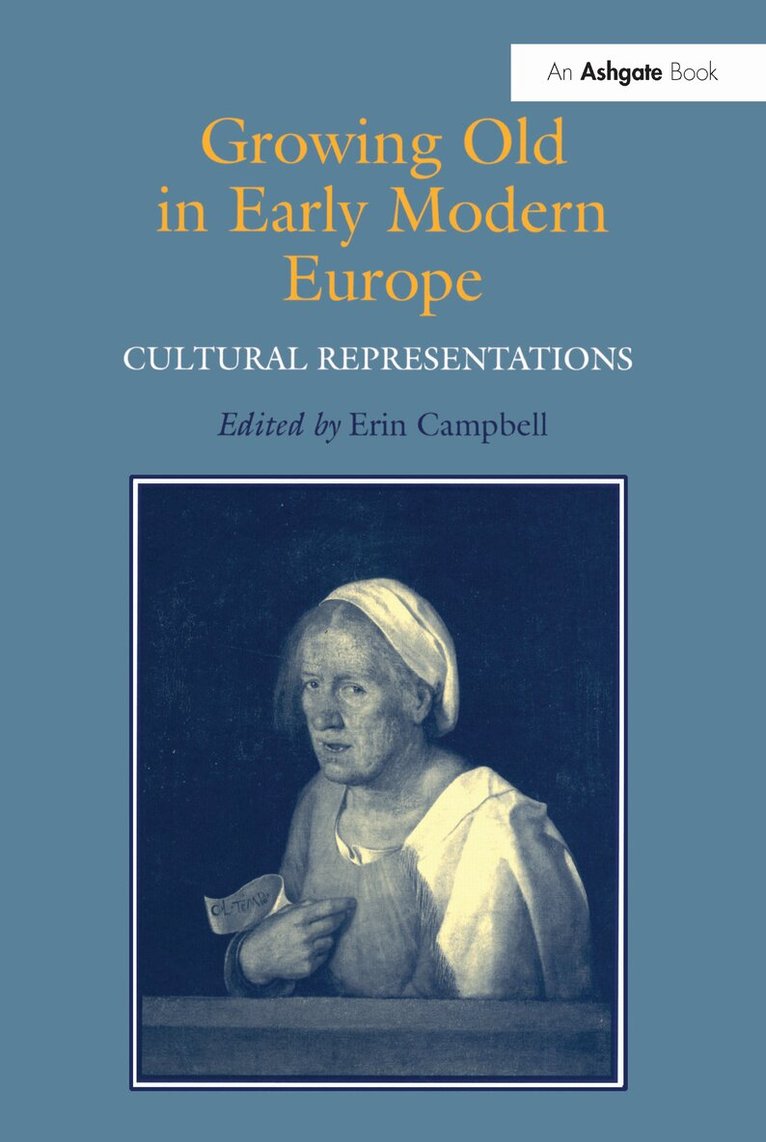
Growing Old in Early Modern Europe
Cultural Representations
Inbunden, 2006
2893 kr
Lägg i varukorg
The goal of the twelve essays in this volume, contributed by scholars in the fields of history, literature, art history, and medicine, is to enrich our understanding of cultural discourses on ageing in early modern Europe. While a number of books examine old age in other eras, and a few touch on …
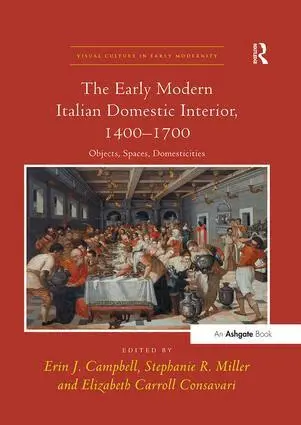
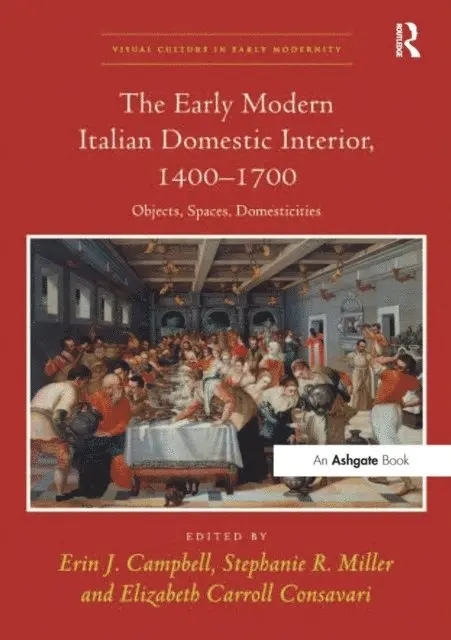
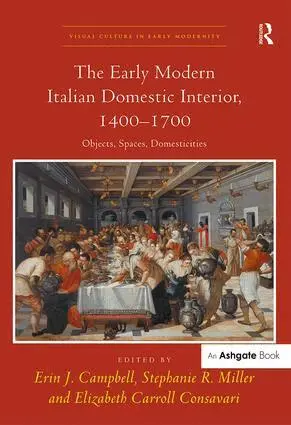
Early Modern Italian Domestic Interior, 1400–1700
Objects, Spaces, Domesticities
Av Erin J. Campbell, Stephanie R. Miller m. fl.
Häftad, 2016
953 kr
Lägg i varukorg
Emphasizing on the one hand the reconstruction of the material culture of specific residences, and on the other, the way in which particular domestic objects reflect, shape, and mediate family values and relationships within the home, this volume offers a distinct contribution to research on the …
Growing Old in Early Modern Europe
Cultural Representations
Häftad, 2017
880 kr
Lägg i varukorg
The goal of the twelve essays in this volume, contributed by scholars in the fields of history, literature, art history, and medicine, is to enrich our understanding of cultural discourses on ageing in early modern Europe. While a number of books examine old age in other eras, and a few touch on …
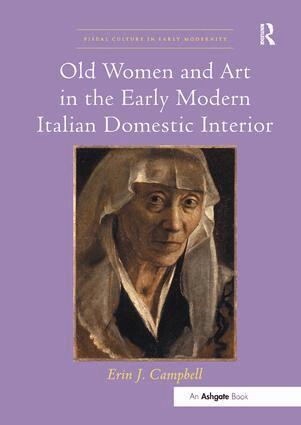
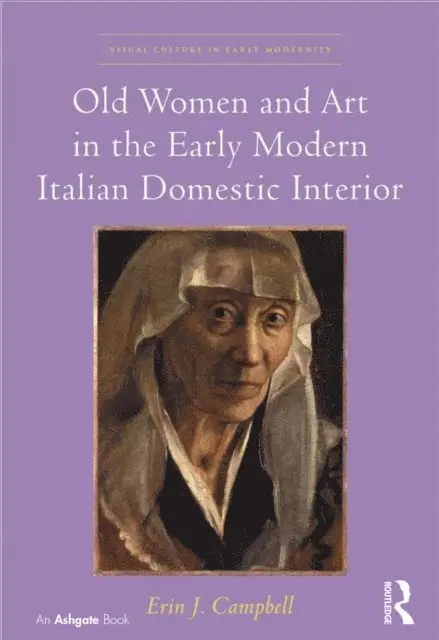
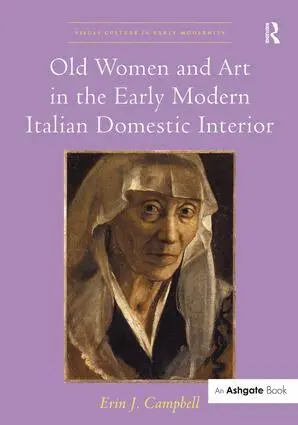
Old Women and Art in the Early Modern Italian Domestic Interior
Häftad, 2018
788 kr
Lägg i varukorg
Though portraits of old women mediate cultural preoccupations just as effectively as those of younger women, the scant published research on images of older women belies their significance within early modern Italy. This study examines the remarkable flowering, largely overlooked in portraiture …
Early Modern Italian Domestic Interior, 1400-1700
Objects, Spaces, Domesticities
Av Elizabeth Carroll Consavari, Stephanie R. Miller m. fl.
E-bok, 2016
1091 kr
Lägg i varukorg
Emphasizing on the one hand the reconstruction of the material culture of specific residences, and on the other, the way in which particular domestic objects reflect, shape, and mediate family values and relationships within the home, this volume offers a distinct contribution to research on the …
Early Modern Italian Domestic Interior, 1400-1700
Objects, Spaces, Domesticities
Av Elizabeth Carroll Consavari, Stephanie R. Miller m. fl.
E-bok, 2016
1099 kr
Lägg i varukorg
Emphasizing on the one hand the reconstruction of the material culture of specific residences, and on the other, the way in which particular domestic objects reflect, shape, and mediate family values and relationships within the home, this volume offers a distinct contribution to research on the …
Old Women and Art in the Early Modern Italian Domestic Interior
E-bok, 2016
927 kr
Lägg i varukorg
Though portraits of old women mediate cultural preoccupations just as effectively as those of younger women, the scant published research on images of older women belies their significance within early modern Italy. This study examines the remarkable flowering, largely overlooked in portraiture …
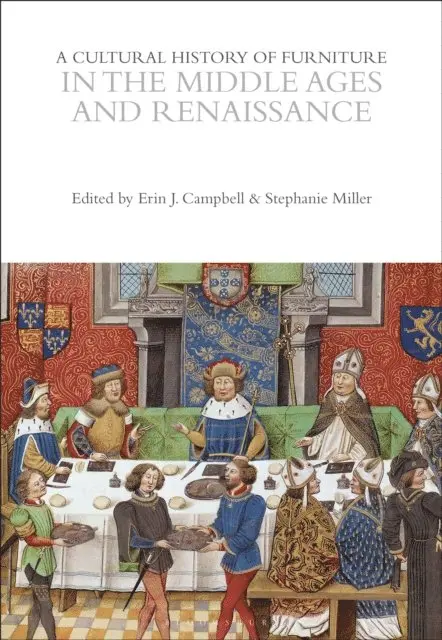
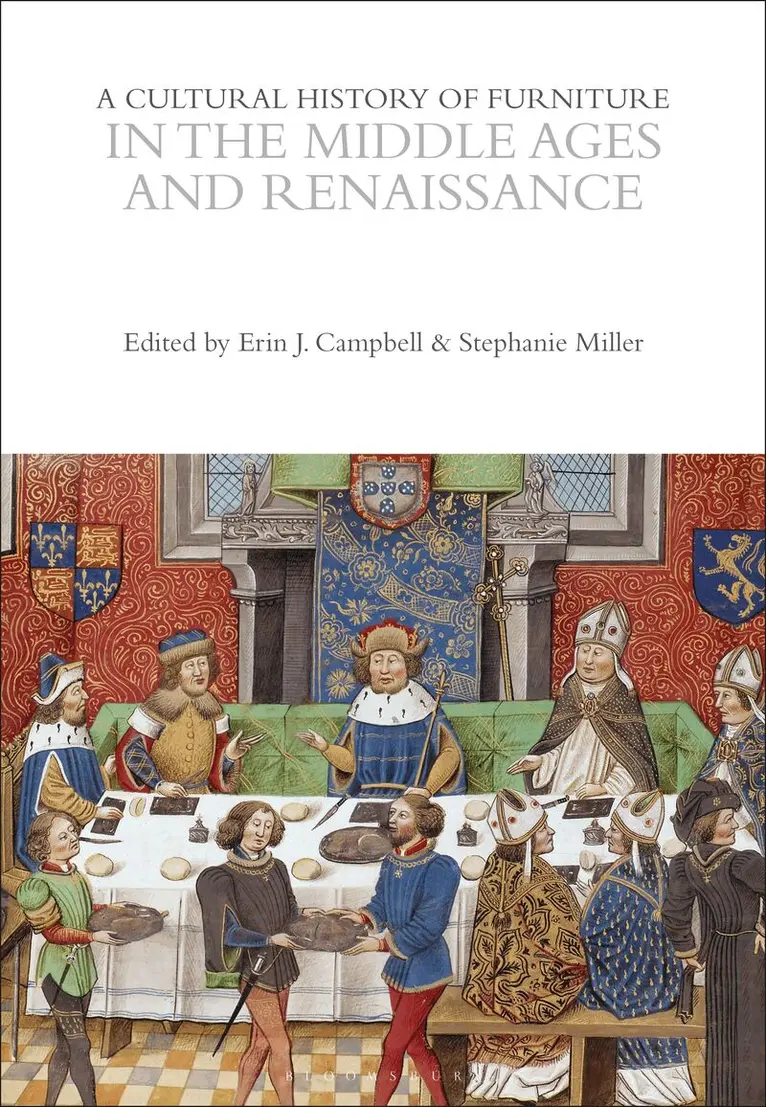
Cultural History of Furniture in the Middle Ages and Renaissance
Av Erin J. Campbell, Stephanie Miller
E-bok, 2022
418 kr
Lägg i varukorg
The Middle Ages were marked by dramatic social, economic, political, and religious changes. Diverse regional and local conditions, and varied social classes - including peasant, artisan, merchant, clergy, nobility, and rulers - resulted in differing needs for furniture. The social settings for …
Cultural History of Furniture in the Middle Ages and Renaissance
Av Erin J. Campbell, Stephanie Miller
E-bok, 2022
418 kr
Lägg i varukorg
The Middle Ages were marked by dramatic social, economic, political, and religious changes. Diverse regional and local conditions, and varied social classes - including peasant, artisan, merchant, clergy, nobility, and rulers - resulted in differing needs for furniture. The social settings for …
Cultural History of Furniture in the Middle Ages and Renaissance
Av Erin J. Campbell, Stephanie Miller
Häftad, 2026
382 kr
Lägg i varukorg
The Middle Ages were marked by dramatic social, economic, political, and religious changes. Diverse regional and local conditions, and varied social classes - including peasant, artisan, merchant, clergy, nobility, and rulers - resulted in differing needs for furniture. The social settings for …
Early Modern Italian Domestic Interior, 1400–1700
Objects, Spaces, Domesticities
Av Erin J. Campbell, Stephanie R. Miller m. fl.
Inbunden, 2013
2591 kr
Lägg i varukorg
Emphasizing on the one hand the reconstruction of the material culture of specific residences, and on the other, the way in which particular domestic objects reflect, shape, and mediate family values and relationships within the home, this volume offers a distinct contribution to research on the …
Old Women and Art in the Early Modern Italian Domestic Interior
Inbunden, 2015
2554 kr
Lägg i varukorg
Though portraits of old women mediate cultural preoccupations just as effectively as those of younger women, the scant published research on images of older women belies their significance within early modern Italy. This study examines the remarkable flowering, largely overlooked in portraiture …