Erminia Colucci – författare
Visar alla böcker från författaren . Handla med fri frakt och snabb leverans.
4 produkter
4 produkter
Häftad, Engelska, 2025
625 kr
Skickas inom 3-6 vardagar
Integrating the role of culture is critical in preventing suicide: - Written by leading suicide researchers- Explores suicide in different cultural contexts- Highlights how to conduct culturally sensitive studiesThe increasing domination of individual approaches in suicide research and prevention, at the expense of socio-cultural factors, is severely harming our ability to prevent people dying by suicide. This is the clearly set out arguments and evidence in this lucid book by leading social scientists and suicide researchers.In the first section, the authors review and examine the fundamental issues of why "culture" is of vital importance in understanding and preventing suicidal behavior, what the "cultural meaning" of suicide is, and where current research and theory are leading us. This section ends with a thought-provoking perspective of suicide as a staged performance impacted by the suicide's culture.The second section then presents the results of a mixed-methods cross-cultural study on the cultural meanings of suicide in three contexts: Australian, Indian, and Italian. There follows an essay on a culturally specific form of suicide (sati in India), and a discussion of suicide among Roma and Irish Travellers. A further chapter describes a community-based suicide prevention strategy that has been developed for different populations, including people from migrant and refugee backgrounds and from low-and-middle-income Asian countries.In the concluding section, the authors highlight both the necessity and the challenges of conducting good culturally sensitive and meaningful studies, as well as suggesting ways to address these challenges. This book volume is essential reading for anyone involved in suicide research and prevention.
E-bok
Engelska, 2025421 kr
Läs direkt efter köp
###BOLD#TEXT[Integrating the role of culture is critical in preventing suicide]###Written by leading suicide researchersExplores suicide in different cultural contextsHighlights how to conduct culturally sensitive studiesBuilding on the seminal work of Colucci and Lester (2013), this volume examines the unique perspective of the role culture plays in suicide research and prevention. With the current domination of individual and largely biomedical approaches in the field, these leading social scientists and suicide researchers carefully show how important integrating sociocultural factors is in helping to prevent people from dying by suicide and support those who live with suicidality.The first section addresses the fundamental issues of why "culture" is of vital importance in understanding and preventing suicidal behavior, what the "cultural meaning" of suicide is, and where current research and theory are taking us. It concludes with a thought-provoking perspective on suicide as a staged performance. The second section features a mixed-methods cross-cultural study on the meanings of suicide in Australian, Indian, and Italian cultures. Additional chapters explore a culturally specific form of suicide (i.e., sati in India), suicide among Roma and Irish Travellers, and a community-based suicide prevention strategy for different populations, including migrants and refugees and people from low-and-middle-income Asian countries. The authors conclude with insightful recommendations for conducting culturally sensitive and meaningful studies.This volume is essential reading for anyone involved in suicide research and prevention and more broadly to those interested in the sociocultural and political contexts of mental health.
E-bok
PDF, Engelska, 2012331 kr
Läs direkt efter köp
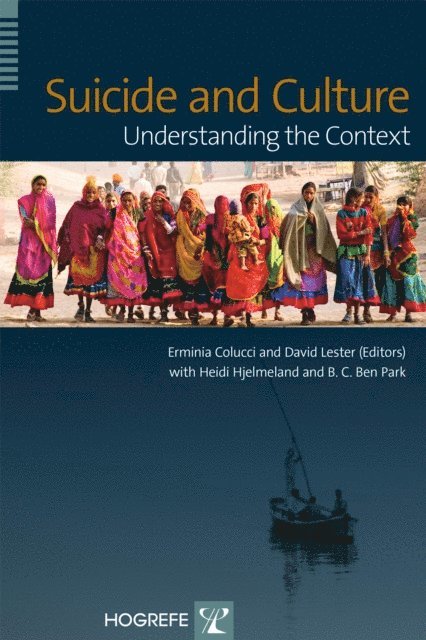
Why understanding the role of culture can help prevent suicideThe increasing domination of biological approaches in suicide research and prevention,at the expense of social and cultural understanding, is severely harming ourability to stop people dying – so run the clearly set out arguments and evidence inthis lucid book by leading social scientists and suicide researchers.In the first part of this book, instead of simply comparing suicide in different countries,the authors review and examine the fundamental issues of why culture is ofvital importance in understanding and preventing suicidal behavior, what the "culturalmeaning" of suicide is, and where current research and theory are leading us.The second part of the book then presents (and, importantly, also critiques) exemplaryrecent research, including a quantitative and qualitative study on the meaningof suicide in Australia, India, and Italy, which is reported in detail, as well as otherstudies on correlates of suicidal behavior in Kuwait and the US, on a culturallyspecific form of suicide (sati), and on the role of cultural conflict in South Korea.In the concluding section, the editors highlight both the necessity and the challengesof conducting good culturally sensitive studies, as well as suggesting solutionsto these challenges. This volume is thus essential reading for anyone involvedin suicide research and prevention
E-bok
PDF, Engelska, 2025421 kr
Läs direkt efter köp
###BOLD#TEXT[Integrating the role of culture is critical in preventing suicide]###Written by leading suicide researchersExplores suicide in different cultural contextsHighlights how to conduct culturally sensitive studiesBuilding on the seminal work of Colucci and Lester (2013), this volume examines the unique perspective of the role culture plays in suicide research and prevention. With the current domination of individual and largely biomedical approaches in the field, these leading social scientists and suicide researchers carefully show how important integrating sociocultural factors is in helping to prevent people from dying by suicide and support those who live with suicidality.The first section addresses the fundamental issues of why "culture" is of vital importance in understanding and preventing suicidal behavior, what the "cultural meaning" of suicide is, and where current research and theory are taking us. It concludes with a thought-provoking perspective on suicide as a staged performance. The second section features a mixed-methods cross-cultural study on the meanings of suicide in Australian, Indian, and Italian cultures. Additional chapters explore a culturally specific form of suicide (i.e., sati in India), suicide among Roma and Irish Travellers, and a community-based suicide prevention strategy for different populations, including migrants and refugees and people from low-and-middle-income Asian countries. The authors conclude with insightful recommendations for conducting culturally sensitive and meaningful studies.This volume is essential reading for anyone involved in suicide research and prevention and more broadly to those interested in the sociocultural and political contexts of mental health.