Ernest Harsch - Böcker
Visar alla böcker från författaren Ernest Harsch. Handla med fri frakt och snabb leverans.
7 produkter
7 produkter
201 kr
Skickas inom 7-10 vardagar
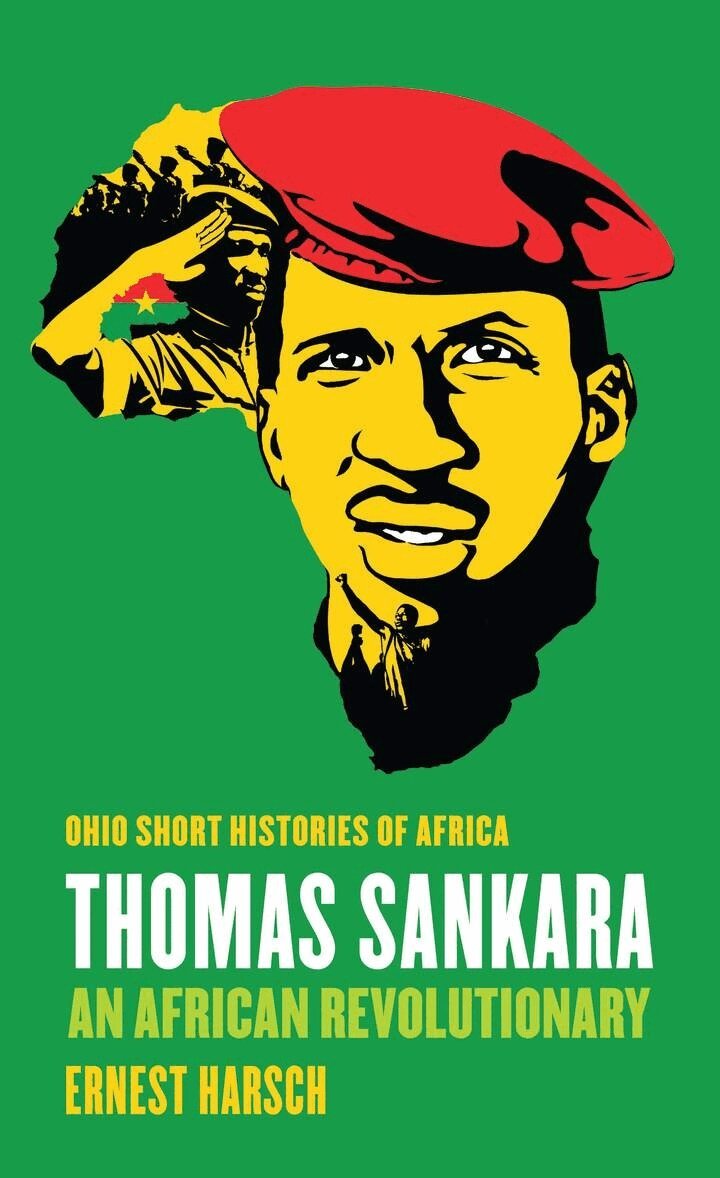
Thomas Sankara, often called the African Che Guevara, was president of Burkina Faso, one of the poorest countries in Africa, until his assassination during the military coup that brought down his government. Although his tenure in office was relatively short, Sankara left an indelible mark on his country's history and development. An avowed Marxist, he outspokenly asserted his country's independence from France and other Western powers while at the same time seeking to build a genuine pan-African unity.Ernest Harsch traces Sankara's life from his student days to his recruitment into the military, early political awakening, and increasing dismay with his country's extreme poverty and political corruption. As he rose to higher leadership positions, he used those offices to mobilize people for change and to counter the influence of the old, corrupt elites. Sankara and his colleagues initiated economic and social policies that shifted away from dependence on foreign aid and toward a greater use of the country's own resources to build schools, health clinics, and public works. Although Sankara's sweeping vision and practical reforms won him admirers both in Burkina Faso and across Africa, a combination of domestic opposition groups and factions within his own government and the army finally led to his assassination in 1987.This is the first English-language book to tell the story of Sankara's life and struggles, drawing on the author's extensive firsthand research and reporting on Burkina Faso, including interviews with the late leader. Decades after his death, Sankara remains an inspiration to young people throughout Africa for his integrity, idealism, and dedication to independence and self-determination.
435 kr
Skickas
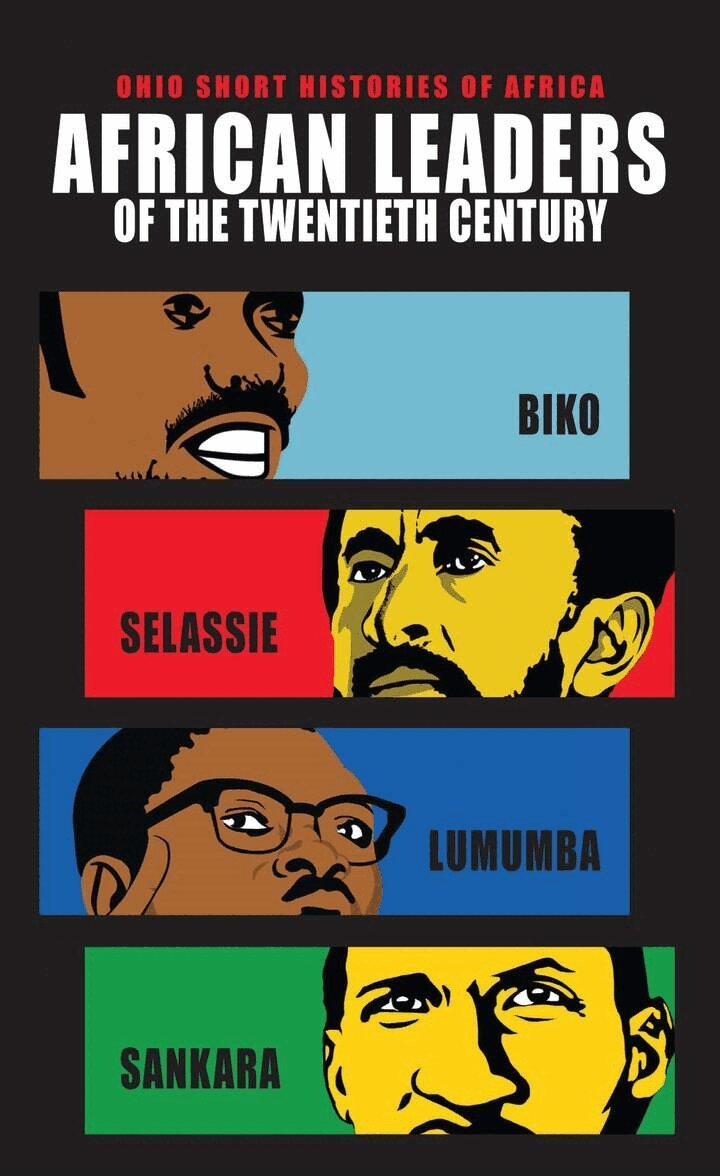
This omnibus edition brings together concise and up-to-date biographies of Steve Biko, Emperor Haile Selassie, Patrice Lumumba, and Thomas Sankara. African Leaders of the Twentieth Century will complement courses in history and political science and serve as a useful collection for the general reader.Steve Biko, by Lindy WilsonSteve Biko inspired a generation of black South Africans to claim their true identity and refuse to be a part of their own oppression. This short biography shows how fundamental he was to the reawakening and transformation of South Africa in the second half of the twentieth century and just how relevant he remains.Emperor Haile Selassie, by Bereket Habte SelassieEmperor Haile Selassie was an iconic figure of the twentieth century, a progressive monarch who ruled Ethiopia from 1916 to 1974. The fascinating story of the emperor¹s life is also the story of modern Ethiopia.Patrice Lumumba, by Georges Nzongola-NtalajaPatrice Lumumba was a leader of the independence struggle in what is today the Democratic Republic of the Congo. Decades after his assassination, Lumumba remains one of the heroes of the twentieth-century Africanindependence movement.Thomas Sankara: An African Revolutionary, by Ernest HarschThomas Sankara, often called the African Che Guevara, was president of Burkina Faso, one of the poorest countries in Africa, until his assassination during the military coup that brought down his government. This is the first English-language book to tell the story of Sankara's life and struggles.
872 kr
Skickas inom 7-10 vardagar
Ghana has long struggled against persistent corruption that has sapped state treasuries, distorted economic and social relationships, and undermined public confidence in government. In recent decades, concerns about corruption have become common in international policy circles, media, and academia. Ghanaians, however, began grappling with the issue long before outsiders expressed interest. From their indigenous precolonial societies through the decades of British rule to the various postindependence regimes, Ghanaians have aspired both to clean house at the top and to ensure that day-to-day affairs are managed honestly and with justice for ordinary citizens.Drawing on decades of research and interviews with Ghanaian officials and activists, Ernest Harsch focuses closely on corruption’s political implications: that is, how political actors use concerns about graft and related misdeeds to advance their own agendas. Harsch also considers social dimensions: class, ethnicity, gender, and other distinctions. While elite perspectives are well represented in official records, this book pays particular attention to voices from below, expressed through popular demonstrations, strikes, and other rebellious actions. In addition, activists have produced or collected hundreds of original protest declarations, petitions, reports, and letters. Those documents reveal that ordinary Ghanaians have opposed corruption not so much because it distorts markets-a central complaint of external and elite actors-but because it makes their daily living conditions so much harder and deepens inequities by disproportionately benefiting those with wealth and harming those without.
385 kr
Skickas inom 7-10 vardagar
Ghana has long struggled against persistent corruption that has sapped state treasuries, distorted economic and social relationships, and undermined public confidence in government. In recent decades, concerns about corruption have become common in international policy circles, media, and academia. Ghanaians, however, began grappling with the issue long before outsiders expressed interest. From their indigenous precolonial societies through the decades of British rule to the various postindependence regimes, Ghanaians have aspired both to clean house at the top and to ensure that day-to-day affairs are managed honestly and with justice for ordinary citizens.Drawing on decades of research and interviews with Ghanaian officials and activists, Ernest Harsch focuses closely on corruption’s political implications: that is, how political actors use concerns about graft and related misdeeds to advance their own agendas. Harsch also considers social dimensions: class, ethnicity, gender, and other distinctions. While elite perspectives are well represented in official records, this book pays particular attention to voices from below, expressed through popular demonstrations, strikes, and other rebellious actions. In addition, activists have produced or collected hundreds of original protest declarations, petitions, reports, and letters. Those documents reveal that ordinary Ghanaians have opposed corruption not so much because it distorts markets-a central complaint of external and elite actors-but because it makes their daily living conditions so much harder and deepens inequities by disproportionately benefiting those with wealth and harming those without.
131 kr
Tillfälligt slut
Thomas Sankara, often called the African Che Guevara, was president of Burkina Faso, one of the poorest countries in Africa, until his assassination during the military coup that brought down his government. Although his tenure in office was relatively short, Sankara left an indelible mark on his country's history and development. An avowed Marxist, he outspokenly asserted his country's independence from France and other Western powers while at the same time seeking to build a genuine pan-African unity. He is held in high esteem by Julius Malema and the Economic Freedom Fighters. Ernest Harsch traces Sankara's life from his student days to his recruitment into the military, early political awakening, and increasing dismay with his country's extreme poverty and political corruption. As he rose to higher leadership positions, he used those offices to mobilise people for change and to counter the influence of the old, corrupt elites. Sankara and his colleagues initiated economic and social policies that shifted away from dependence on foreign aid and toward a greater use of the country's own resources to build schools, health clinics, and public works.Although Sankara's sweeping vision and practical reforms won him admirers both in Burkina Faso and across Africa, a combination of domestic opposition groups and factions within his own government and the army finally led to his assassination in 1987. This is the first English-language book to tell the story of Sankara's life and struggles, drawing on the author's extensive first-hand research and reporting on Burkina Faso, including interviews with the late leader. Decades after his death, Sankara remains an inspiration to young people throughout Africa for his integrity, idealism, and dedication to independence and self-determination.
351 kr
Skickas inom 10-15 vardagar
In October 2014, huge protests across Burkina Faso succeeded in overthrowing the long-entrenched regime of their authoritarian ruler, Blaise Compaoré. Defying all expectations, this popular movement went on to defeat an attempted coup by the old regime, making it possible for a transitional government to organize free and fair elections the following year. In doing so, the people of this previously obscure West African nation surprised the world, and their struggle stands as one of the few instances of a popular democratic uprising succeeding in postcolonial sub-Saharan Africa.For over three decades, Ernest Harsch has researched and reported from Burkina Faso, interviewing subjects ranging from local democratic activists to revolutionary icon Thomas Sankara, the man once dubbed ‘Africa’s Che Guevara.’ In this book, Harsch provides a compelling history of this little understood country, from the French colonial period to the Compaoré regime and the movement that finally deposed him.
1 245 kr
Skickas inom 10-15 vardagar
In October 2014, huge protests across Burkina Faso succeeded in overthrowing the long-entrenched regime of their authoritarian ruler, Blaise Compaoré. Defying all expectations, this popular movement went on to defeat an attempted coup by the old regime, making it possible for a transitional government to organize free and fair elections the following year. In doing so, the people of this previously obscure West African nation surprised the world, and their struggle stands as one of the few instances of a popular democratic uprising succeeding in postcolonial sub-Saharan Africa.For over three decades, Ernest Harsch has researched and reported from Burkina Faso, interviewing subjects ranging from local democratic activists to revolutionary icon Thomas Sankara, the man once dubbed ‘Africa’s Che Guevara.’ In this book, Harsch provides a compelling history of this little understood country, from the French colonial period to the Compaoré regime and the movement that finally deposed him.