Ernest Sternberg – författare
Visar alla böcker från författaren Ernest Sternberg. Handla med fri frakt och snabb leverans.
4 produkter
4 produkter
1 009 kr
Skickas inom 10-15 vardagar
Though many still think that we live in an information economy, Ernest Sternberg asserts that the driving force in 21st-century capitalism is not information, but image. Through studies of food processing, real estate development, tourism, movies, and labor performances, he examines how businesses endow products with evocative meaning.It has become common wisdom that we live in a postindustrial information society in which data and calculation underlie wealth. But now that information is as routinely produced as industrial or agricultural goods, businesses are discovering that they best achieve competitive advantage by producing what consumers most dearly seek—personal meaning. The 21st-century economy produces just that: not merely information, but evocative images; not just commodities, but meaning-laden icons. As Sternberg shows, foods now appeal through their sensuality and nostalgia; houses and stores draw customers through their exoticism; people sell their labor through the deliberate performance of the self for the market; and tourist destinations offer up carefully crafted thematic experiences. Whereas farms, factories, and information processors once stood at the core of the economy, now movie studios do, producing the product valued above all, meaningful content, from which downstream firms acquire the themes that animate desire.Now that meaning pervades production, Sternberg argues, modes of inquiry once reserved for the humanities make sense in the study of the economy. Drawing on art history and aesthetics, he introduces iconography as a mode of cultural analysis adapted to the study of commercial production. Through comparative studies of diverse economic sectors, ranging from food processing to tourism, Sternberg carries out an iconographic analysis of the new economy. This is a provocative study for scholars, students, and professionals dealing with marketing and consumer research, culture and media studies, socio-economics, and economic geography.
Photonic Technology and Industrial Policy
U.S. Responses to Technological Change
Häftad, Engelska, 1992
402 kr
Tillfälligt slut
A revolutionary technological development of the late twentieth century, photonics embraces lasers, fiber optics, imaging devices, and optical applications to computing. It affects the fortunes of numerous industries and, other than conventional microelectronics, may now be the leading arena for worldwide technological rivalry. While Japan has seen its photonic industries grow faster than any other high technology sector, the United States, where much of photonics originated, has experienced a declining industrial capability in world markets.Why is the U.S. floundering in this critical new technology? Are market solutions adequate as a national response to such massive technological change? After describing the history and economic implications of photonics, this book places these questions in the context of industrial policy debates about the proper role of government in response to strategic industrial sectors. The author then assesses the U.S. public policy response by examining various government programs directed at photonics. These programs add up to an implicit government photonics policy, but one that is shortsighted, incoherent, and unplanned. Sternberg concludes that it is this failure to plan that explains United States' retrogression in a critical technology.
1 088 kr
Tillfälligt slut
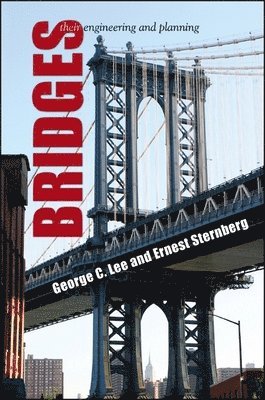
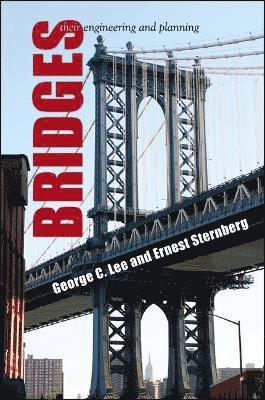
A multidisciplinary and accessible introduction to humanity's favorite structure: the bridge.Whether you are a student considering a career in civil engineering and transportation planning, a public official interested in the future of infrastructure, or a person who simply cares about bridges, this book offers an accessible and illustrated introduction to the most beloved feature of our built environment. Learn about engineering basics: the forces that bridges must resist to stay aloft and the principles by which engineers decide which types of bridges make sense at which sites. Find out how engineers protect bridges from their greatest threats-the earthquakes, floods, and other hazards that can cause catastrophic damage.Moving from engineering to planning, learn how we decide whether a bridge is worth building in the first place, learn about controversial features of cost-benefit analysis, and about the transportation models by which planners forecast bridge effects on traffic patterns. Investigate a sometimes intractable problem: why a project often creeps along for a decade or more to get from initial studies to the day the ribbon is cut, undergoing vast cost escalations. Also explore the environmental impact of bridges, and the meaning of a "sustainable bridge," and whether bridges could once again be built, like ancient Roman ones, to last a thousand years.
387 kr
Tillfälligt slut
A multidisciplinary and accessible introduction to humanity's favorite structure: the bridge.Whether you are a student considering a career in civil engineering and transportation planning, a public official interested in the future of infrastructure, or a person who simply cares about bridges, this book offers an accessible and illustrated introduction to the most beloved feature of our built environment. Learn about engineering basics: the forces that bridges must resist to stay aloft and the principles by which engineers decide which types of bridges make sense at which sites. Find out how engineers protect bridges from their greatest threats-the earthquakes, floods, and other hazards that can cause catastrophic damage.Moving from engineering to planning, learn how we decide whether a bridge is worth building in the first place, learn about controversial features of cost-benefit analysis, and about the transportation models by which planners forecast bridge effects on traffic patterns. Investigate a sometimes intractable problem: why a project often creeps along for a decade or more to get from initial studies to the day the ribbon is cut, undergoing vast cost escalations. Also explore the environmental impact of bridges, and the meaning of a "sustainable bridge," and whether bridges could once again be built, like ancient Roman ones, to last a thousand years.