Ernst Breisach - Böcker
Visar alla böcker från författaren Ernst Breisach. Handla med fri frakt och snabb leverans.
7 produkter
7 produkter
786 kr
Tillfälligt slut
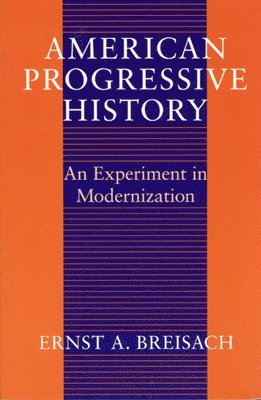
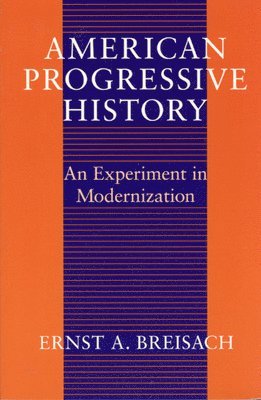
American Progressive History is the first book to relate the story of Progressive history through all its transformations from its emergence in the early 1900s to its demise in the 1940s. Focusing his account on the work of the movement's most important representatives--including Charles Beard, James Harvey Robinson, and Carl Becker--Ernst Breisach demonstrates that Progressive history is distinguished by its unique combination of beliefs in the objective reality of historical facts and its faith in the inevitability of the progress of the human race. And though he discusses at length Frederick Jackson Turner's contributions to the creation of a modern American historiography, Breisach sets him apart from the scholars who shaped Progressive history. While Progressive history is usually treated in isolation from simultanieous movements in European historiography, Breisach shows how it was formulated in the face of the same cultural pressures confronting European historians.Indeed, it becomes clear that until the 1930s the Progressive historians' confidence in the validity of historical investigation and the progress of civilization shielded American historians from the skepticism and cultural pessimism which characterized many of their European contempories. Breisach's exceptionally broad and subtle analysis reveals American Progressive history to be an important and innovative experiment in the international quest for a New History, as well as a coherent school of thought in its own right.
309 kr
Skickas inom 7-10 vardagar
American Progressive History is the first book to relate the story of Progressive history through all its transformations from its emergence in the early 1900s to its demise in the 1940s. Focusing his account on the work of the movement's most important representatives—including Charles Beard, James Harvey Robinson, and Carl Becker—Ernst Breisach demonstrates that Progressive history is distinguished by its unique combination of beliefs in the objective reality of historical facts and its faith in the inevitability of the progress of the human race. And though he discusses at length Frederick Jackson Turner's contributions to the creation of a modern American historiography, Breisach sets him apart from the scholars who shaped Progressive history. While Progressive history is usually treated in isolation from simultanieous movements in European historiography, Breisach shows how it was formulated in the face of the same cultural pressures confronting European historians. Indeed, it becomes clear that until the 1930s the Progressive historians' confidence in the validity of historical investigation and the progress of civilization shielded American historians from the skepticism and cultural pessimism which characterized many of their European contempories.Breisach's exceptionally broad and subtle analysis reveals American Progressive history to be an important and innovative experiment in the international quest for a New History, as well as a coherent school of thought in its own right.
587 kr
Tillfälligt slut
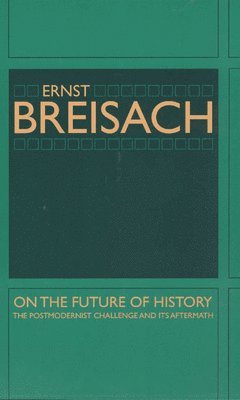
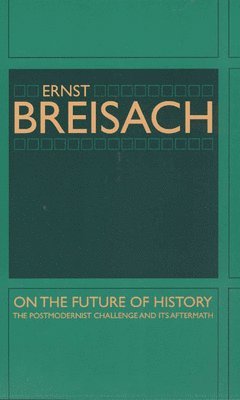
What does postmodernism mean for the future of history? Can one still write history in postmodernity? To answer questions such as these, Ernst Breisach provides the first comprehensive overview of postmodernism and its complex relationship to history and historiography. Placing postmodern theories in their intellectual and historical contexts, he shows how they are part of broad developments in Western culture. Breisach sees postmodernism as neither just a fad nor a universal remedy. In clear and concise language, he presents and critically evaluates the major views on history held by influential postmodernists, such as Derrida, Foucault, Lyotard, and the new narrativists. Along the way, he introduces to the reader major debates among historians over postmodern theories of evidence, objectivity, meaning and order, truth, and the usefulness of history. He also discusses new types of history that have emerged as a consequence of postmodernism, including cultural history, microhistory, and new historicism. For anyone concerned with the postmodern challenge to history, both advocates and critics alike, On the Future of History will be a welcome guide.
229 kr
Skickas inom 7-10 vardagar
What does postmodernism mean for the future of history? Can one still write history in postmodernity? To answer questions such as these, Ernst Breisach provides the first comprehensive overview of postmodernism and its complex relationship to history and historiography. Placing postmodern theories in their intellectual and historical contexts, he shows how they are part of broad developments in Western culture. Breisach sees postmodernism as neither just a fad nor a universal remedy. In clear and concise language, he presents and critically evaluates the major views on history held by influential postmodernists, such as Derrida, Foucault, Lyotard, and the new narrativists. Along the way, he introduces to the reader major debates among historians over postmodern theories of evidence, objectivity, meaning and order, truth, and the usefulness of history. He also discusses new types of history that have emerged as a consequence of postmodernism, including cultural history, microhistory, and new historicism. For anyone concerned with the postmodern challenge to history, both advocates and critics alike, On the Future of History will be a welcome guide.
1 574 kr
Skickas inom 3-6 vardagar
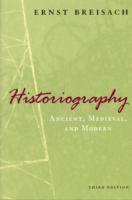
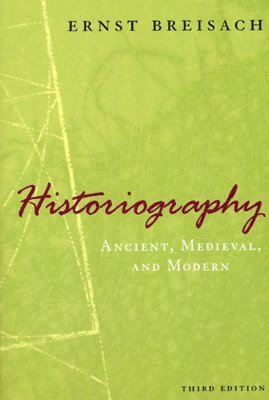
In this pioneering work, Ernst Breisach presents an effective, well-organized, and concise account of the development of historiography in Western culture. Neither a handbook nor an encyclopedia, this up-to-date third edition narrates and interprets the development of historiography from its origins in Greek poetry to the present, with compelling sections on postmodernism, deconstructionism, African-American history, women’s history, microhistory, the Historikerstreit, cultural history, and more. The definitive look at the writing of history by a historian, Historiography provides key insights into some of the most important issues, debates and innovations in modern historiography. Praise for the first edition: “Breisach’s comprehensive coverage of the subject and his clear presentation of the issues and the complexity of an evolving discipline easily make his work the best of its kind.”—Lester D. Stephens, American Historical Review
363 kr
In this pioneering work, Ernst Breisach presents an effective, well-organized, and concise account of the development of historiography in Western culture. Neither a handbook nor an encyclopedia, this up-to-date third edition narrates and interprets the development of historiography from its origins in Greek poetry to the present, with compelling sections on postmodernism, deconstructionism, African-American history, women’s history, microhistory, the Historikerstreit, cultural history, and more. The definitive look at the writing of history by a historian, Historiography provides key insights into some of the most important issues, debates and innovations in modern historiography. Praise for the first edition: “Breisach’s comprehensive coverage of the subject and his clear presentation of the issues and the complexity of an evolving discipline easily make his work the best of its kind.”—Lester D. Stephens, American Historical Review
Del 19 - Studies in Medieval and Early Modern Culture
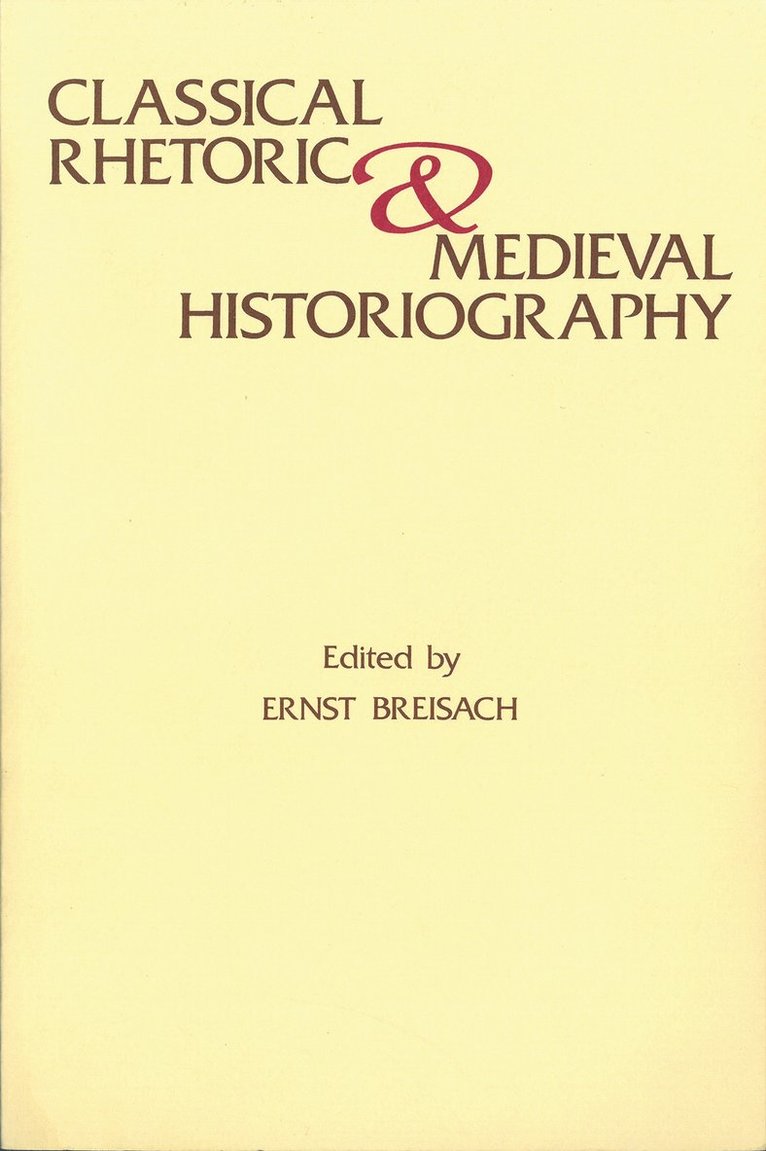
Classical Rhetoric and Medieval Historiography
Inbunden, Engelska, 1985
256 kr
Skickas inom 5-8 vardagar
While the study of rhetoric has received a much-needed revival dating from about 1945, historical writing was not a favored object of scrutiny among the many studies of rhetoric's influence on medieval literature, education, and preaching (from the introduction). By 1978, some scholars had resolved to rectify this problem, and organized sessions at the thirteenth International Congress on Medieval Studies. This volume stands as a selection of works presented there, helping to fortify the strength of interest and inquiry directed toward rhetoric's symbiosis with historiography in centuries past (from the introduction).