Ernst-Jochen Thiele – författare
Visar alla böcker från författaren Ernst-Jochen Thiele. Handla med fri frakt och snabb leverans.
2 produkter
2 produkter
E-bok
PDF, Engelska, 2012687 kr
Läs direkt efter köp
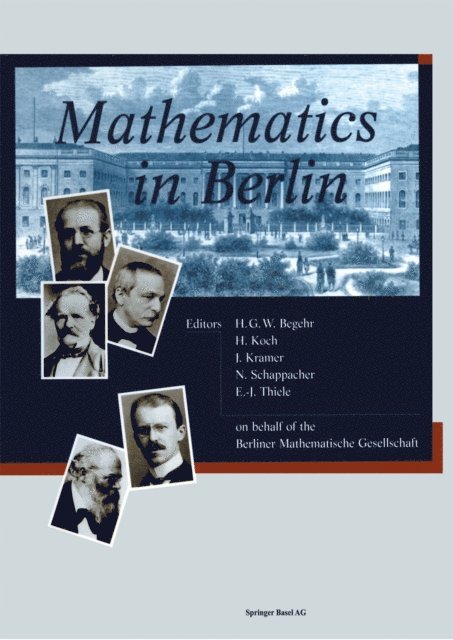
This little book is conceived as a service to mathematicians attending the 1998 International Congress of Mathematicians in Berlin. It presents a comprehensive, condensed overview of mathematical activity in Berlin, from Leibniz almost to the present day (without, however, including biographies of living mathematicians). Since many towering figures in mathematical history worked in Berlin, most of the chapters of this book are concise biographies. These are held together by a few survey articles presenting the overall development of entire periods of scientific life at Berlin. Overlaps between various chapters and differences in style between the chap ters were inevitable, but sometimes this provided opportunities to show different aspects of a single historical event - for instance, the Kronecker-Weierstrass con troversy. The book aims at readability rather than scholarly completeness. There are no footnotes, only references to the individual bibliographies of each chapter. Still, we do hope that the texts brought together here, and written by the various authors for this volume, constitute a solid introduction to the history of Berlin mathematics.
Häftad, Engelska, 1998
544 kr
Skickas inom 10-15 vardagar
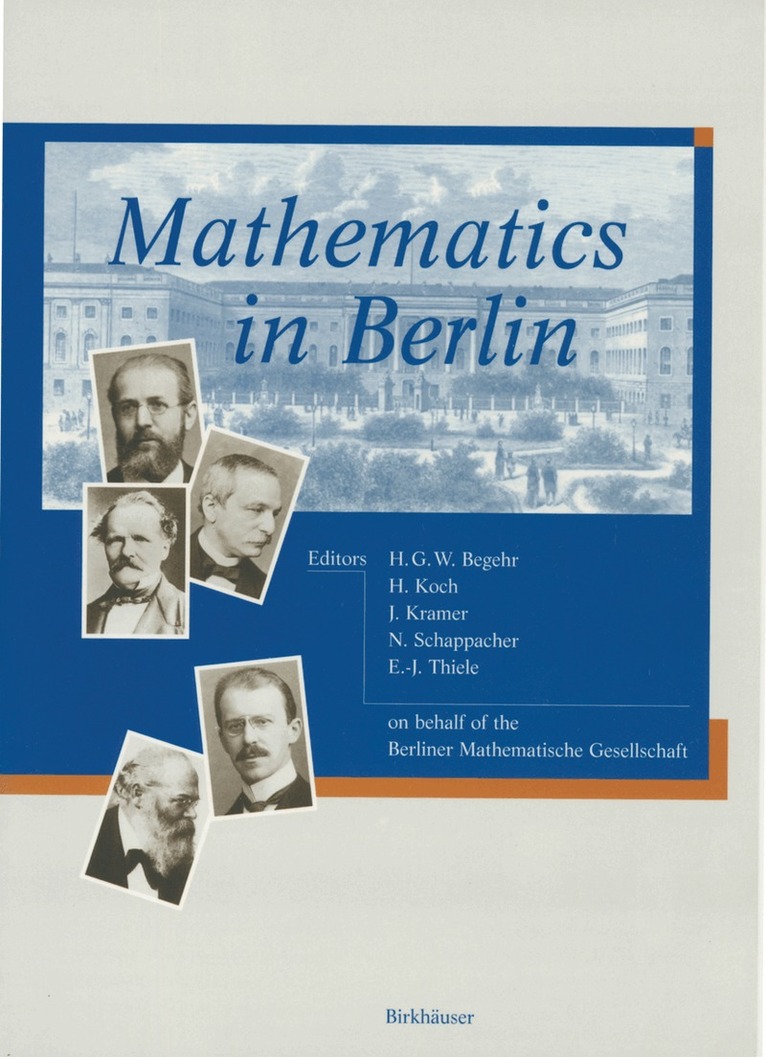
This work provides information for readers interested in the mathematical past and present of Berlin. It presents a comprehensive, condensed overview of mathematical activity in Berlin, beginning with the foundation of the Academy by Leibniz and carrying over almost to the present day. Many chapters are essentially concise biographies of figures in mathematical history. The presentations are held together by a few articles examining the overall development of entire periods of scientific life at Berlin. Chapters cover the foundation of the University of Berlin, the "golden age" of mathematics (spanning the second half of the 19th century), the Nazi period, the development of mathematics in East and West Berlin during the political invasion of the city, and the merging of the formerly separated communities with the reunification of Germany.