Esmail Doustkhah – författare
2 111 kr
Skickas inom 10-15 vardagar
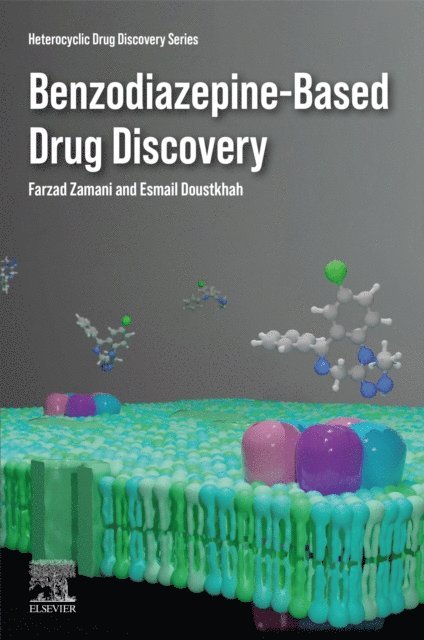
Benzodiazepine-Based Drug Discovery covers benzodiazepines and benzothiazepines, which constitute two pivotal classes of heterocyclic compounds widely used as core structures of medicinal drugs for the treatment of depression, epilepsy, seizures and muscle spasms. 1,4-Benzodiazepine, 1,5-benzodiazepine, and 1,5-benzothiazepine are the most studied groups of benzodiazepines and benzothiazepines because of their outstanding potential biological activities. This book offers a broad range of recent developments and detailed coverage of the synthesis and biological activities of the drugs based on benzodiazepine and benzothiazepine matrixes, and is an ideal reference guide to researchers working in organic and medicinal chemistry.
The importance of these privileged pharmacophores is not limited to the treatment of psychotic disorders because minor changes in the structures can generate various biological activities. They represent a wide range of therapeutic functions such as anticonvulsant, antianxiety, anti-depressant, antiviral, anti-HIV, anti-inflammatory, anticoagulant, anti-obesity, endothelin antagonist, cholecystokinin antagonist, and vasopressin receptor antagonist activities.
Presents detailed coverage of chemical structures and practical synthetic methods of benzodiazepines and benzothiazepines in drug discovery Compiles detailed in vivo and in vitro biological activity data of 1,4-benzodiazepine- and 1,5-benzodiazepine-based drugs that will help researchers design and develop innovative drugs Discusses promising avenues and potential challenges in the development of new benzodiazepines and benzothiazepines in medicinal drug synthesis3 006 kr
Läs direkt efter köp
1 685 kr
Skickas inom 5-8 vardagar
1 978 kr
Läs direkt efter köp
Discover solvent-free approaches for the synthesis of nanocatalysts as well as various catalytic transformations in this unique one-stop resource
Solvent-free methods have attracted wide attention in organic synthesis and catalysis as a promising approach towards “greener” and more sustainable chemical transformations. In this regard, nanocatalysis has seen particular growth in recent years.
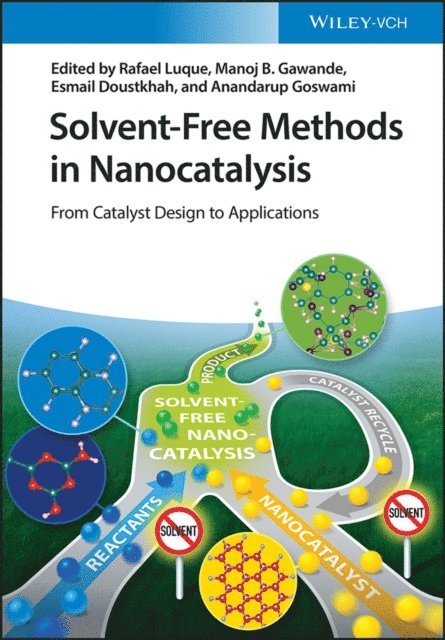
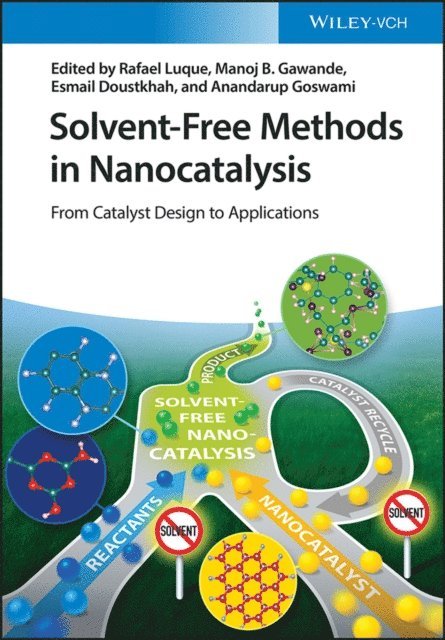
Solvent-Free Methods in Nanocatalysis gives an in-depth overview of nanocatalysts and their catalytic applications using solvent-free methods. After a brief introduction, it covers various synthetic techniques for the preparation of nanocatalysts and supports using solvent-free methods, e.g. ball-milling, microwave- and plasma-assisted methods. The book discusses in detail different catalyst classes, such as metal oxides, doped and functionalized nanocarbons, as well as nitride- and silica-based materials to help researchers to understand the efficiency and nature of these catalysts/supports based on their chemical structure. In the book readers will also find:
A brief account of the history, challenges, and recent advances in the field Detailed discussion of advantages and disadvantages of solvent-free techniques for nanocatalyst preparation Treatment of important solvent- and catalyst-free organic transformations (i.e. oxidation, coupling and multicomponent reactions) A chapter on supported ionic liquids for solvent-free catalysisWritten by leading researchers in the field, Solvent-Free Methods in Nanocatalysis is a useful reference for researchers and students working in organic synthesis, catalysis, and nanomaterials science.
1 926 kr
Läs direkt efter köp
Discover solvent-free approaches for the synthesis of nanocatalysts as well as various catalytic transformations in this unique one-stop resource
Solvent-free methods have attracted wide attention in organic synthesis and catalysis as a promising approach towards “greener” and more sustainable chemical transformations. In this regard, nanocatalysis has seen particular growth in recent years.
Solvent-Free Methods in Nanocatalysis gives an in-depth overview of nanocatalysts and their catalytic applications using solvent-free methods. After a brief introduction, it covers various synthetic techniques for the preparation of nanocatalysts and supports using solvent-free methods, e.g. ball-milling, microwave- and plasma-assisted methods. The book discusses in detail different catalyst classes, such as metal oxides, doped and functionalized nanocarbons, as well as nitride- and silica-based materials to help researchers to understand the efficiency and nature of these catalysts/supports based on their chemical structure. In the book readers will also find:
A brief account of the history, challenges, and recent advances in the field Detailed discussion of advantages and disadvantages of solvent-free techniques for nanocatalyst preparation Treatment of important solvent- and catalyst-free organic transformations (i.e. oxidation, coupling and multicomponent reactions) A chapter on supported ionic liquids for solvent-free catalysisWritten by leading researchers in the field, Solvent-Free Methods in Nanocatalysis is a useful reference for researchers and students working in organic synthesis, catalysis, and nanomaterials science.