Esmorie Miller - Böcker
Visar alla böcker från författaren Esmorie Miller. Handla med fri frakt och snabb leverans.
3 produkter
3 produkter
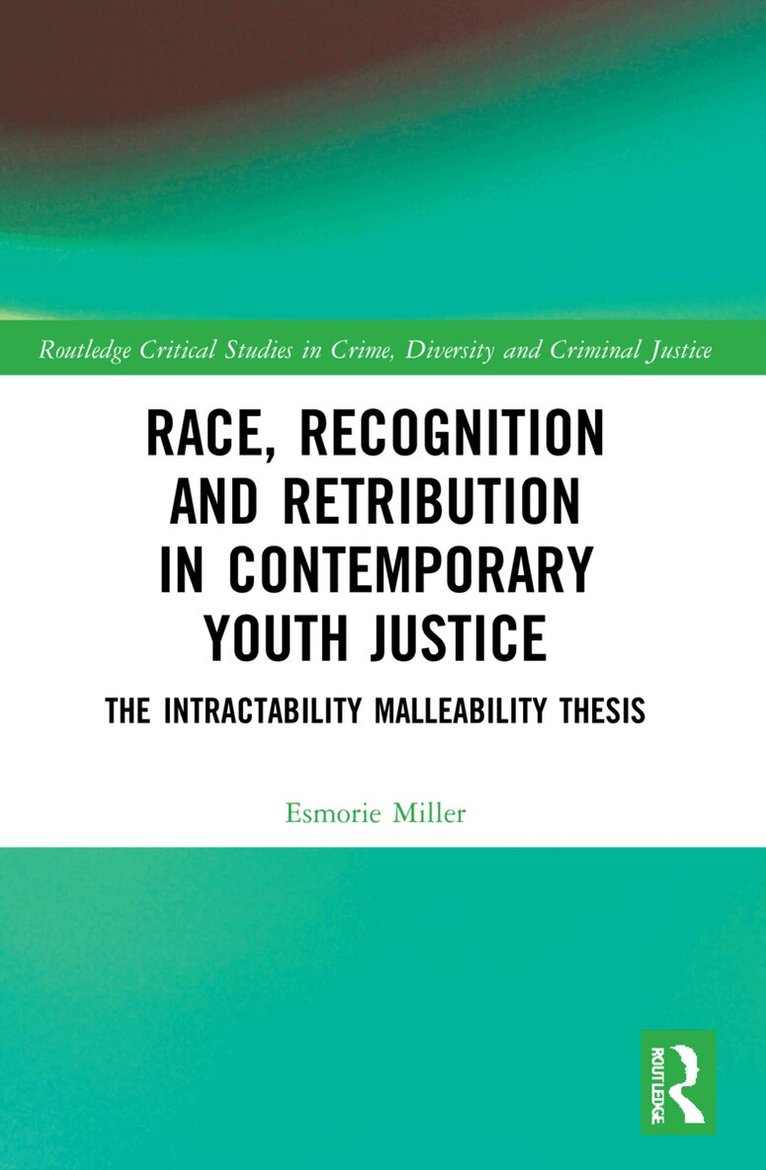
Race, Recognition and Retribution in Contemporary Youth Justice
The Intractability Malleability Thesis
Häftad, Engelska, 2023
620 kr
Skickas inom 10-15 vardagar
Race, Recognition and Retribution in Contemporary Youth Justice provides a cross-national, sociohistorical investigation of the legacy of racial discrimination, which informs contemporary youth justice practice in Canada and England. The book links racial disparities in youth justice, especially exclusion from ideologies of care and notions of future citizenship, with historical practices of exclusion.Despite the logic of care found in both rehabilitative and retributive forms of youth justice, Black inner-city youth remain excluded from lenience and social welfare considerations. This exclusion reflects a historical legacy of racial discrimination apparent in the harsher sanctions levied against Black, innercity youth. In exploring race’s role in this arrangement, the book asks: To what extent were Black youth excluded from historic considerations of the lenience and social care, built into the logic of youth justice in England and Canada? To what extent are the disproportionately high incarceration rates, for Black, inner-city youth in the contemporary system, a reflection of a historic exclusion from considerations of lenience and social care? How might contemporary justice efforts be reoriented to explicitly prioritize considerations of lenience and social care ahead of penalty for Black, inner-city youth?Examining the entrenched structural continuities of racial discrimination, the book draws on archival and interview data, with interviewees including professionals who work with inner-city youth. In concert with the archival and interview data, the book offers the intractability/malleability I/M thesis, an integrated social theoretical logic with the capacity to expand the customary analytical scope for understanding the contemporary entrenched normalization of racialized youth as punishable. The aim is to advance a historicized account, exploring youth’s positioning as constitutive of a continuity of racialized peoples’, in general, and youth’s, in particular, historic exclusion from the benefits of modern rights, including lenience and care. The I/M logic takes its analytical currency from a combined critical race theory (CRT) and recognition theory. The book argues that a truly progressive era of youth justice necessitates cultivating policy and practice which explicitly prioritizes considerations of lenience and social care, ahead of reliance on penalty.This multidisciplinary book is valuable reading for academics and students researching criminology, sociology, politics, anthropology, critical race studies, and history. It will also appeal to practitioners in the field of youth justice, policymakers, and third-sector organizations.
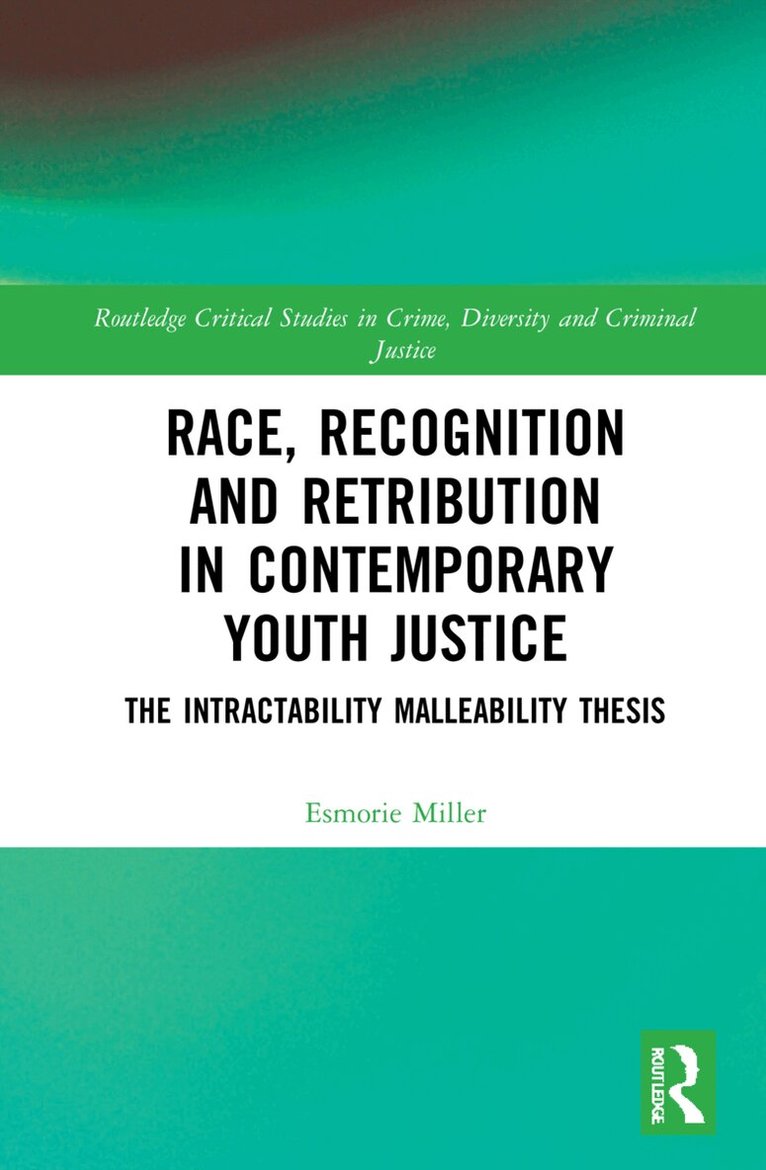
Race, Recognition and Retribution in Contemporary Youth Justice
The Intractability Malleability Thesis
Inbunden, Engelska, 2021
1 806 kr
Skickas inom 10-15 vardagar
Race, Recognition and Retribution in Contemporary Youth Justice provides a cross-national, sociohistorical investigation of the legacy of racial discrimination, which informs contemporary youth justice practice in Canada and England. The book links racial disparities in youth justice, especially exclusion from ideologies of care and notions of future citizenship, with historical practices of exclusion.Despite the logic of care found in both rehabilitative and retributive forms of youth justice, Black inner-city youth remain excluded from lenience and social welfare considerations. This exclusion reflects a historical legacy of racial discrimination apparent in the harsher sanctions levied against Black, innercity youth. In exploring race’s role in this arrangement, the book asks: To what extent were Black youth excluded from historic considerations of the lenience and social care, built into the logic of youth justice in England and Canada? To what extent are the disproportionately high incarceration rates, for Black, inner-city youth in the contemporary system, a reflection of a historic exclusion from considerations of lenience and social care? How might contemporary justice efforts be reoriented to explicitly prioritize considerations of lenience and social care ahead of penalty for Black, inner-city youth?Examining the entrenched structural continuities of racial discrimination, the book draws on archival and interview data, with interviewees including professionals who work with inner-city youth. In concert with the archival and interview data, the book offers the intractability/malleability I/M thesis, an integrated social theoretical logic with the capacity to expand the customary analytical scope for understanding the contemporary entrenched normalization of racialized youth as punishable. The aim is to advance a historicized account, exploring youth’s positioning as constitutive of a continuity of racialized peoples’, in general, and youth’s, in particular, historic exclusion from the benefits of modern rights, including lenience and care. The I/M logic takes its analytical currency from a combined critical race theory (CRT) and recognition theory. The book argues that a truly progressive era of youth justice necessitates cultivating policy and practice which explicitly prioritizes considerations of lenience and social care, ahead of reliance on penalty.This multidisciplinary book is valuable reading for academics and students researching criminology, sociology, politics, anthropology, critical race studies, and history. It will also appeal to practitioners in the field of youth justice, policymakers, and third-sector organizations.
471 kr
Skickas inom 7-10 vardagar
This book contends with the question of how to decolonise criminology and discusses a number of key aspects of the debate. It sets out to consider differing aspects of criminology, including its history as a discipline, its context within the empire, its location within higher education (a system itself still steeped in colonial ideas and practices) and its relationship to criminal justice systems, with their own well-documented racially mediated brutality. It aims to expand the criminological lens and seek ways to enhance participation within criminological debate of those groups who have been excluded from participation and power. This book aims to follow a path already established by scholars in the global South, as well as engaging with marginalised communities within the global South who have not yet been fully accepted into the academy. It outlines a practical toolkit to support higher education institutions to decolonise their criminology curricula. It considers what the decolonial endeavour means within academic criminology, criminal justice-related professionals and within communities.