Esther de Boe - Böcker
Visar alla böcker från författaren Esther de Boe. Handla med fri frakt och snabb leverans.
3 produkter
3 produkter
2 150 kr
Skickas inom 10-15 vardagar
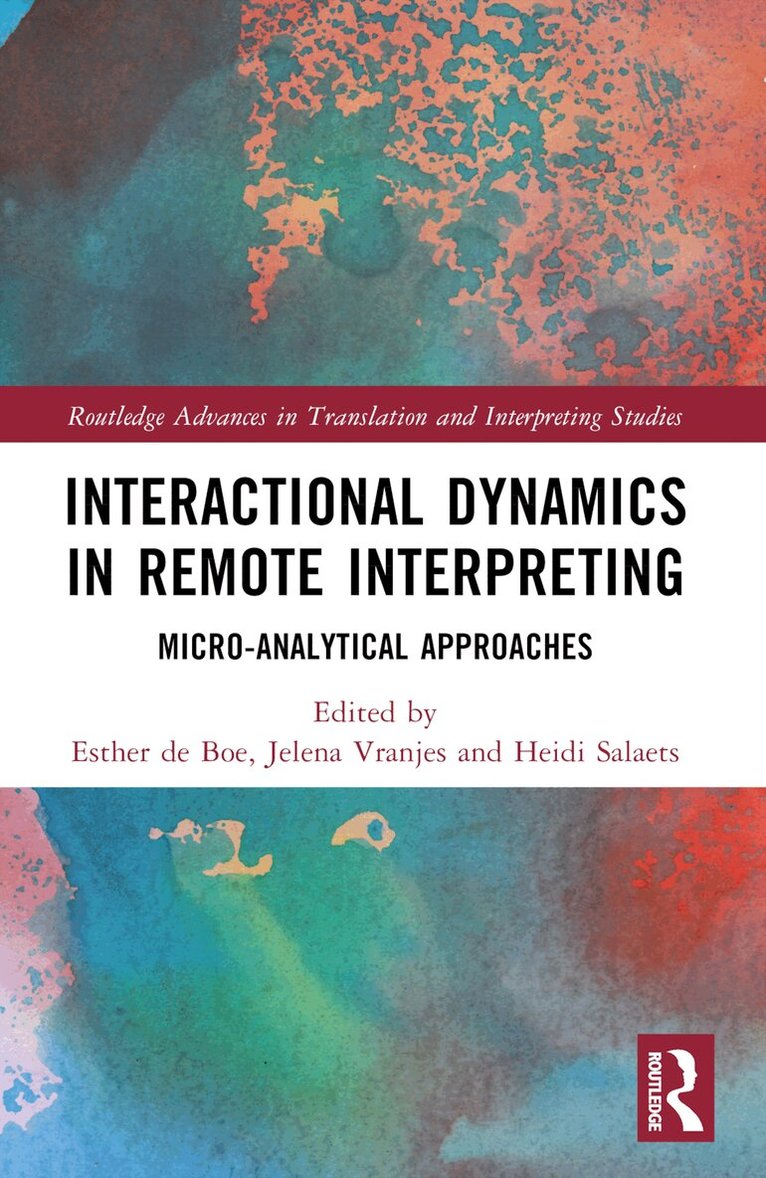
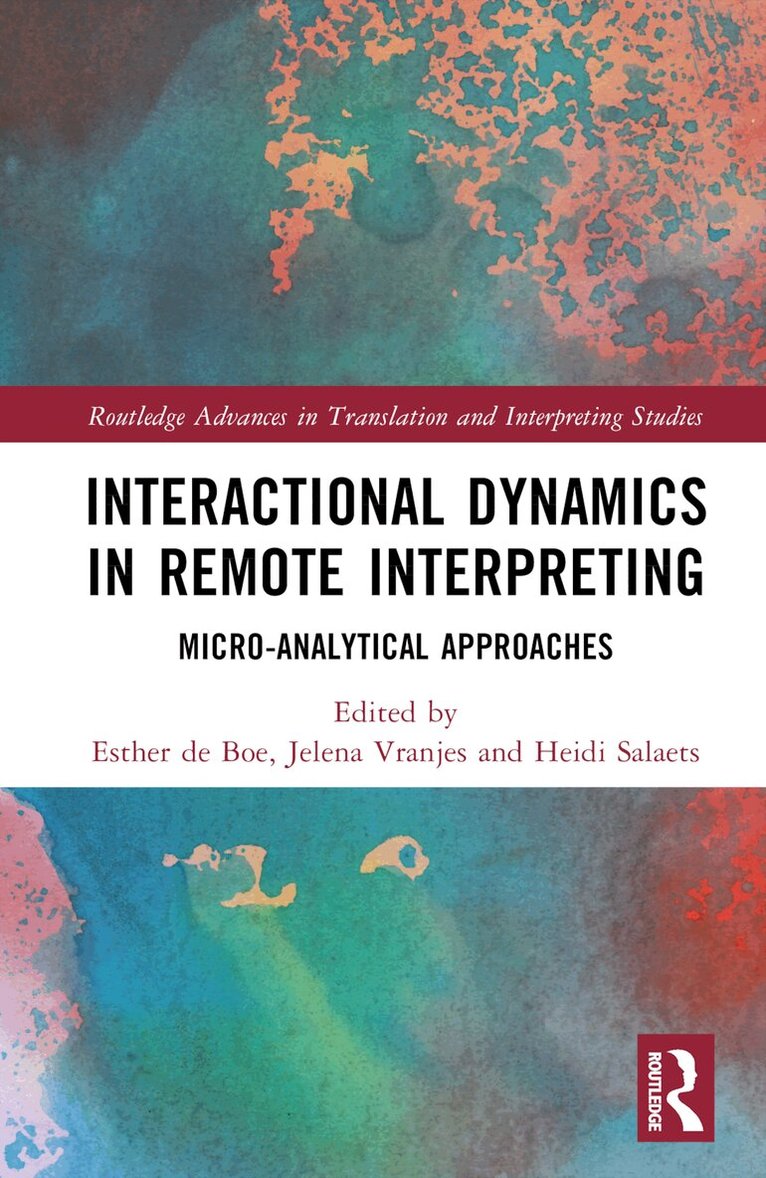
This collection introduces an innovative micro-analytical approach to interaction management in remote interpreting, offering new insights into our understanding of the conversational dynamics of remote dialogue interpreting.The book calls attention to the need for greater reflection on the impact of the increased use of remote interpreting via telephone and video link, particularly in light of the COVID-19 pandemic, on the already complex interactional dynamics of communication in dialogue interpreting settings. Featuring perspectives from both established and emerging scholars, the volume explores both the signals and mechanisms of interaction management and the effects of context in such settings. Chapters draw on empirical studies based on experimental and authentic data from video recordings and eye-tracking data to examine the impact on smoothness and synchronization of the interaction in remote interpreting, in light of the absence of multimodal resources such as gaze and gesture. In collecting this research in a single volume, the book paves the way for further research on the changing relationships between interaction management, technology, and multimodality in dialogue interpreting contexts in today’s increasingly technology-mediated world.This volume will be of interest to students and scholars in interpreting studies, language and communication, and pragmatics.
593 kr
Skickas inom 10-15 vardagar
This collection introduces an innovative micro-analytical approach to interaction management in remote interpreting, offering new insights into our understanding of the conversational dynamics of remote dialogue interpreting.The book calls attention to the need for greater reflection on the impact of the increased use of remote interpreting via telephone and video link, particularly in light of the COVID-19 pandemic, on the already complex interactional dynamics of communication in dialogue interpreting settings. Featuring perspectives from both established and emerging scholars, the volume explores both the signals and mechanisms of interaction management and the effects of context in such settings. Chapters draw on empirical studies based on experimental and authentic data from video recordings and eye-tracking data to examine the impact on smoothness and synchronization of the interaction in remote interpreting, in light of the absence of multimodal resources such as gaze and gesture. In collecting this research in a single volume, the book paves the way for further research on the changing relationships between interaction management, technology, and multimodality in dialogue interpreting contexts in today’s increasingly technology-mediated world.This volume will be of interest to students and scholars in interpreting studies, language and communication, and pragmatics.
Del 34 - New Trends in Translation Studies
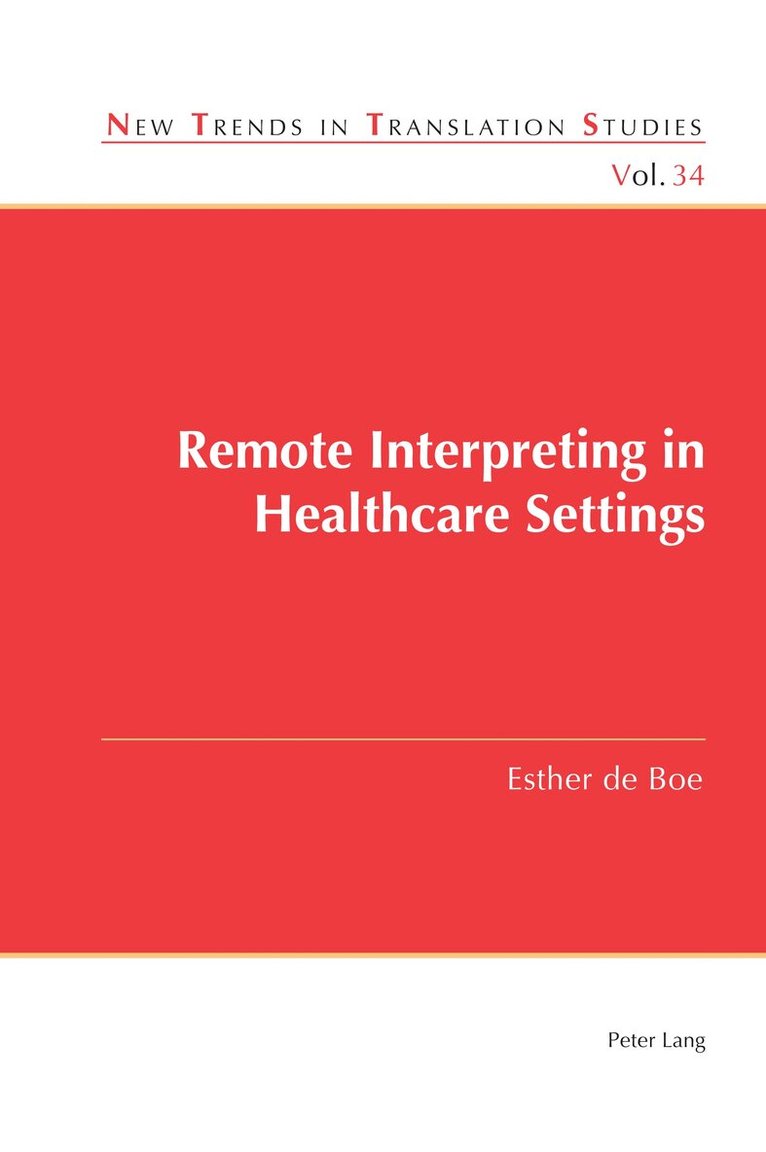
Remote Interpreting in Healthcare Settings
Häftad, Engelska, 2022
685 kr
Skickas inom 5-8 vardagar
The increasing practice of remote interpreting (RI) by telephone and video link has profoundly changed the ways in which interpreting services are being delivered. Although clinical research on RI has reported positive results, empirical research in other settings, such as legal contexts, has demonstrated that RI can affect the quality of interpreter-mediated communication.This book investigates the possible effects of using RI on the quality of healthcare interpreting. Central to the research design are three series of simulated interpreter-mediated doctor–patient encounters, each involving a different interpreter and using three different interpreting methods: face-to-face interpreting, telephone interpreting and video interpreting. These sessions were video recorded, transcribed and annotated according to categories previously established in interpreting studies. First, quantitative analyses of miscommunication and interaction management were carried out to identify potential relationships between message equivalence issues and interactional issues and to establish the possible influence of environmental and technological factors. These data were submitted to comparative, qualitative analyses, which were triangulated with the findings from the participants’ perceptions, collected by means of thirty post-simulation interviews. The insights generated by this work are highly relevant for all users of RI to anticipate and overcome communication problems.