Esther Jacobson-Tepfer – författare
Visar alla böcker från författaren Esther Jacobson-Tepfer. Handla med fri frakt och snabb leverans.
10 produkter
10 produkter
Inbunden, Engelska, 2015
1 279 kr
Skickas inom 5-8 vardagar
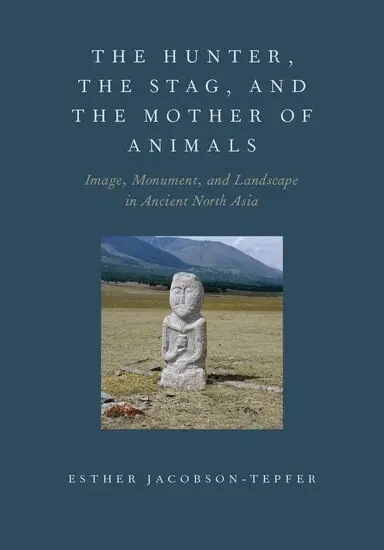
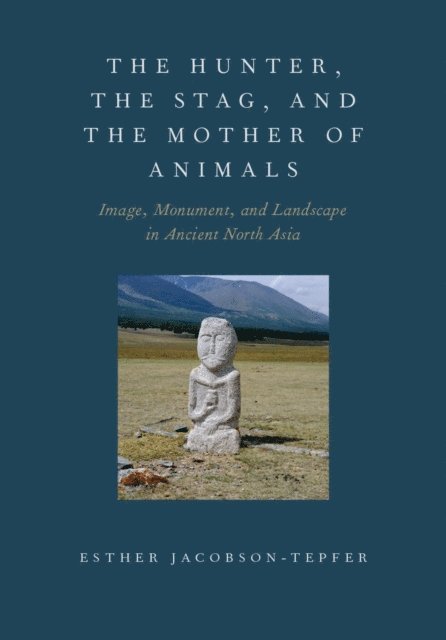
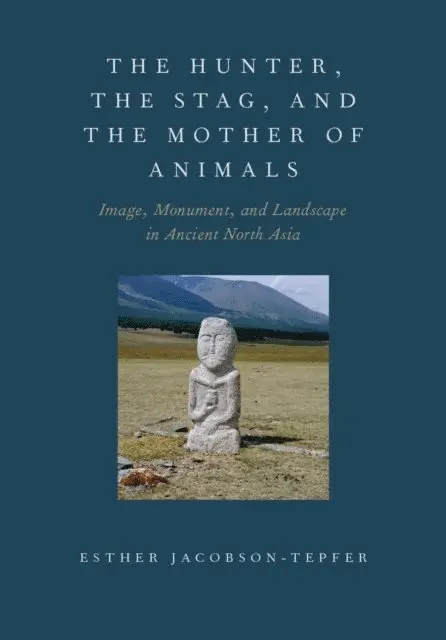
The Hunter, the Stag, and the Mother of Animals offers an in-depth exploration of the changing traditions of belief in pre-Bronze and Bronze Age North Asia. Esther Jacobson-Tepfer centers her argument on a female deity and her evolution up until the early Iron Age, across a 2,000 year period. Through the art historical and archaeological evidence of the symbolic systems left behind, she traces the progression of the deity from an originating animal mother through her incarnation as the mother of animals, her late embodiment as the guardian of the road to the land of the dead, the transformation of her essential liminality into the structures of predation and, in the form of a predated stag, her subsequent destruction. In detailed commentaries on rock art structures and monuments, Jacobson-Tepfer reconstructs and explores how the deity's power was embedded in the Janus-faced concept of life/death: how, in all her forms, the deity occupied the threshold between the worlds of humans and ancestors, humans and animals. More broadly, this study details how her fate was directly related to the sociological evolution at the onset of the Iron age: the transition of the cultures in South Siberia and Mongolia from hunting-based settlement to horse-dependent semi-nomadism, and with that the rise of a heroic narrative tradition. Jacobson-Tepfer has had unparalleled access to regional data still unavailable in the West, and the collection of this data in English as well as her extensive collection of color photographs and drawings will fill a gaping hole in the literature and prove invaluable to both archaeologists and art historians.The Hunter, the Stag, and the Mother of Animals will surely become a standard reference for both disciplines as well as a guide to those interested in rock art and beliefs systems more generally.
E-bok
PDF, Engelska, 20151 442 kr
Läs direkt efter köp
The ancient landscape of North Asia gave rise to a mythic narrative of birth, death, and transformation that reflected the hardship of life for ancient nomadic hunters and herders. Of the central protagonists, we tend to privilege the hero hunter of the Bronze Age and his re-incarnation as a warrior in the Iron Age. But before him and, in a sense, behind him was a female power, half animal, half human. From her came permission to hunt the animals of the taiga, and by her they were replenished. She was, in other words, the source of the hunter''s success. The stag was a latecomer to this tale, a complex symbol of death and transformation embedded in what ultimately became a struggle for priority between animal mother and hero hunter.From this region there are no written texts to illuminate prehistory, and the hundreds of burials across the steppe reveal little relating to myth and belief before the late Bronze Age. What they do tell us is that peoples and cultures came and went, leaving behind huge stone mounds, altars, and standing stones as well as thousands of petroglyphic images. With The Hunter, the Stag, and the Mother of Animals, Esther Jacobson-Tepfer uses that material to reconstruct the prehistory of myth and belief in ancient North Asia. Her narrative places monuments and imagery within the context of the physical landscape and by considering all three elements as reflections of the archaeology of belief. Within that process, paleoenvironmental forces, economic innovations, and changing social order served as pivots of mythic transformation. With this vividly illustrated study, Jacobson-Tepfer brings together for this first time in any language Russian and Mongolian archaeology with prehistoric representational traditions of South Siberia and Mongolia in order to explore the non-material aspects of these fascinating prehistoric cultures.
E-bok
Engelska, 20151 442 kr
Läs direkt efter köp
The ancient landscape of North Asia gave rise to a mythic narrative of birth, death, and transformation that reflected the hardship of life for ancient nomadic hunters and herders. Of the central protagonists, we tend to privilege the hero hunter of the Bronze Age and his re-incarnation as a warrior in the Iron Age. But before him and, in a sense, behind him was a female power, half animal, half human. From her came permission to hunt the animals of the taiga, and by her they were replenished. She was, in other words, the source of the hunter''s success. The stag was a latecomer to this tale, a complex symbol of death and transformation embedded in what ultimately became a struggle for priority between animal mother and hero hunter.From this region there are no written texts to illuminate prehistory, and the hundreds of burials across the steppe reveal little relating to myth and belief before the late Bronze Age. What they do tell us is that peoples and cultures came and went, leaving behind huge stone mounds, altars, and standing stones as well as thousands of petroglyphic images. With The Hunter, the Stag, and the Mother of Animals, Esther Jacobson-Tepfer uses that material to reconstruct the prehistory of myth and belief in ancient North Asia. Her narrative places monuments and imagery within the context of the physical landscape and by considering all three elements as reflections of the archaeology of belief. Within that process, paleoenvironmental forces, economic innovations, and changing social order served as pivots of mythic transformation. With this vividly illustrated study, Jacobson-Tepfer brings together for this first time in any language Russian and Mongolian archaeology with prehistoric representational traditions of South Siberia and Mongolia in order to explore the non-material aspects of these fascinating prehistoric cultures.
Häftad, Engelska, 2020
246 kr
Skickas inom 7-10 vardagar
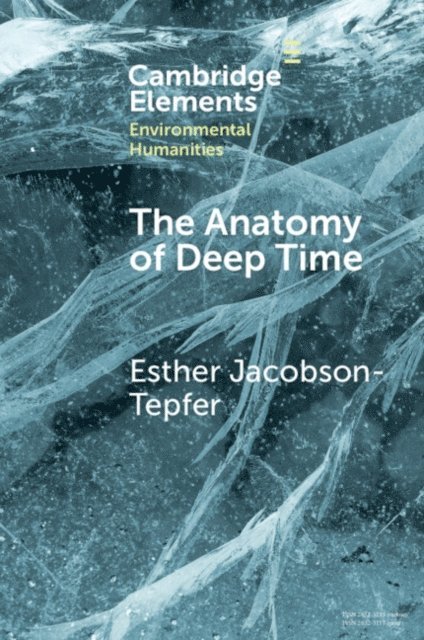
Petroglyphic rock art in three valleys of Mongolia's Altai Mountains reveals the anatomy of deep time at the boundary between Central and North Asia. Inscribed over a period of twelve millennia, its subject matter, styles, and manner of execution reflect the constraints of changing geology, climate, and vegetation. These valleys were created and shaped by ancient glaciers. Analysis of their physical environment, projected from the deep past to the present, begins to explain the rhythm of cultural manifestations: where rock art appears, when it disappears, and why. The material and this remote arena offer an ideal laboratory to study the intersection of prehistoric culture and paleoenvironment.
294 kr
Läs direkt efter köp
Petroglyphic rock art in three valleys of Mongolia''s Altai Mountains reveals the anatomy of deep time at the boundary between Central and North Asia. Inscribed over a period of twelve millennia, its subject matter, styles, and manner of execution reflect the constraints of changing geology, climate, and vegetation. These valleys were created and shaped by ancient glaciers. Analysis of their physical environment, projected from the deep past to the present, begins to explain the rhythm of cultural manifestations: where rock art appears, when it disappears, and why. The material and this remote arena offer an ideal laboratory to study the intersection of prehistoric culture and paleoenvironment.
E-bok
PDF, Engelska, 2020294 kr
Läs direkt efter köp
Petroglyphic rock art in three valleys of Mongolia''s Altai Mountains reveals the anatomy of deep time at the boundary between Central and North Asia. Inscribed over a period of twelve millennia, its subject matter, styles, and manner of execution reflect the constraints of changing geology, climate, and vegetation. These valleys were created and shaped by ancient glaciers. Analysis of their physical environment, projected from the deep past to the present, begins to explain the rhythm of cultural manifestations: where rock art appears, when it disappears, and why. The material and this remote arena offer an ideal laboratory to study the intersection of prehistoric culture and paleoenvironment.
Häftad, Engelska, 2019
731 kr
Skickas inom 3-6 vardagar
Inbunden, Engelska, 2019
842 kr
Skickas inom 3-6 vardagar
Del 30 - Handbook of Oriental Studies. Section 8 Uralic & Central Asian Studies
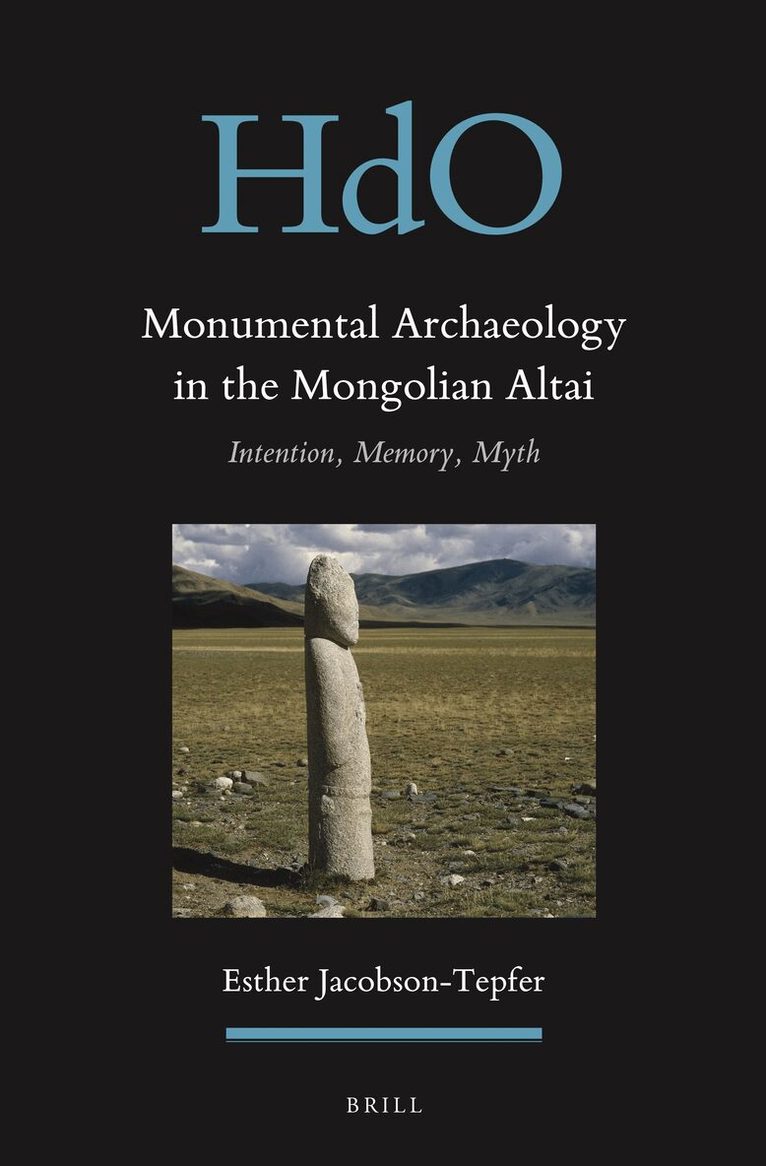
Monumental Archaeology in the Mongolian Altai
Intention, Memory, Myth
Inbunden, Engelska, 2023
2 075 kr
Skickas inom 5-8 vardagar
The stone monuments of Mongolia’s Altai Mountains trace the web of ancient cultures across that remote land. This study breaks new ground by seeking their cultural significance from within their physical locations and viewsheds. It is the first study to join the mute stone monuments to the vivid petroglyphic rock art of that region. In that and in the examination of a monument’s individualizing details, I seek to recover the impulse of original intention, the way in which monument and location fix cultural memory, and the way in which memory finally gives way to the cultural development of myth.
Häftad, Engelska, 2023
398 kr
Skickas inom 5-8 vardagar