Esther Sobin - Böcker
Visar alla böcker från författaren Esther Sobin. Handla med fri frakt och snabb leverans.
3 produkter
3 produkter
250 kr
Skickas inom 5-8 vardagar
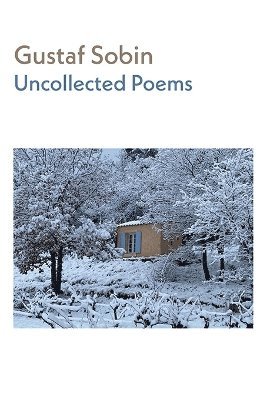
Gustaf Sobin's Uncollected Poems brings under one set of covers some fugitive pieces that did not make it into his official posthumous Collected Poems (2010), together with some occasional works and two full-length volumes that stood outside the normal trajectory of his poetry: Articles of Light and Elation and Sicilian Miniatures, the former published in a bibliophile edition and the latter never distributed commercially. This Uncollected fills out the picture of the author's work more fully than ever before."Gustaf Sobin's poems are not, in any superficial sense, 'painterly', but there is about them that sense of the intangible which anyone who has done graphic work must have felt hovering about the image and its physical counterpart. They often seek to render this intangibility of a world not yet known at the moment it is seized upon by the forms of language. The forms of language are thus, for Sobin, a fundamental measure of human activity although his poems do not look at that activity within an immediately social context. Sobin's attitude to language and to the way it stylizes our world for us recalls the writings of Benjamin Lee Whorf on the spatial concepts of the Hopi Indians. And Sobin's world, like that of the Hopi, is basic, stripped, often sun-drenched, sometimes arid-and mysterious." -Charles Tomlinson
484 kr
Skickas inom 5-8 vardagar
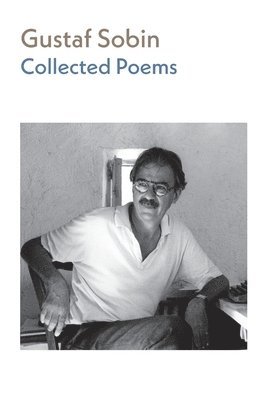
Gustaf Sobin's Collected appeared posthumously in 2010, and has been unavailable now for some two years. Given our long association with the author - his work appeared in the very first issue of Shearsman magazine in 1981, and we published three chapbooks of his work at various times in the 1980s and 1990s - we are delighted to be able to bring this major volume back into print. Sobin was an American poet of a very singular kind, but allied in some ways to the Objectivists and to poets such as Robert Creeley and Robert Duncan. Crucially, he spent most of his adult life in Provence, and counted France, and French poets, amongst his most important influences. This makes him stand apart from his US contemporaries and leaves him in a slightly odd corner of the literary landscape. What is not in doubt, however, is the quality of the work. Sobin was a major poet, by any standard."I can't think of anyone in our time who has trod the via negativa so determinedly and with such purpose. The texture of the ground, but also the grain of what lies beneath it. And so, the miracle, as Oppen would say, that there is a music in all this, in all this nothing, our brief glimpse." -Michael Palmer "Sobin is a master of hoverings, hesitances, etched definitions of movement, soundings, fine measurings of air. He leads the mind into a poetry of great distinction, awakening the spirit to a world of errant clarities renewed." -Robert Duncan"Gustaf Sobin is sui generis, one of the deep figures of recent times. He is one of our dark and scintillating stars, his poetry a gift to our art now when there is a dearth of beauty and of myriadness of intelligence." -Michael McClure"Gustaf Sobin's poems are not, in any superficial sense, 'painterly', but there is about them that sense of the intangible which anyone who has done graphic work must have felt hovering about the image and its physical counterpart. They often seek to render this intangibility of a world not yet known at the moment it is seized upon by the forms of language. The forms of language are thus, for Sobin, a fundamental measure of human activity although his poems do not look at that activity within an immediately social context. Sobin's attitude to language and to the way it stylizes our world for us recalls the writings of Benjamin Lee Whorf on the spatial concepts of the Hopi Indians. And Sobin's world, like that of the Hopi, is basic, stripped, often sun-drenched, sometimes arid - and mysterious." -Charles Tomlinson"This expatriate American poet is a national treasure." -Rain Taxi
524 kr
Skickas inom 5-8 vardagar
Gustaf Sobin's Collected appeared posthumously in 2010, and has been unavailable now for some two years. Given our long association with the author - his work appeared in the very first issue of Shearsman magazine in 1981, and we published three chapbooks of his work at various times in the 1980s and 1990s - we are delighted to be able to bring this major volume back into print. Sobin was an American poet of a very singular kind, but allied in some ways to the Objectivists and to poets such as Robert Creeley and Robert Duncan. Crucially, he spent most of his adult life in Provence, and counted France, and French poets, amongst his most important influences. This makes him stand apart from his US contemporaries and leaves him in a slightly odd corner of the literary landscape. What is not in doubt, however, is the quality of the work. Sobin was a major poet, by any standard."I can't think of anyone in our time who has trod the via negativa so determinedly and with such purpose. The texture of the ground, but also the grain of what lies beneath it. And so, the miracle, as Oppen would say, that there is a music in all this, in all this nothing, our brief glimpse." -Michael Palmer"Sobin is a master of hoverings, hesitances, etched definitions of movement, soundings, fine measurings of air. He leads the mind into a poetry of great distinction, awakening the spirit to a world of errant clarities renewed." -Robert Duncan"Gustaf Sobin is sui generis, one of the deep figures of recent times. He is one of our dark and scintillating stars, his poetry a gift to our art now when there is a dearth of beauty and of myriadness of intelligence." -Michael McClure"Gustaf Sobin's poems are not, in any superficial sense, 'painterly', but there is about them that sense of the intangible which anyone who has done graphic work must have felt hovering about the image and its physical counterpart. They often seek to render this intangibility of a world not yet known at the moment it is seized upon by the forms of language. The forms of language are thus, for Sobin, a fundamental measure of human activity although his poems do not look at that activity within an immediately social context. Sobin's attitude to language and to the way it stylizes our world for us recalls the writings of Benjamin Lee Whorf on the spatial concepts of the Hopi Indians. And Sobin's world, like that of the Hopi, is basic, stripped, often sun-drenched, sometimes arid - and mysterious." -Charles Tomlinson"This expatriate American poet is a national treasure." -Rain Taxi