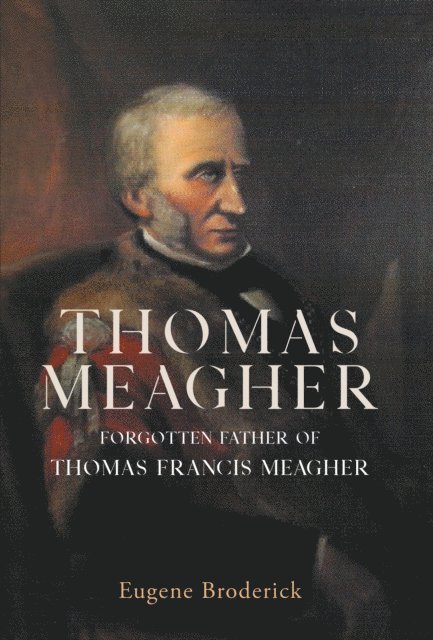
Thomas Meagher is the biography of the father of one of Ireland’s most famous patriots, Thomas Francis Meagher. Overshadowed by his son, he was a man of deeply held political and religious principles, who, through his philanthropic works and political career, helped shape the character of nineteenth-century Ireland and deserves to be remembered in his own right. The book charts the complete story of Meagher, from his birth to Irish parents in Newfoundland, to his death in Bray in 1874. Most of his life was spent in Waterford city and it was there that he would establish himself as champion of political and religious equality, holding mayoral and parliamentary offices, while also working for the alleviation of suffering for the working classes, particularly during the Great Famine. A staunch follower of Daniel O’Connell, his career was strongly linked to the ongoing fight for repeal and Catholic rights. Broderick also looks at the fascinating and complex relationship Meagher had with his son, Thomas Francis, which mirrored the age-old conflict between constitutional and revolutionary nationalism in Ireland. Illuminating the history, not only of the man, but also the times in which he lived, this is a very human story set against the backdrop of great political turbulence.
This book covers a unique, yet virtually ignored episode in Irish history—the efforts by intellectuals to influence and shape in a radical way the policies and direction of a major political party. Between 1932 and 1934, Michael Tierney and James Hogan, both university academics, exploited the opportunity offered by the formation of the Blueshirts and Fine Gael to promote their views for an alternative social, economic and political order. This order was inspired by Catholic social teachings, in particular those enunciated by Pope Pius XI in his encyclical Quadragesimo Anno, issued in 1931. In it the pontiff had advocated a social system which sought to reconcile the conflicting interests of capital and labour by essentially giving representation to the various economic interests in society by organising them according to their vocational groupings. With ideas rooted in contemporary Catholic social and political philosophy, especially Catholic corporatism or vocationalism, Tierney and Hogan intended that Fine Gael become the vehicle for the promotion of their ideas. In effect, they virtually hijacked the objectives of the party. Under their influence and that of others, including Eoin O'Duffy and Ernest Blythe, Fine Gael adopted corporate principles and began the process of formulating policies to give practical expression to them. Among those the party produced was a detailed labour policy. The advocates of corporatism, though always a tiny minority within the party, enjoyed a disproportionate influence. They contributed, however, to divisions within Fine Gael during a turbulent period in Irish politics. Moreover, the party's opponents in Fianna Fail and the labour movement successfully characterised it as advocating fascism. Their ultimate failure has obscured the significance of the achievement of Hogan, Tierney and their allies. They transformed Fine Gael into a political party with a radical and distinct ideological programme and succeeded in giving Irish politics, for a brief period in the 1930s, a new dimension and vibrancy.
Thomas Meagher is the biography of the father of one of Ireland’s most famous patriots, Thomas Francis Meagher. Overshadowed by his son, he was a man of deeply held political and religious principles, who, through his philanthropic works and political career, helped shape the character of nineteenth-century Ireland and deserves to be remembered in his own right. The book charts the complete story of Meagher, from his birth to Irish parents in Newfoundland, to his death in Bray in 1874. Most of his life was spent in Waterford city and it was there that he would establish himself as champion of political and religious equality, holding mayoral and parliamentary offices, while also working for the alleviation of suffering for the working classes, particularly during the Great Famine. A staunch follower of Daniel O’Connell, his career was strongly linked to the ongoing fight for repeal and Catholic rights. Broderick also looks at the fascinating and complex relationship Meagher had with his son, Thomas Francis, which mirrored the age-old conflict between constitutional and revolutionary nationalism in Ireland. Illuminating the history, not only of the man, but also the times in which he lived, this is a very human story set against the backdrop of great political turbulence.
This book covers a unique, yet virtually ignored episode in Irish history—the efforts by intellectuals to influence and shape in a radical way the policies and direction of a major political party. Between 1932 and 1934, Michael Tierney and James Hogan, both university academics, exploited the opportunity offered by the formation of the Blueshirts and Fine Gael to promote their views for an alternative social, economic and political order. This order was inspired by Catholic social teachings, in particular those enunciated by Pope Pius XI in his encyclical Quadragesimo Anno, issued in 1931. In it the pontiff had advocated a social system which sought to reconcile the conflicting interests of capital and labour by essentially giving representation to the various economic interests in society by organising them according to their vocational groupings. With ideas rooted in contemporary Catholic social and political philosophy, especially Catholic corporatism or vocationalism, Tierney and Hogan intended that Fine Gael become the vehicle for the promotion of their ideas. In effect, they virtually hijacked the objectives of the party. Under their influence and that of others, including Eoin O'Duffy and Ernest Blythe, Fine Gael adopted corporate principles and began the process of formulating policies to give practical expression to them. Among those the party produced was a detailed labour policy. The advocates of corporatism, though always a tiny minority within the party, enjoyed a disproportionate influence. They contributed, however, to divisions within Fine Gael during a turbulent period in Irish politics. Moreover, the party's opponents in Fianna Fail and the labour movement successfully characterised it as advocating fascism. Their ultimate failure has obscured the significance of the achievement of Hogan, Tierney and their allies. They transformed Fine Gael into a political party with a radical and distinct ideological programme and succeeded in giving Irish politics, for a brief period in the 1930s, a new dimension and vibrancy.