Eugene Kagan – författare
2 976 kr
Läs direkt efter köp
1 293 kr
Läs direkt efter köp
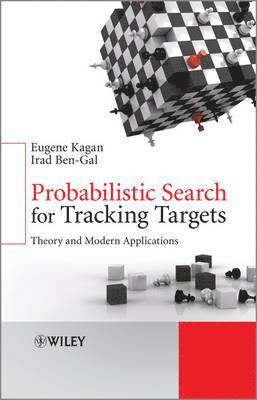
Presents a probabilistic and information-theoretic framework for a search for static or moving targets in discrete time and space.
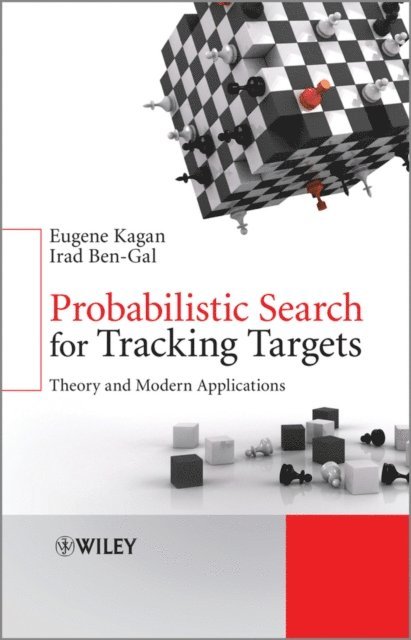
Probabilistic Search for Tracking Targets uses an information-theoretic scheme to present a unified approach for known search methods to allow the development of new algorithms of search. The book addresses search methods under different constraints and assumptions, such as search uncertainty under incomplete information, probabilistic search scheme, observation errors, group testing, search games, distribution of search efforts, single and multiple targets and search agents, as well as online or offline search schemes. The proposed approach is associated with path planning techniques, optimal search algorithms, Markov decision models, decision trees, stochastic local search, artificial intelligence and heuristic information-seeking methods. Furthermore, this book presents novel methods of search for static and moving targets along with practical algorithms of partitioning and search and screening.
Probabilistic Search for Tracking Targets includes complete material for undergraduate and graduate courses in modern applications of probabilistic search, decision-making and group testing, and provides several directions for further research in the search theory.
The authors:
Provide a generalized information-theoretic approach to the problem of real-time search for both static and moving targets over a discrete space. Present a theoretical framework, which covers known information-theoretic algorithms of search, and forms a basis for development and analysis of different algorithms of search over probabilistic space. Use numerous examples of group testing, search and path planning algorithms to illustrate direct implementation in the form of running routines. Consider a relation of the suggested approach with known search theories and methods such as search and screening theory, search games, Markov decision process models of search, data mining methods, coding theory and decision trees. Discuss relevant search applications, such as quality-control search for nonconforming units in a batch or a military search for a hidden target. Provide an accompanying website featuring the algorithms discussed throughout the book, along with practical implementations procedures.1 297 kr
Läs direkt efter köp
Presents a probabilistic and information-theoretic framework for a search for static or moving targets in discrete time and space.
Probabilistic Search for Tracking Targets uses an information-theoretic scheme to present a unified approach for known search methods to allow the development of new algorithms of search. The book addresses search methods under different constraints and assumptions, such as search uncertainty under incomplete information, probabilistic search scheme, observation errors, group testing, search games, distribution of search efforts, single and multiple targets and search agents, as well as online or offline search schemes. The proposed approach is associated with path planning techniques, optimal search algorithms, Markov decision models, decision trees, stochastic local search, artificial intelligence and heuristic information-seeking methods. Furthermore, this book presents novel methods of search for static and moving targets along with practical algorithms of partitioning and search and screening.
Probabilistic Search for Tracking Targets includes complete material for undergraduate and graduate courses in modern applications of probabilistic search, decision-making and group testing, and provides several directions for further research in the search theory.
The authors:
Provide a generalized information-theoretic approach to the problem of real-time search for both static and moving targets over a discrete space. Present a theoretical framework, which covers known information-theoretic algorithms of search, and forms a basis for development and analysis of different algorithms of search over probabilistic space. Use numerous examples of group testing, search and path planning algorithms to illustrate direct implementation in the form of running routines. Consider a relation of the suggested approach with known search theories and methods such as search and screening theory, search games, Markov decision process models of search, data mining methods, coding theory and decision trees. Discuss relevant search applications, such as quality-control search for nonconforming units in a batch or a military search for a hidden target. Provide an accompanying website featuring the algorithms discussed throughout the book, along with practical implementations procedures.1 455 kr
Skickas inom 5-8 vardagar
1 688 kr
Läs direkt efter köp
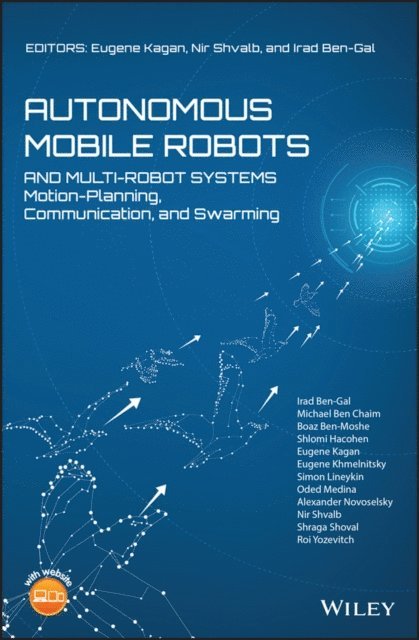
Offers a theoretical and practical guide to the communication and navigation of autonomous mobile robots and multi-robot systems
This book covers the methods and algorithms for the navigation, motion planning, and control of mobile robots acting individually and in groups. It addresses methods of positioning in global and local coordinates systems, off-line and on-line path-planning, sensing and sensors fusion, algorithms of obstacle avoidance, swarming techniques and cooperative behavior. The book includes ready-to-use algorithms, numerical examples and simulations, which can be directly implemented in both simple and advanced mobile robots, and is accompanied by a website hosting codes, videos, and PowerPoint slides
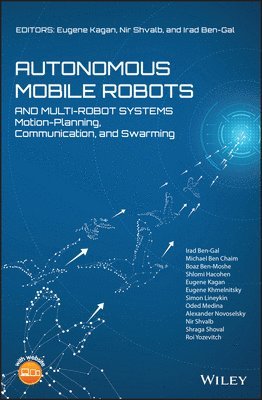
Autonomous Mobile Robots and Multi-Robot Systems: Motion-Planning, Communication and Swarming consists of four main parts. The first looks at the models and algorithms of navigation and motion planning in global coordinates systems with complete information about the robot’s location and velocity. The second part considers the motion of the robots in the potential field, which is defined by the environmental states of the robot''s expectations and knowledge. The robot''s motion in the unknown environments and the corresponding tasks of environment mapping using sensed information is covered in the third part. The fourth part deals with the multi-robot systems and swarm dynamics in two and three dimensions.
Provides a self-contained, theoretical guide to understanding mobile robot control and navigation Features implementable algorithms, numerical examples, and simulations Includes coverage of models of motion in global and local coordinates systems with and without direct communication between the robots Supplemented by a companion website offering codes, videos, and PowerPoint slidesAutonomous Mobile Robots and Multi-Robot Systems: Motion-Planning, Communication and Swarming is an excellent tool for researchers, lecturers, senior undergraduate and graduate students, and engineers dealing with mobile robots and related issues.
1 692 kr
Läs direkt efter köp
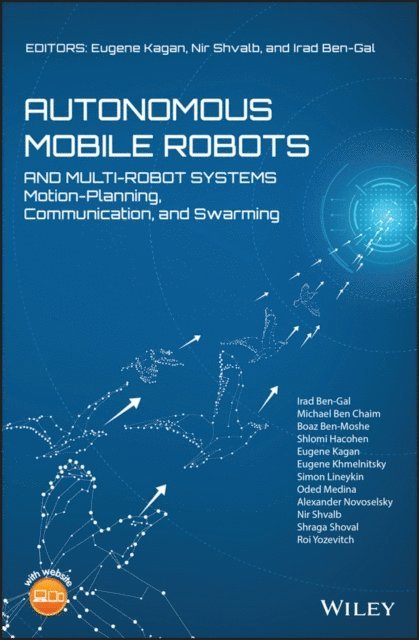
Offers a theoretical and practical guide to the communication and navigation of autonomous mobile robots and multi-robot systems
This book covers the methods and algorithms for the navigation, motion planning, and control of mobile robots acting individually and in groups. It addresses methods of positioning in global and local coordinates systems, off-line and on-line path-planning, sensing and sensors fusion, algorithms of obstacle avoidance, swarming techniques and cooperative behavior. The book includes ready-to-use algorithms, numerical examples and simulations, which can be directly implemented in both simple and advanced mobile robots, and is accompanied by a website hosting codes, videos, and PowerPoint slides
Autonomous Mobile Robots and Multi-Robot Systems: Motion-Planning, Communication and Swarming consists of four main parts. The first looks at the models and algorithms of navigation and motion planning in global coordinates systems with complete information about the robot’s location and velocity. The second part considers the motion of the robots in the potential field, which is defined by the environmental states of the robot''s expectations and knowledge. The robot''s motion in the unknown environments and the corresponding tasks of environment mapping using sensed information is covered in the third part. The fourth part deals with the multi-robot systems and swarm dynamics in two and three dimensions.
Provides a self-contained, theoretical guide to understanding mobile robot control and navigation Features implementable algorithms, numerical examples, and simulations Includes coverage of models of motion in global and local coordinates systems with and without direct communication between the robots Supplemented by a companion website offering codes, videos, and PowerPoint slidesAutonomous Mobile Robots and Multi-Robot Systems: Motion-Planning, Communication and Swarming is an excellent tool for researchers, lecturers, senior undergraduate and graduate students, and engineers dealing with mobile robots and related issues.
2 696 kr
Skickas inom 10-15 vardagar
861 kr
Tillfälligt slut