Eugene P. Trani - Böcker
Visar alla böcker från författaren Eugene P. Trani. Handla med fri frakt och snabb leverans.
7 produkter
7 produkter
610 kr
Skickas inom 10-15 vardagar
358 kr
Skickas inom 3-6 vardagar
Theodore Roosevelt's interest in foreign affairs was no less intense than his zeal for domestic reform, as Eugene P. Trani demonstrates in this new study of the Portsmouth Conference which in 1906 brought an end to the Russo-Japanese war.Conscious of America's growing stature as a world power and concerned lest continued hostilities disrupt further the political and economic composition of East Asia, Roosevelt proclaimed himself peacemaker. With characteristic energy -- and with considerable tact -- he initiated the conference and successfully brought about a treaty. It was no easy task. Trani, who has made extensive use of Russian, Japanese, and American archival material, shows that the Tsarist government, mortified by Russian defeats, wished to renew the conflict. This last of the personally managed peace conferences greatly enhanced the prestige of both the United States and its ebullient chief executive.
Distorted Mirrors
Americans and Their Relations with Russia and China in the Twentieth Century
Inbunden, Engelska, 2009
485 kr
Skickas inom 7-10 vardagar
As the United States enters the twenty-first century, it confronts two powers that loomed less large on the world stage a century before. Yet American policies toward Russia and China have been shaped by attitudes going back even further, as this new book relates. ""Distorted Mirrors"" traces American prejudices toward the two countries by focusing on the views of influential writers and politicians over the course of the twentieth century. Donald Davis and Eugene Trani show where American images of Russia and China originated, how they evolved, and how they have often helped sustain foreign policies generally negative toward the former and positive toward the latter. This wide-ranging survey draws on memoirs, archives, and interviews, much of it appearing in print for the first time, to show how influential individuals shaped these perceptions and policies based on what they saw - or thought they saw - in those two countries.Through a series of tableaux that traces America's relations with Russia and China through the twentieth century, the authors show how the personalities of certain players impacted the interpretation of key situations and conflicts and how cultural attitudes toward Russia and China became ingrained and difficult to dislodge. The book traces formative attitudes back to two late-nineteenth-century books, with George Kennan's ""Siberia and the Exile System"" painting a grim picture of tsarist penal colonies and William Rockhill's ""Land of the Lamas"" depicting China as an exotic Shangri-la.Davis and Trani show how these images were sustained over the years: for Russia, by Slavic expert Samuel Harper, State Department official Robert Kelley, journalist Eugene Lyons, ambassador William Bullitt, President Franklin D. Roosevelt, and policymakers George F. Kennan and Paul Nitze; and for China, by President Woodrow Wilson, philosopher John Dewey, journalist Edgar Snow, novelist Pearl S. Buck, ambassador Nelson T. Johnson, FDR, journalist Theodore White, and statesman Henry Kissinger. They also relate how Ronald Reagan and George H. W. Bush tried to replace these misconceptions with a policy of accommodation, and they assess the state of current U.S. attitudes and policies.""Distorted Mirrors"" marks a fresh approach to U.S. relations with these countries, emphasizing long-term attitudes that influenced policies rather than the reverse. It shows us that perceptions shaped over the course of the twentieth century are crucial for their bearing on the twenty-first, particularly if those unrestrained prejudices reemerge.
378 kr
Skickas inom 11-20 vardagar
1 161 kr
Skickas inom 3-6 vardagar
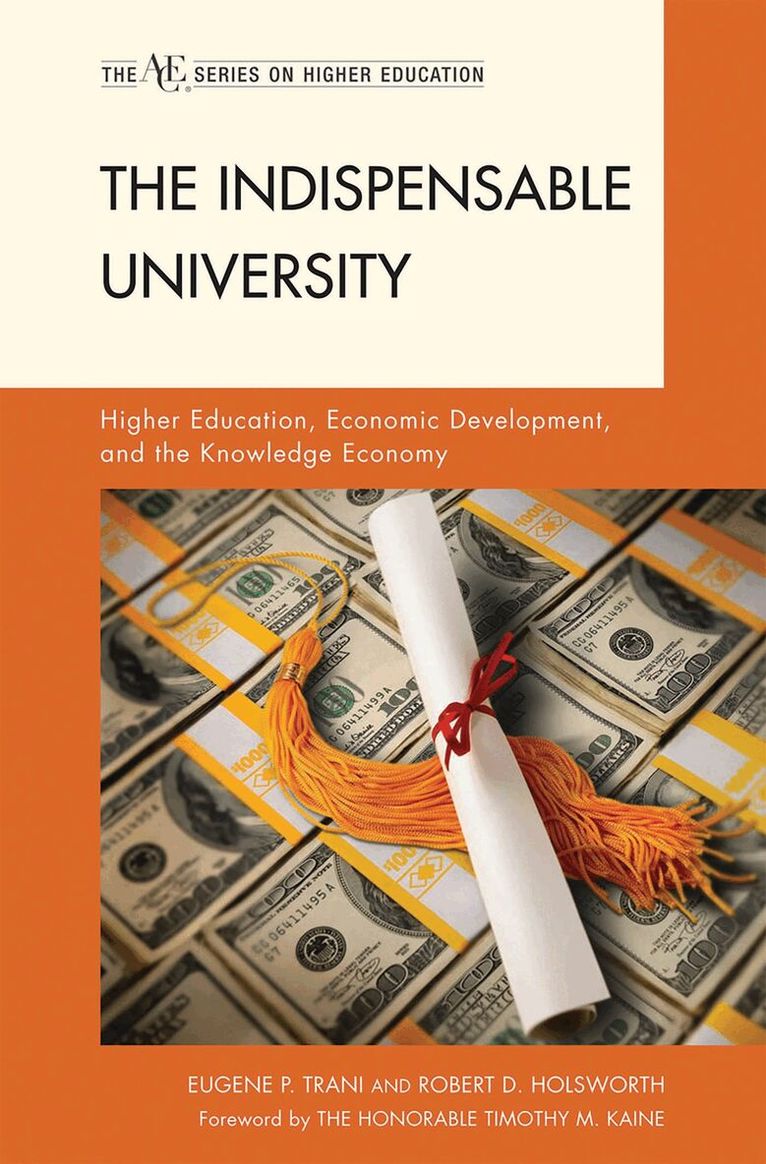
Indispensable University
Higher Education, Economic Development, and the Knowledge Economy
Häftad, Engelska, 2013
552 kr
Skickas inom 10-15 vardagar
The Indispensable University describes the innovative transformation of institutions of higher education (HEIs) across the world, in response to the emerging realities of the twenty-first century global knowledge-based economy, as well as describes how HEIs are defining many of today's economic realities on a regional level. HEIs continue to drive economic development through their traditional roles of purchaser, employer, real estate developer, workforce developer and community developer. But these roles now must be executed more strategically and collaboratively. Also, the twenty-first century economy offers universities unique opportunities to generate the intellectual and financial capital that drives emerging knowledge-based industries.Case studies are drawn from: urban America; rural America; Europe; the Middle East; and emerging countries. Some of the topics covered include the following: the role of university presidents as change leaders; the relationship between higher education institutions and the political leadership of cities, states, and nations; successful models of partnerships between higher education and the private sector; and future challenges and opportunities facing the modern university.
Indispensable University
Higher Education, Economic Development, and the Knowledge Economy
Inbunden, Engelska, 2010
1 045 kr
Skickas inom 10-15 vardagar
The Indispensable University describes the innovative transformation of institutions of higher education (HEIs) across the world, in response to the emerging realities of the twenty-first century global knowledge-based economy, as well as describes how HEIs are defining many of today's economic realities on a regional level. HEIs continue to drive economic development through their traditional roles of purchaser, employer, real estate developer, workforce developer and community developer. But these roles now must be executed more strategically and collaboratively. Also, the twenty-first century economy offers universities unique opportunities to generate the intellectual and financial capital that drives emerging knowledge-based industries.Case studies are drawn from: urban America; rural America; Europe; the Middle East; and emerging countries. Some of the topics covered include the following: the role of university presidents as change leaders; the relationship between higher education institutions and the political leadership of cities, states, and nations; successful models of partnerships between higher education and the private sector; and future challenges and opportunities facing the modern university.