Eugene Rabinowitch – författare
Visar alla böcker från författaren Eugene Rabinowitch. Handla med fri frakt och snabb leverans.
3 produkter
3 produkter
E-bok
PDF, Engelska, 2013763 kr
Läs direkt efter köp
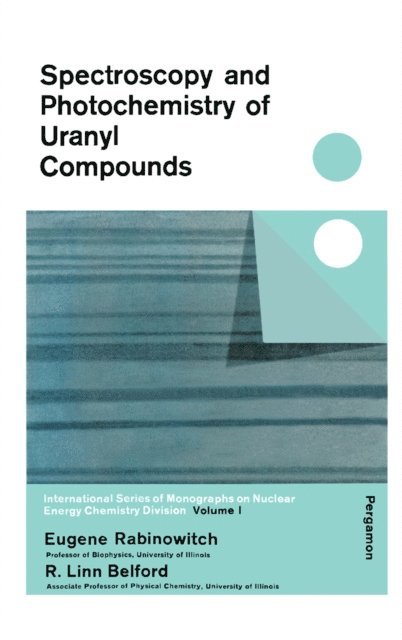
Spectroscopy and Photochemistry of Uranyl Compounds is a guide to the research and physics of the actinide elements, particularly the uranyl ion. The book is introduced with the subject of the spectroscopy of uranyl salts in the solid state. Studies dealing with the fluorescence and absorption spectra of solid uranyl salts through band measurements and empirical classification, term analysis, and fluorescence spectrum in relation to excitation by light of various wavelengths are then discussed. The book also mentions the analysis of the uranyl spectrum by Dieke and co-workers, because of the precise measurements of the fluorescence and absorption bands obtained under the Manhattan project. The table determined by Pant and Sakhwalkar in their study of the florescence spectrum of solid, hydrated uranyl fluoride at -185 degrees centigrade is presented. The text also discusses the theory of electronic structure and spectra of the uranyl ion. The spectroscopy of uranyl compounds in solution and the uranyl fluorescence intensity and decay are then presented. The book then explains the process of measuring the intensity of slowly decaying florescence of uranyl salts. The primary photochemical reactions in uranyl compounds are found to be slow, giving rise to many secondary thermal reactions that may be unwanted. Researchers in the fields of chemistry and physics working on actinide elements will find this collection of monographs invaluable.
E-bok
PDF, Engelska, 2012708 kr
Läs direkt efter köp
AFTER THE LUNAR LANDING Our concern in this volume is the impact upon science, technology and international cooperation of man''s emer gence from the "cradle," the biosphere of Earth, to visit the surface of another planet. The editors invited experts in the physical and social sciences who had been think ing, talking and writing about space programs for a long time. Some had been critical of manned space flight, its motives and its costs. Some have been or are currently involved in Project Apollo. Some had not committed themselves to value judgments but were fascinated by probable results. In general, the authors regard the moon landing as a climactic event in man''s evolution. Sir Bernard Lovell is likely to have a cataclysmic effect on society suggests it and that an international effort should be mounted to send men to Mars in the 1980s. The question of how Project Apollo relates to a scheme of priorities which takes into account such needs as housing, health, pollution and the problems of urbaniza tion enters the discussion from several points of view. Eugene Rabinowitch suggests that Apollo may stimulate the development of a system of establishing national priorities in the application of the nation''s resources. Freeman Dyson, on the other hand, does not believe that ix PREFACE x any "hierarchy of committees" can devise an accepted order of priorities.
Häftad, Engelska, 2012
566 kr
Skickas inom 10-15 vardagar
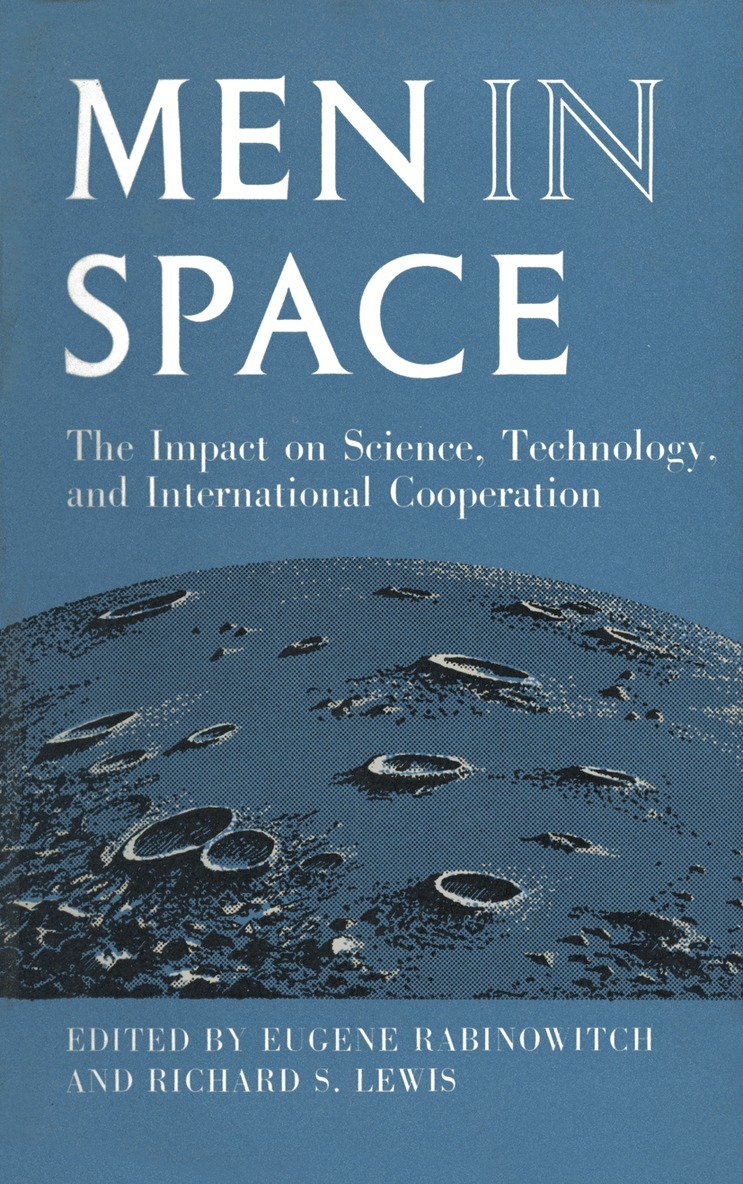
AFTER THE LUNAR LANDING Our concern in this volume is the impact upon science, technology and international cooperation of man's emer gence from the "cradle," the biosphere of Earth, to visit the surface of another planet. The editors invited experts in the physical and social sciences who had been think ing, talking and writing about space programs for a long time. Some had been critical of manned space flight, its motives and its costs. Some have been or are currently involved in Project Apollo. Some had not committed themselves to value judgments but were fascinated by probable results. In general, the authors regard the moon landing as a climactic event in man's evolution. Sir Bernard Lovell is likely to have a cataclysmic effect on society suggests it and that an international effort should be mounted to send men to Mars in the 1980s. The question of how Project Apollo relates to a scheme of priorities which takes into account such needs as housing, health, pollution and the problems of urbaniza tion enters the discussion from several points of view. Eugene Rabinowitch suggests that Apollo may stimulate the development of a system of establishing national priorities in the application of the nation's resources. Freeman Dyson, on the other hand, does not believe that ix PREFACE x any "hierarchy of committees" can devise an accepted order of priorities.