Eugenia V. Buzaneva – författare
Visar alla böcker från författaren Eugenia V. Buzaneva. Handla med fri frakt och snabb leverans.
10 produkter
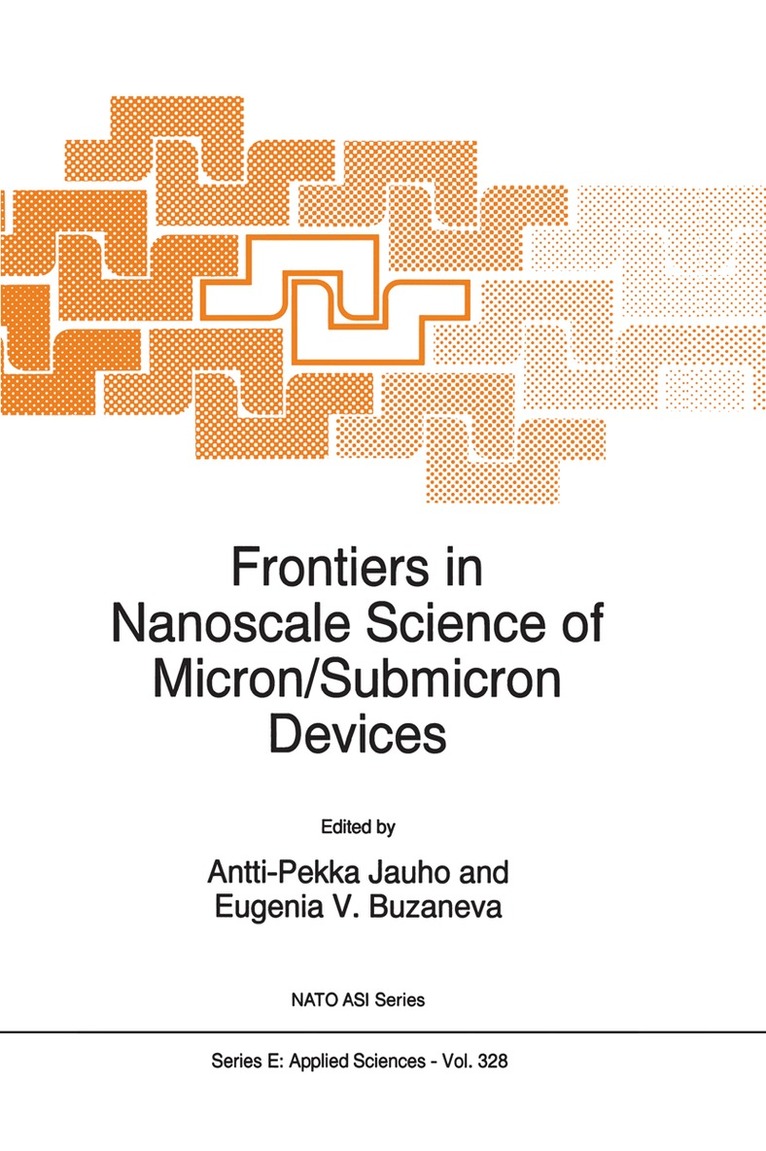
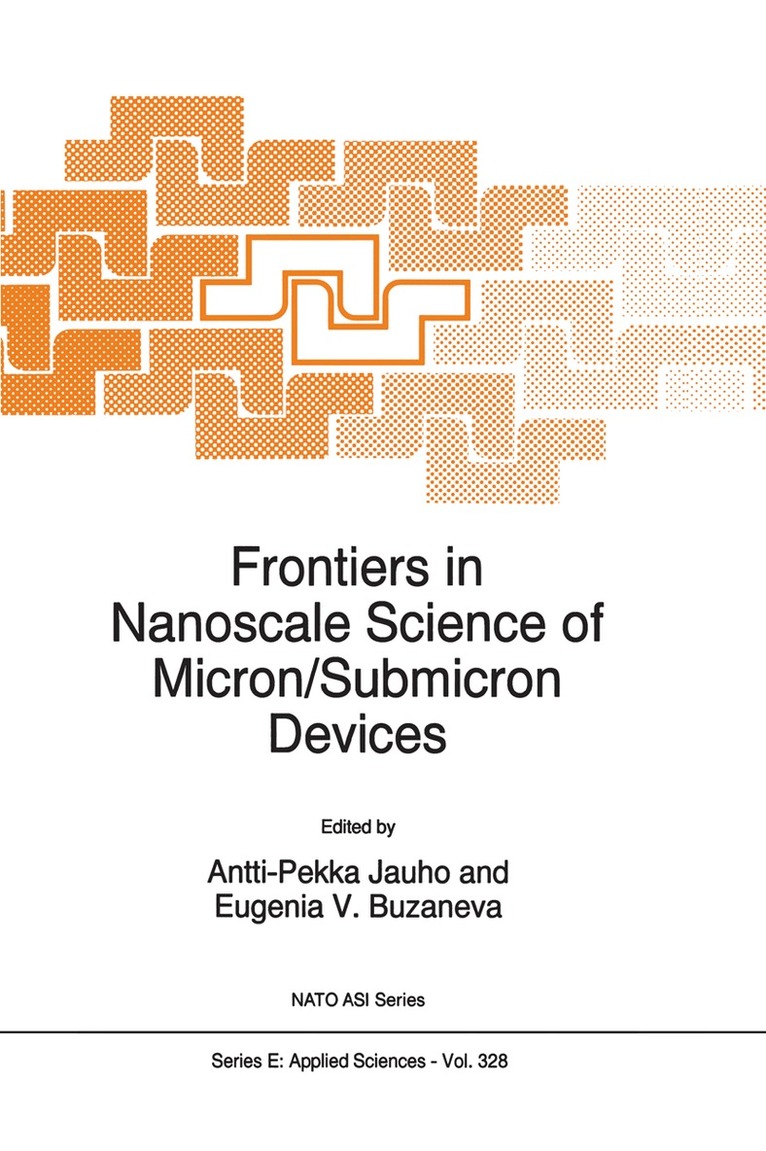
Frontiers in Nanoscale Science of Micron/Submicron Devices
Av Anti-Pekka Jauho, Antti-Pekka Jauho m. fl.
Inbunden, 1996
3267 kr
Lägg i varukorg
Nanoscale Science, whose birth and further growth and development has been driven by the needs of the microelectronics industry on one hand, and by the sheer human curiosity on the other hand, has given researchers an unprecedented capability to design and construct devices whose function ality is …
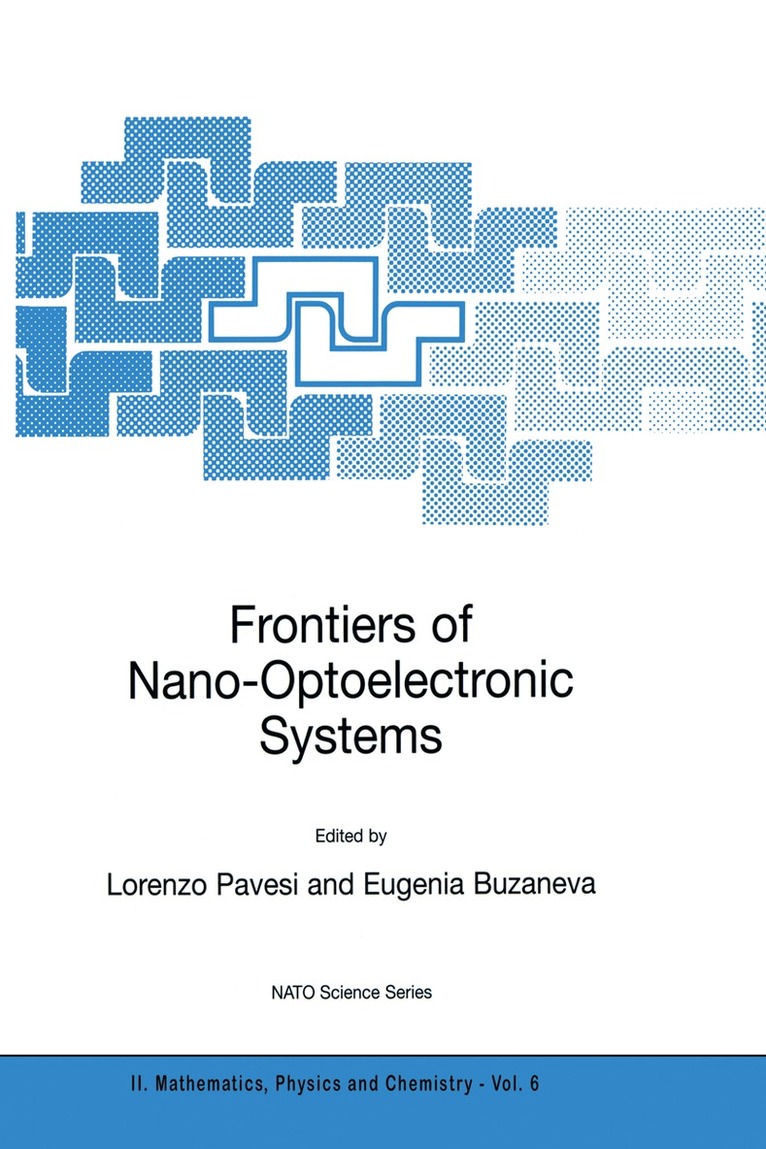
Frontiers of Nano-Optoelectronic Systems
Av Lorenzo Pavesi, Eugenia V. Buzaneva
Inbunden, 2000
1094 kr
Lägg i varukorg
This text points out directions for future research in such different subjects as photonic band gap crystals, semiconductor quantum dot and wire lasers, silicon optoelectronics, carbon-based nanostructure physics, polymer based nano-composite and quantum wires, DNA nano-technology and silicon …
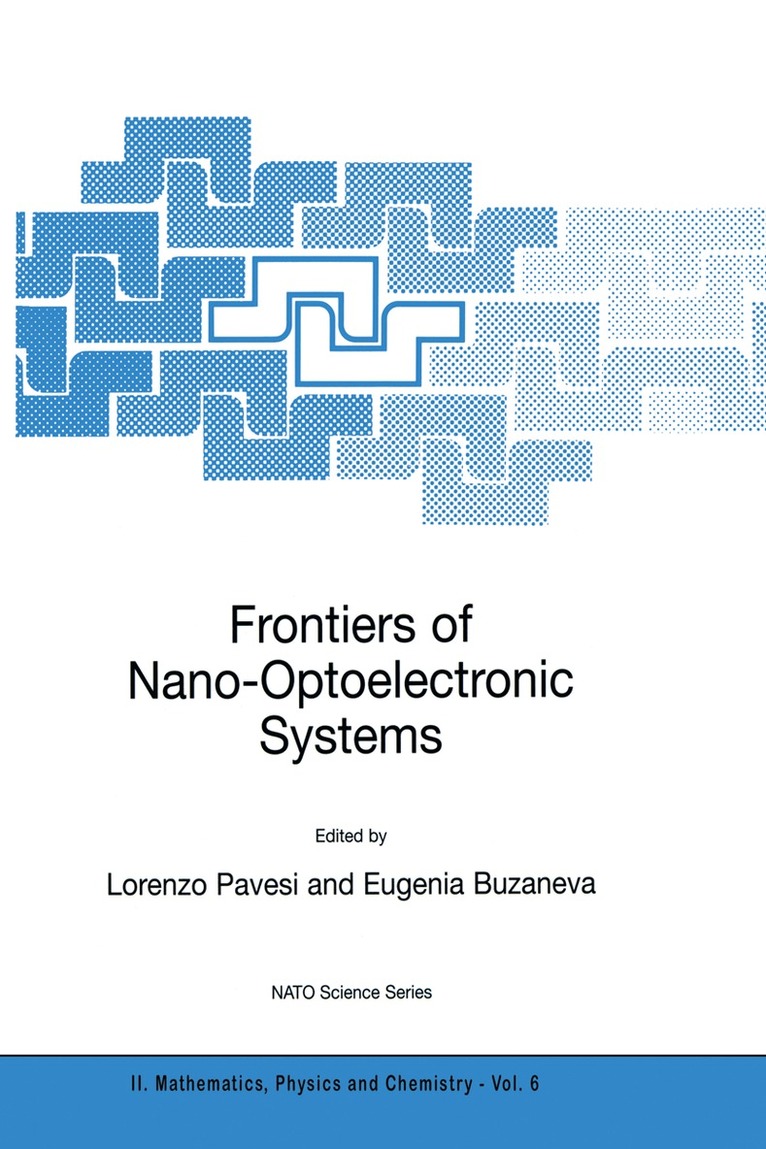
Frontiers of Nano-Optoelectronic Systems
Av Lorenzo Pavesi, Eugenia V. Buzaneva
Häftad, 2000
1094 kr
Lägg i varukorg
Since their discovery, low dimensional materials have never stopped to intrigue scientists, whether they are physicists, chemists, or biochemists. Investigations of their nature and functions have always been and still are numerous and as soon as a solution is found for a given question, another …
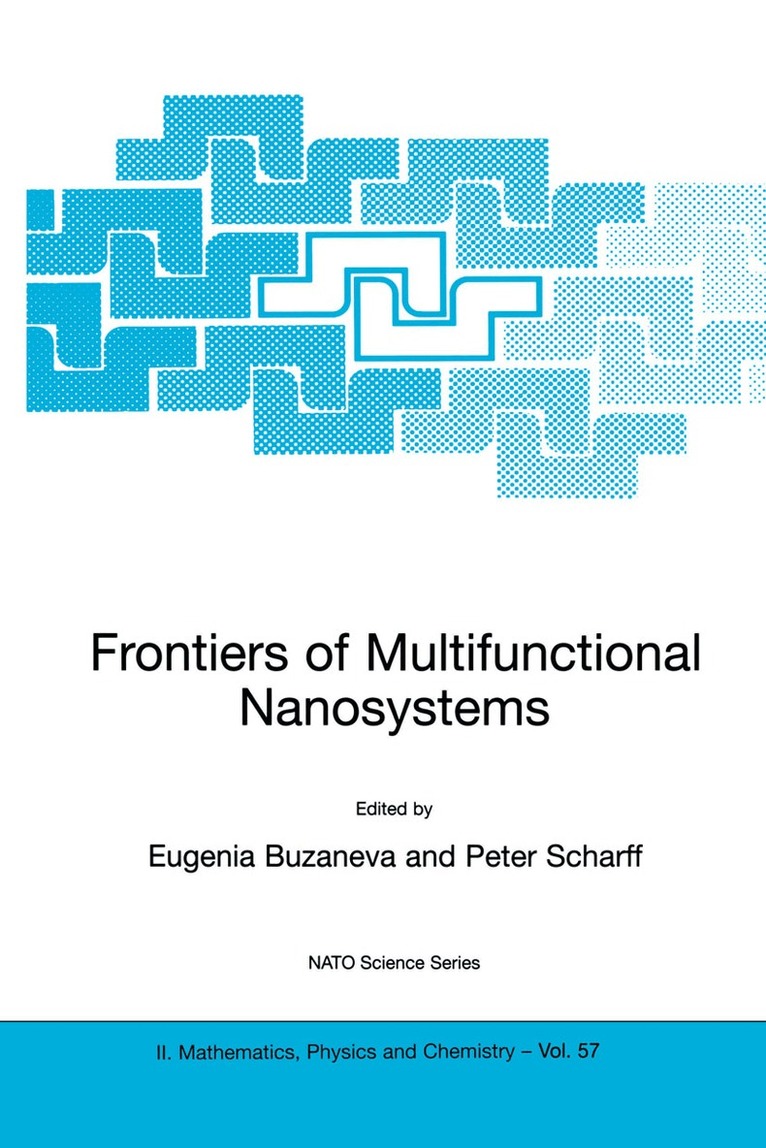
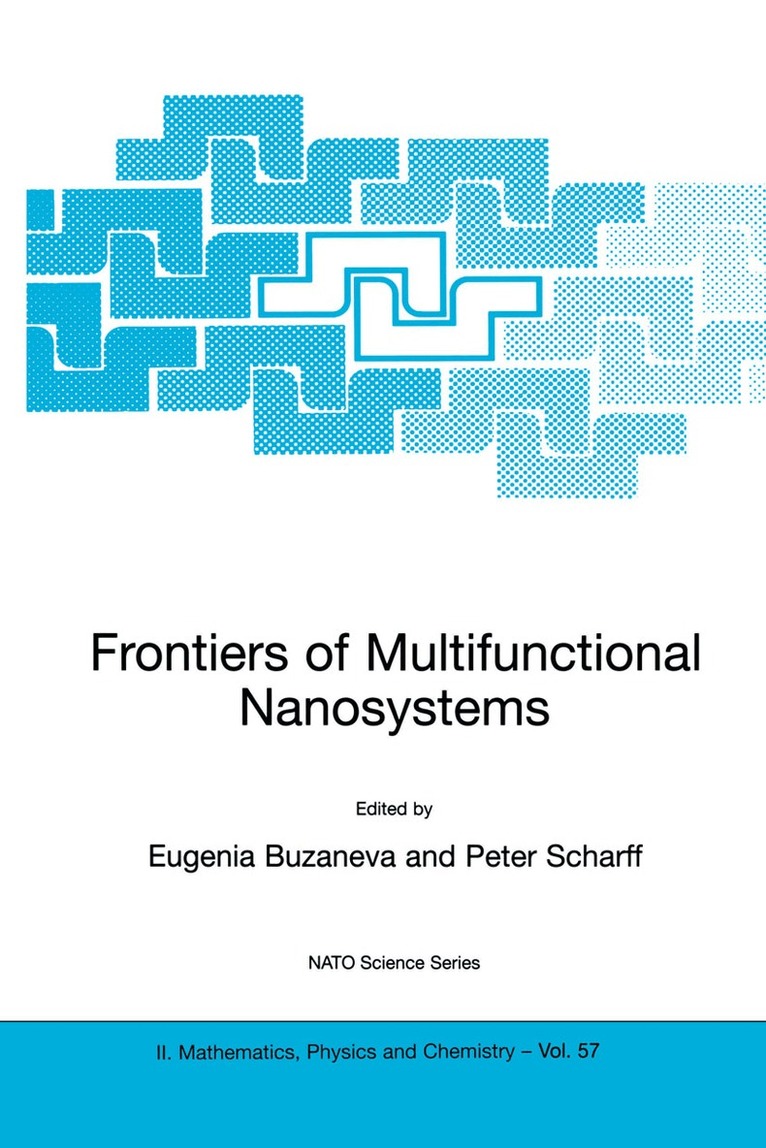
Frontiers of Multifunctional Nanosystems
Av Eugenia V. Buzaneva, Peter Scharff
Inbunden, 2002
1639 kr
Lägg i varukorg
General routes to the development of innovative, multi functional nanosystems are described by experts in the field. The systems described are based on fullerenes, nanotubes, metals (Au, Ag, Pt, etc.) and semiconductors (Si, CdS, CdTe, metal oxides), nanocrystals and polymer / biopolymer assembly …
Frontiers of Multifunctional Nanosystems
Av Eugenia V. Buzaneva, Peter Scharff
Häftad, 2002
1639 kr
Lägg i varukorg
General routes to the development of innovative, multi functional nanosystems are described by experts in the field. The systems described are based on fullerenes, nanotubes, metals (Au, Ag, Pt, etc.) and semiconductors (Si, CdS, CdTe, metal oxides), nanocrystals and polymer / biopolymer assembly …
Frontiers of Multifunctional Integrated Nanosystems
Proceedings of the NATO ARW on Frontiers of Molecular-scale Science and Technology of Nanocarbon, Nanosilicon and Biopolymer Integrated Nanosystems,Ilmenau, Germany from 12 to 16 July 2003
Av Eugenia V. Buzaneva, Peter Scharff
Inbunden, 2004
3271 kr
Lägg i varukorg
A compendium of novel information on molecular-scale science and the application of nanocarbon, nanosilicon and biopolymer integrated nanosystems. During the 20th century, molecular-scale science and nanotechnology developed rapidly, leading to the construction of innovative materials - nanosystens …
Frontiers of Multifunctional Integrated Nanosystems
Proceedings of the NATO ARW on Frontiers of Molecular-scale Science and Technology of Nanocarbon, Nanosilicon and Biopolymer Integrated Nanosystems,Ilmenau, Germany from 12 to 16 July 2003
Av Eugenia V. Buzaneva, Peter Scharff
Häftad, 2004
3271 kr
Lägg i varukorg
A compendium of novel information on molecular-scale science and the application of nanocarbon, nanosilicon and biopolymer integrated nanosystems. During the 20th century, molecular-scale science and nanotechnology developed rapidly, leading to the construction of innovative materials - nanosystens …
Frontiers of Multifunctional Nanosystems
Av Peter Scharff, Eugenia V. Buzaneva
E-bok, 2012
2111 kr
Lägg i varukorg
Frontiers of Nano-Optoelectronic Systems
Av Eugenia V. Buzaneva, Lorenzo Pavesi
E-bok, 2012
1413 kr
Lägg i varukorg
Since their discovery, low dimensional materials have never stopped to intrigue scientists, whether they are physicists, chemists, or biochemists. Investigations of their nature and functions have always been and still are numerous and as soon as a solution is found for a given question, another …
Frontiers in Nanoscale Science of Micron/Submicron Devices
Av A.-P. Jauho, Eugenia V. Buzaneva
Häftad, 2011
3271 kr
Lägg i varukorg
Nanoscale Science, whose birth and further growth and development has been driven by the needs of the microelectronics industry on one hand, and by the sheer human curiosity on the other hand, has given researchers an unprecedented capability to design and construct devices whose function ality is …