Eve Derenne – författare
Visar alla böcker från författaren Eve Derenne. Handla med fri frakt och snabb leverans.
2 produkter
2 produkter
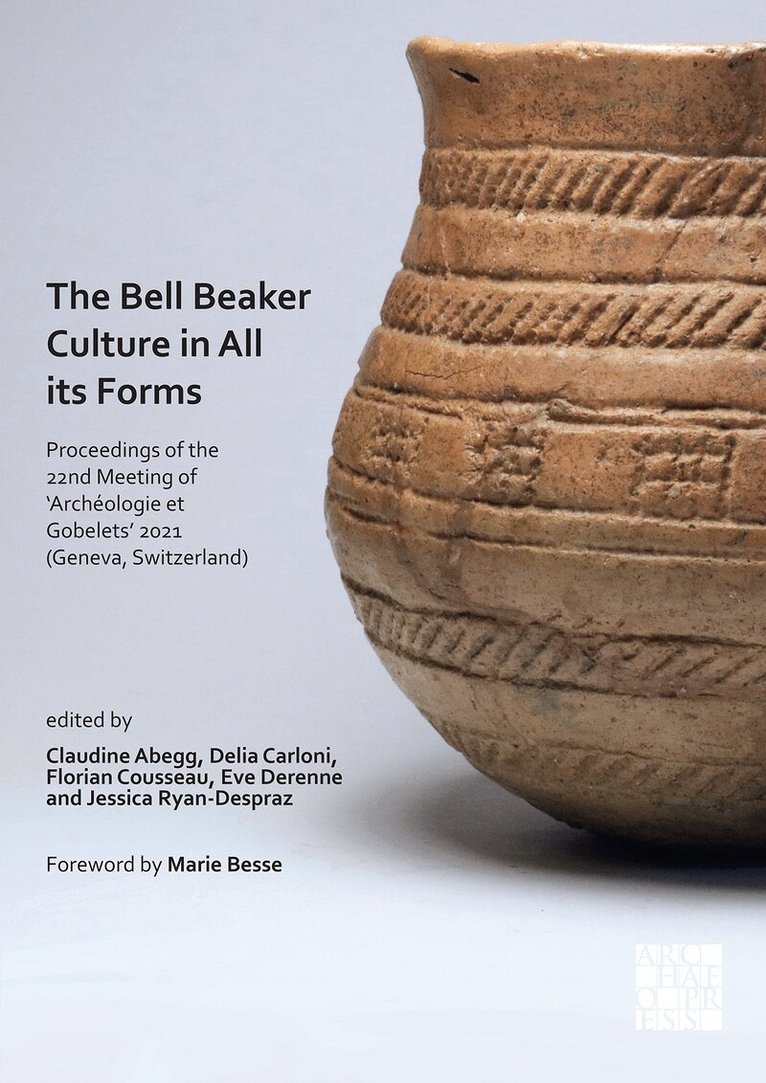
Bell Beaker Culture in All Its Forms
Proceedings of the 22nd Meeting of ‘Archéologie et Gobelets’ 2021 (Geneva, Switzerland)
Häftad, Engelska, 2022
785 kr
Skickas
The Bell Beaker Culture in All its Forms contains the proceedings of the 22nd meeting of the ‘Archéologie et Gobelets’ Association which took place in Geneva, Switzerland in January 2021. The book is structured in three parts: Archaeological Material demonstrates how ceramics, lithics, wrist guards, and metal artifacts contribute to our understanding of the Bell Beaker Culture. Funerary Archaeology and Anthropology considers how the particular context of death and the human skeleton can be employed to gain information on Bell Beaker populations. The final section, Reconstructing Bell Beaker Society, builds upon archaeological evidence to discuss site interpretations as well as the wide-reaching topics of ritual, culture, and symbolism. With the publication of these proceedings, it is hoped that the conference interactions can facilitate future research and discussions on Bell Beaker societies and their roles within Neolithic Europe and beyond.
760 kr
Kommande
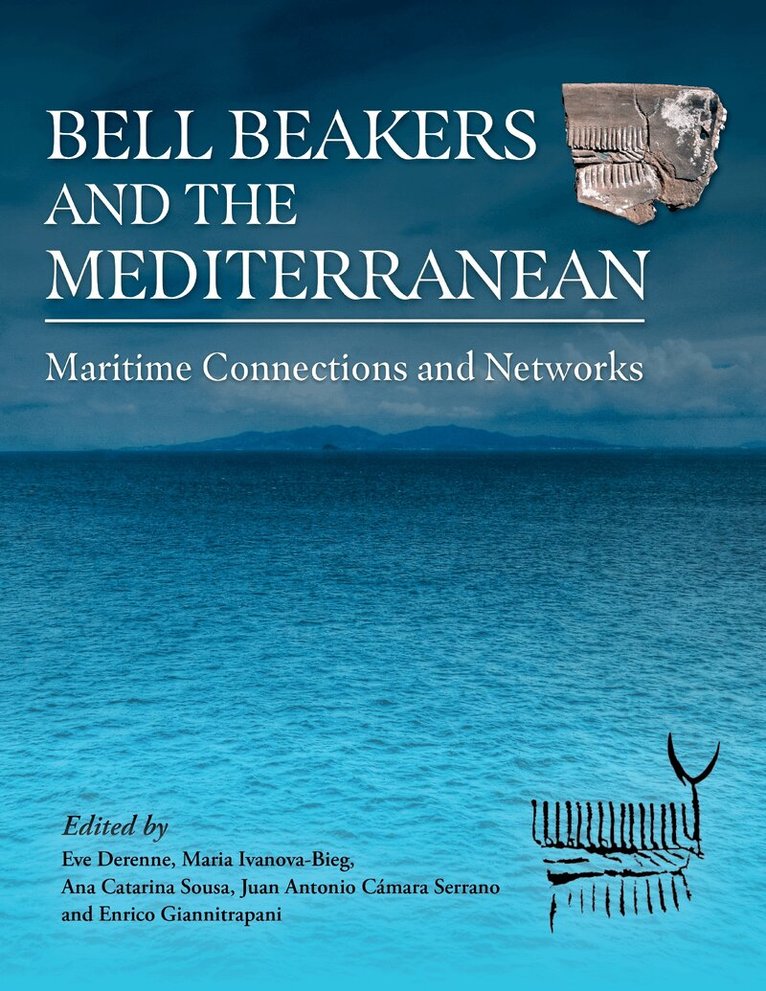
The late 4th and 3rd millennium BCE saw the development of new long-distance maritime networks around the Mediterranean. During this late Chalcolithic phase, the ‘mental mapping’ of the Mediterranean as a maritime space reached a critical stage, the influx of new people and cultural traits, combined with a boom in seaborne exchange, meant that the western and central Mediterranean became integrated into a large maritime cultural area. Circulation routes seem to have expanded remarkably after 2500 cal BCE, enabling large-scale cultural phenomena such as the Bell Beaker complex to spread across the Mediterranean and integrate a variety of local Chalcolithic groups, both on islands and in coastal or mainland areas. These large-scale networks of interaction foreshadowed the emergence of major Mediterranean civilisations in the next millennium.Noting that this topic had not been the subject of scholarly discussions in recent years, even though recent archaeological discoveries and analytical developments offered new opportunities to investigate these issues, the co-editors of this volume organised a session at the 2024 international conference of the European Association of Archaeologists in Rome. Their aim was to examine the origins and dynamics of Bell Beaker connections across the Mediterranean, be it in terms of material culture, subsistence strategies, technology, human-environment relationships, absolute chronology, genomic ancestry or isotopic provenance. This resulting volume is a coherent collection of papers covering the entire western and central Mediterranean, including coastal Maghreb, the Balearic Islands, Sardinia and Sicily. The chapters present a wide variety of scales, methodological approaches and sub-topics ranging from site-based to supra-regional studies, typological and technological approaches, network analyses, computational modelling, but also raw material, isotopic and palaeogenomic data, and touch on themes such as mobility patterns, local integration, power display, exchange networks, luxury and exotic goods consumption, metallurgy and the emergence of social complexity. Some focus solely on Bell Beaker contexts, others discuss the relationships between the traditions of the preceding Chalcolithic societies and the Bell Beaker phenomenon, or the ties the latter shared with the Bronze Age groups that followed it.Together, these contributions demonstrate the dynamic interplay of cultural, social and technological factors that shaped the Mediterranean during the late 4th–early 2nd millennia BCE. By integrating diverse lines of evidence and a wide array of methodological approaches, this volume not only provides a nuanced understanding of Bell Beaker networks and their integration with local Chalcolithic societies but also sheds light on the precursors to the major Mediterranean civilisations of the Bronze Age. The volume aims to stimulate further research and dialogue on these transformative centuries, bridging gaps in the scholarly discourse and setting a foundation for future interdisciplinary investigations.