Eve Levin – författare
Visar alla böcker från författaren Eve Levin. Handla med fri frakt och snabb leverans.
4 produkter
4 produkter
654 kr
Skickas inom 10-15 vardagar
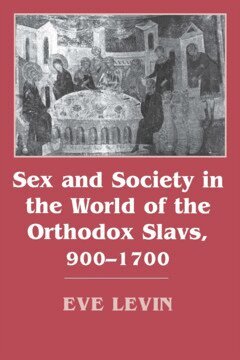
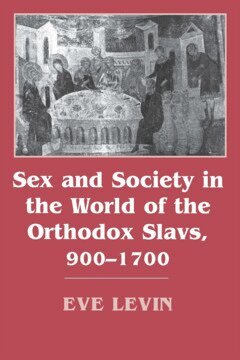
In this pioneering book, Eve Levin explores sexual behavior among the peoples of Serbia, Bulgaria, and Russia from their conversion to Christianity in the ninth and tenth centuries until the end of the seventeenth century. By ranging across all these societies, Levin is able to fulfill three basic aims: to delineate the general character of sexuality among the Orthodox Slavs, to enrich that account by drawing our attention to regional variations in the sexual mores of these peoples, and to draw suggestive comparisons between the world of the medieval Orthodox Slavs and their contemporaries in the Latin West.Levin begins with a study of the ecclesiastical image of sexuality as expressed in didactic and literary texts, showing that the Orthodox Church was deeply suspicious of sexuality. Her second chapter, on canon law and marfiage, examines the conditions for marriage, divorce, and remarriage, the obligation of the conjugal relationship, and the impact of these rules on social order. Levin looks at church regulations concerning sexual relations among relatives by blood, marriage, spiritual kinship, and adoption in Chapter Three, and she devotes Chapter Four to prohibited sexual practices, both inside and outside of marriage. In the fifth chapter she studies Russian and South Slavic responses to rape, and demonstrates that these societies simultaneously censured violence against women and sanctioned the attitudes and social structures that justified it. Chapter Six deals with the rules on sexual conduct for the clergy, whose job it was to enforce sexual precepts. Throughout her work, Levin argues that, despite its conviction that sexual expression was diabolical, the medieval Orthodox Church approached sexual matters in a surprisingly practical way; its official sexual ethic corresponded to a great degree with popular views.Historians of the Slavic world, both medieval and modern, will welcome this accessible study. It should also attract comparativists who work in such fields as church history, the history of women and the family, and the history of sexuality.
406 kr
Skickas inom 10-15 vardagar
In this pioneering book, Eve Levin explores sexual behavior among the peoples of Serbia, Bulgaria, and Russia from their conversion to Christianity in the ninth and tenth centuries until the end of the seventeenth century. By ranging across all these societies, Levin is able to fulfill three basic aims: to delineate the general character of sexuality among the Orthodox Slavs, to enrich that account by drawing our attention to regional variations in the sexual mores of these peoples, and to draw suggestive comparisons between the world of the medieval Orthodox Slavs and their contemporaries in the Latin West.Levin begins with a study of the ecclesiastical image of sexuality as expressed in didactic and literary texts, showing that the Orthodox Church was deeply suspicious of sexuality. Her second chapter, on canon law and marfiage, examines the conditions for marriage, divorce, and remarriage, the obligation of the conjugal relationship, and the impact of these rules on social order. Levin looks at church regulations concerning sexual relations among relatives by blood, marriage, spiritual kinship, and adoption in Chapter Three, and she devotes Chapter Four to prohibited sexual practices, both inside and outside of marriage. In the fifth chapter she studies Russian and South Slavic responses to rape, and demonstrates that these societies simultaneously censured violence against women and sanctioned the attitudes and social structures that justified it. Chapter Six deals with the rules on sexual conduct for the clergy, whose job it was to enforce sexual precepts. Throughout her work, Levin argues that, despite its conviction that sexual expression was diabolical, the medieval Orthodox Church approached sexual matters in a surprisingly practical way; its official sexual ethic corresponded to a great degree with popular views.Historians of the Slavic world, both medieval and modern, will welcome this accessible study. It should also attract comparativists who work in such fields as church history, the history of women and the family, and the history of sexuality.
2 793 kr
Skickas inom 3-6 vardagar
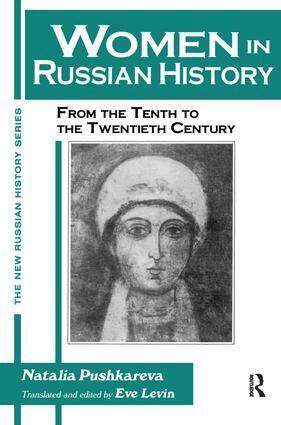
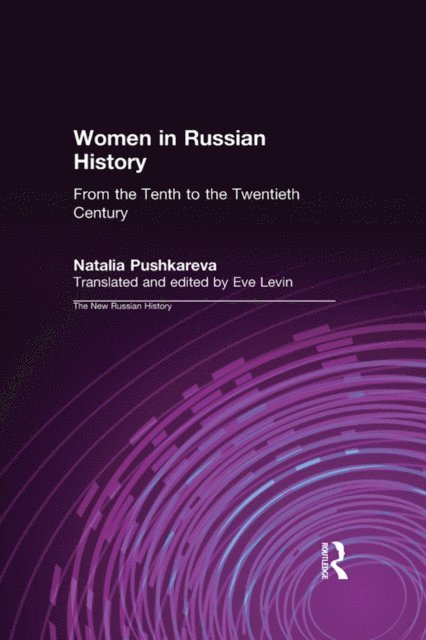
As the first survey of the history of women in Russia to be published in any language, this book is itself an historic event -- the result of the collaboration of the leading Russian and American specialists on Russian women's history. The book is divided in to four chronological parts corresponding to eras of Russian history: (I) Kievan/Mongol (10th - 15th centuries); (II) Muscovite ( 16th - 17th centuries); (III) 18th century; and (IV) 19th - early 20th centuries.Each part gives coverage to four main topics: (1) The role of prominent women in public life, with biographical sketches of women who attained prominence in political or cultural life; (2) Women's daily life and family roles; (3) Women's status under the law; (4) Material culture and in particular women's dress as an expression of their place in society.
581 kr
Skickas inom 10-15 vardagar
As the first survey of the history of women in Russia to be published in any language, this book is itself an historic event -- the result of the collaboration of the leading Russian and American specialists on Russian women's history. The book is divided in to four chronological parts corresponding to eras of Russian history: (I) Kievan/Mongol (10th - 15th centuries); (II) Muscovite ( 16th - 17th centuries); (III) 18th century; and (IV) 19th - early 20th centuries.Each part gives coverage to four main topics: (1) The role of prominent women in public life, with biographical sketches of women who attained prominence in political or cultural life; (2) Women's daily life and family roles; (3) Women's status under the law; (4) Material culture and in particular women's dress as an expression of their place in society.