Eve Sweetser – författare
Visar alla böcker från författaren Eve Sweetser. Handla med fri frakt och snabb leverans.
14 produkter
Spaces, Worlds, and Grammar
Av Gilles Fauconnier, Eve Sweetser
Häftad, 1996
388 kr
Lägg i varukorg
In the mental-spaces framework developed by Gilles Fauconnier in the mid-1980s, the mind creates multiple cognitive "spaces" to mediate its understanding of relations and activities in the world, and to engage in creative thought. These 12 original papers extend the mental-spaces framework and …
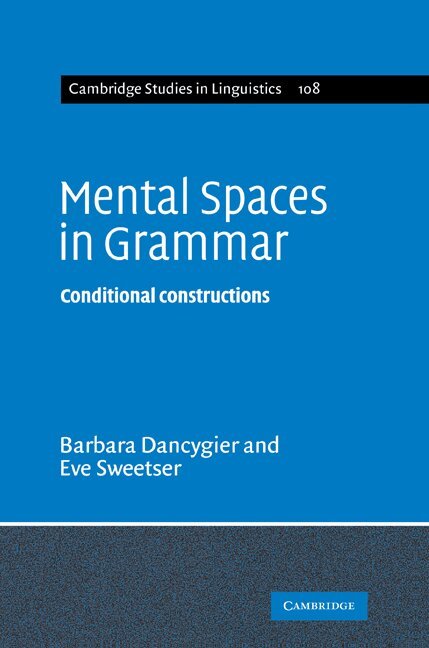
Mental Spaces in Grammar
Conditional Constructions
Av Barbara Dancygier, Eve Sweetser
Häftad, 2009
721 kr
Lägg i varukorg
Conditional constructions have long fascinated linguists, grammarians and philosophers. In this pioneering new study, Barbara Dancygier and Eve Sweetser offer a new descriptive framework for the study of conditionality, broadening the range of richly described conditional constructions. They …
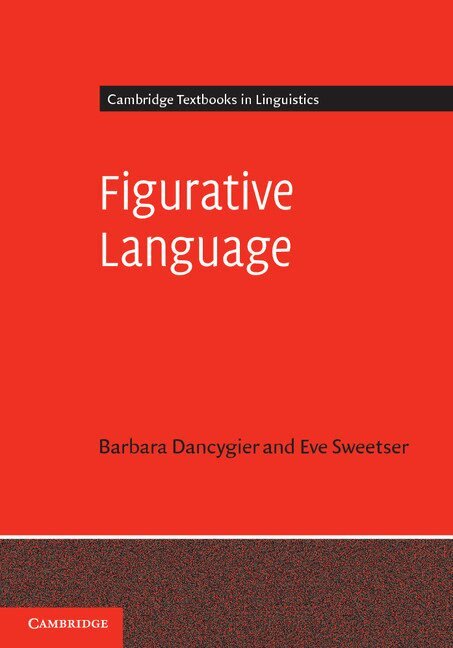
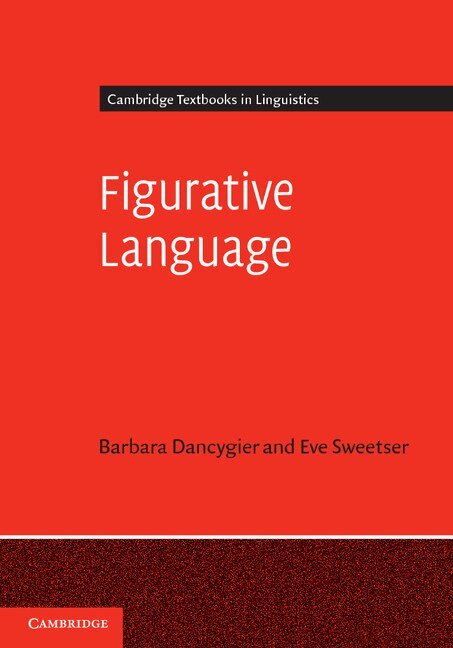
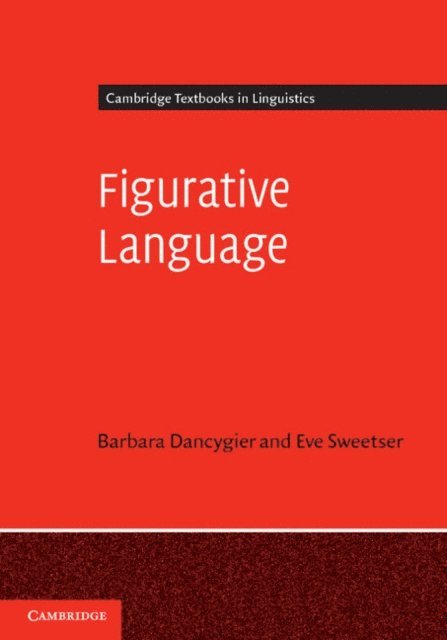
Figurative Language
Av Barbara Dancygier, Eve Sweetser
Häftad, 2014
553 kr
Lägg i varukorg
This lively introduction to figurative language explains a broad range of concepts, including metaphor, metonymy, simile, and blending, and develops new tools for analyzing them. It coherently grounds the linguistic understanding of these concepts in basic cognitive mechanisms such as …
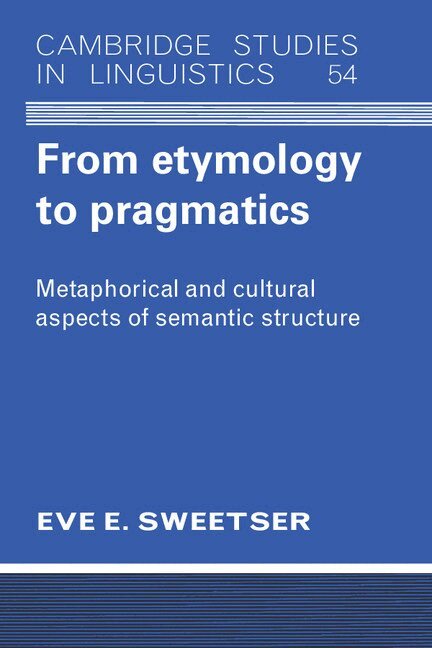
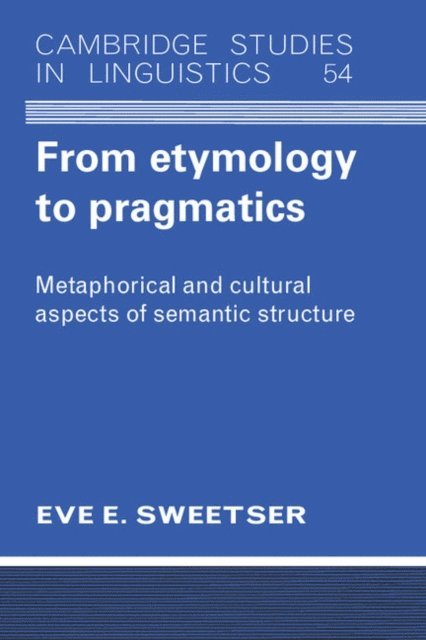
From Etymology to Pragmatics
Metaphorical and Cultural Aspects of Semantic Structure
Av Eve Sweetser
Häftad, 1991
804 kr
Lägg i varukorg
This book offers a distinct approach to the analysis of the multiple meanings of English modals, conjunctions, conditionals and perception verbs. Although such ambiguities cannot easily be accounted for by feature-analyses of word meaning, Eve Sweetser's argument shows that they can be analysed …
Mental Spaces in Grammar
Conditional Constructions
Av Barbara Dancygier, Eve Sweetser
Inbunden, 2005
1762 kr
Lägg i varukorg
Conditional constructions have long fascinated linguists, grammarians and philosophers. In this pioneering new study, Barbara Dancygier and Eve Sweetser offer a new descriptive framework for the study of conditionality, broadening the range of richly described conditional constructions. They …
Figurative Language
Av Barbara Dancygier, Eve Sweetser
Inbunden, 2014
1155 kr
Lägg i varukorg
This lively introduction to figurative language explains a broad range of concepts, including metaphor, metonymy, simile, and blending, and develops new tools for analyzing them. It coherently grounds the linguistic understanding of these concepts in basic cognitive mechanisms such as …
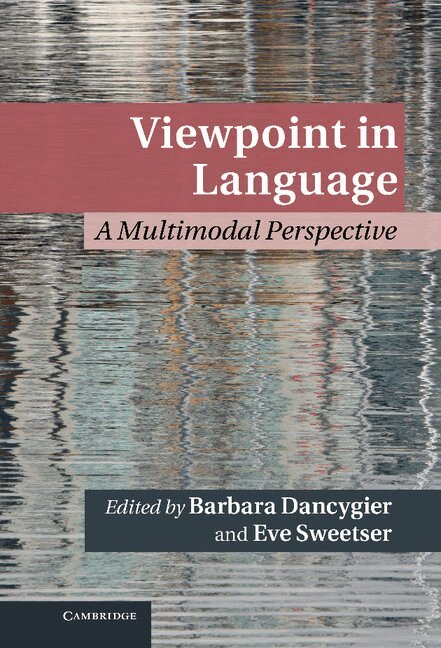
Viewpoint in Language
A Multimodal Perspective
Av Barbara Dancygier, Eve Sweetser
Inbunden, 2012
1844 kr
Lägg i varukorg
What makes us talk about viewpoint and perspective in linguistic analyses and in literary texts, as well as in landscape art? Is this shared vocabulary marking real connections between the disparate phenomena? This volume argues that human cognition is not only rooted in the human body, but also …
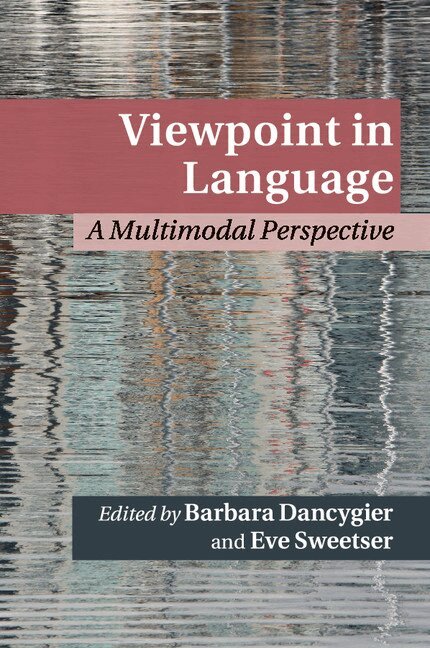
Viewpoint in Language
A Multimodal Perspective
Av Barbara Dancygier, Eve Sweetser
Häftad, 2015
672 kr
Lägg i varukorg
What makes us talk about viewpoint and perspective in linguistic analyses and in literary texts, as well as in landscape art? Is this shared vocabulary marking real connections between the disparate phenomena? This volume argues that human cognition is not only rooted in the human body, but also …
Figurative Language
Av Eve Sweetser, Barbara Dancygier
E-bok, 2014
539 kr
Lägg i varukorg
This lively introduction to figurative language explains a broad range of concepts, including metaphor, metonymy, simile, and blending, and develops new tools for analyzing them. It coherently grounds the linguistic understanding of these concepts in basic cognitive mechanisms such as …
Figurative Language
Av Eve Sweetser, Barbara Dancygier
E-bok, 2014
522 kr
Lägg i varukorg
This lively introduction to figurative language explains a broad range of concepts, including metaphor, metonymy, simile, and blending, and develops new tools for analyzing them. It coherently grounds the linguistic understanding of these concepts in basic cognitive mechanisms such as …
From Etymology to Pragmatics
Metaphorical and Cultural Aspects of Semantic Structure
Av Eve Sweetser
E-bok, 1991
772 kr
Lägg i varukorg
This book offers a distinct approach to the analysis of the multiple meanings of English modals, conjunctions, conditionals and perception verbs. Although such ambiguities cannot easily be accounted for by feature-analyses of word meaning, Eve Sweetser''s argument shows that they can be analysed …
Causal Categories in Discourse and Cognition
Inbunden, 2009
2759 kr
Lägg i varukorg
All languages of the world provide their speakers with linguistic means to express causal relations in discourse. Causal connectives and causative auxiliaries are among the salient markers of causal construals. Cognitive scientists and linguists are interested in how much of this causal modeling is …
Causal Categories in Discourse and Cognition
E-bok, 2009
2798 kr
Lägg i varukorg
All languages of the world provide their speakers with linguistic means to express causal relations in discourse. Causal connectives and causative auxiliaries are among the salient markers of causal construals. Cognitive scientists and linguists are interested in how much of this causal modeling is …
Spaces, Worlds, and Grammar
Av Gilles Fauconnier, Eve Sweetser
Inbunden, 1996
1060 kr
Tillfälligt slut
In the mental-spaces framework developed by Gilles Fauconnier in the mid-1980s, the mind creates multiple cognitive "spaces" to mediate its understanding of relations and activities in the world, and to engage in creative thought. These 12 original papers extend the mental-spaces framework and …