Evelyn Ruppert – författare
Visar alla böcker från författaren . Handla med fri frakt och snabb leverans.
9 produkter
9 produkter
Häftad, Engelska, 2016
329 kr
Skickas inom 5-8 vardagar
Inbunden, Engelska, 2019
2 433 kr
Skickas inom 10-15 vardagar
Data has become a social and political issue because of its capacity to reconfigure relationships between states, subjects, and citizens. This book explores how data has acquired such an important capacity and examines how critical interventions in its uses in both theory and practice are possible.Data and politics are now inseparable: data is not only shaping our social relations, preferences and life chances but our very democracies. Expert international contributors consider political questions about data and the ways it provokes subjects to govern themselves by making rights claims. Concerned with the things (infrastructures of servers, devices, and cables) and language (code, programming, and algorithms) that make up cyberspace, this book demonstrates that without understanding these conditions of possibility it is impossible to intervene in or to shape data politics. Aimed at academics and postgraduate students interested in political aspects of data, this volume will also be of interest to experts in the fields of internet studies, international studies, Big Data, digital social sciences and humanities. The Open Access version of this book, available at https://www.routledge.com/Data-Politics-Worlds-Subjects-Rights/Bigo-Isin-Ruppert/p/book/9781138053267, has been made available under a Creative Commons Attribution-Non Commercial-No Derivatives 4.0 license.
Häftad, Engelska, 2019
628 kr
Skickas inom 10-15 vardagar
Data has become a social and political issue because of its capacity to reconfigure relationships between states, subjects, and citizens. This book explores how data has acquired such an important capacity and examines how critical interventions in its uses in both theory and practice are possible.Data and politics are now inseparable: data is not only shaping our social relations, preferences and life chances but our very democracies. Expert international contributors consider political questions about data and the ways it provokes subjects to govern themselves by making rights claims. Concerned with the things (infrastructures of servers, devices, and cables) and language (code, programming, and algorithms) that make up cyberspace, this book demonstrates that without understanding these conditions of possibility it is impossible to intervene in or to shape data politics. Aimed at academics and postgraduate students interested in political aspects of data, this volume will also be of interest to experts in the fields of internet studies, international studies, Big Data, digital social sciences and humanities. The Open Access version of this book, available at https://www.routledge.com/Data-Politics-Worlds-Subjects-Rights/Bigo-Isin-Ruppert/p/book/9781138053267, has been made available under a Creative Commons Attribution-Non Commercial-No Derivatives 4.0 license.
E-bok
PDF, Engelska, 2006997 kr
Läs direkt efter köp
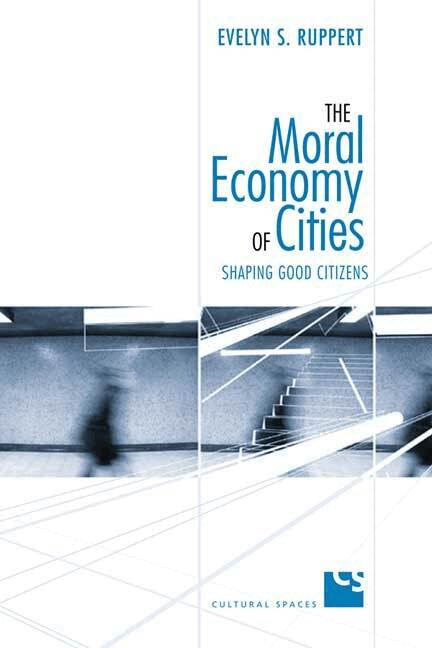
What makes a good city? This question has long preoccupied groups interested and involved in the making and remaking of city spaces. In The Moral Economy of Cities, Evelyn S. Ruppert contends that the vision of the 'good city' embraced by professionals in the business of city making recognizes the interests of a dominant public, namely middle class consumers, office workers, tourists, and families. This vision stigmatizes certain members of the public like street youth, panhandlers, discount- and low-income shoppers, and the language used to extol the virtues of the good city inherently moralizes social conduct in the city.Using the redevelopment of the Yonge-Dundas intersection in downtown Toronto in the mid-1990s as a case study, Ruppert examines the language of planners, urban designers, architects, and marketing analysts to reveal the extent to which moralization legitimizes these professions in the public eye and buttresses the very projects they produce. Ruppert's conclusion that economic practices are not free from moral investment encourages the considerable task of re-examining the implications of city planning and development worldwide. The Moral Economy of Cities is mandatory reading for urban studies scholars and practitioners, and their critics.
E-bok
Engelska, 20061 139 kr
Läs direkt efter köp
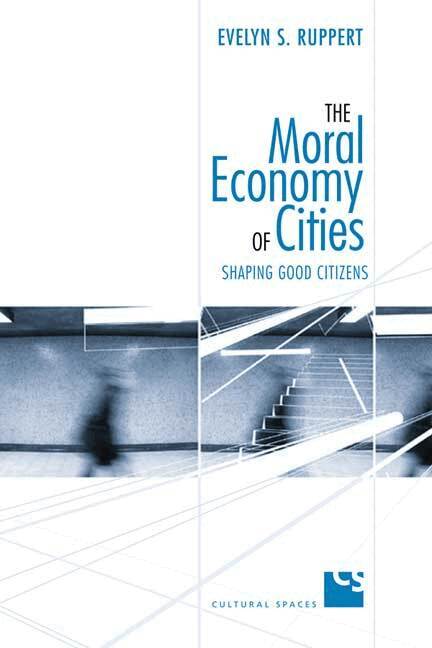
What makes a good city? This question has long preoccupied groups interested and involved in the making and remaking of city spaces. In The Moral Economy of Cities, Evelyn S. Ruppert contends that the vision of the 'good city' embraced by professionals in the business of city making recognizes the interests of a dominant public, namely middle class consumers, office workers, tourists, and families. This vision stigmatizes certain members of the public like street youth, panhandlers, discount- and low-income shoppers, and the language used to extol the virtues of the good city inherently moralizes social conduct in the city.Using the redevelopment of the Yonge-Dundas intersection in downtown Toronto in the mid-1990s as a case study, Ruppert examines the language of planners, urban designers, architects, and marketing analysts to reveal the extent to which moralization legitimizes these professions in the public eye and buttresses the very projects they produce. Ruppert's conclusion that economic practices are not free from moral investment encourages the considerable task of re-examining the implications of city planning and development worldwide. The Moral Economy of Cities is mandatory reading for urban studies scholars and practitioners, and their critics.
Inbunden, Engelska, 2020
1 541 kr
Skickas inom 10-15 vardagar
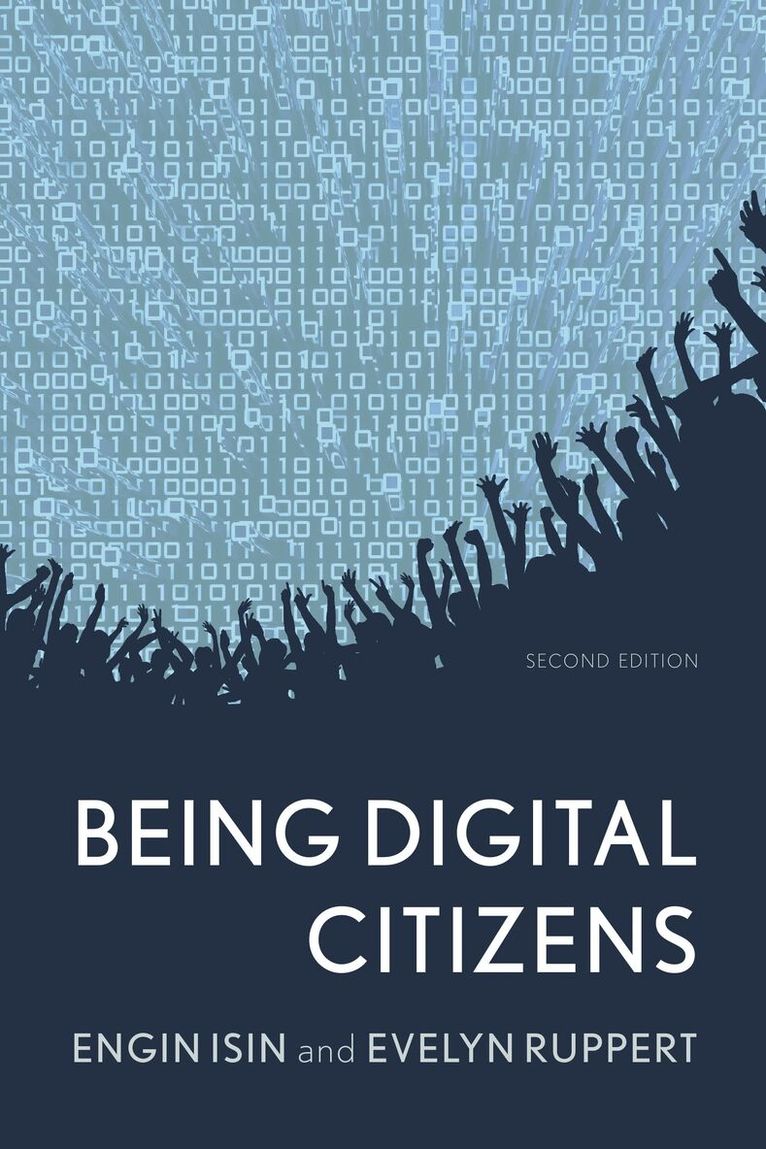
From the rise of cyberbullying and hactivism to the issues surrounding digital privacy rights and freedom of speech, the Internet is changing the ways in which we govern and are governed as citizens.This open access book examines how citizens encounter and perform new sorts of rights, duties, opportunities and challenges through the Internet. By disrupting prevailing understandings of citizenship and cyberspace, the authors highlight the dynamic relationship between these two concepts. Rather than assuming that these are static or established “facts” of politics and society, the book shows how the challenges and opportunities presented by the Internet inevitably impact upon the action and understanding of political agency. In doing so, it investigates how we conduct ourselves in cyberspace through digital acts. This book provides a new theoretical understanding of what it means to be a citizen today for students and scholars across the social sciences.This new and updated edition includes two new chapters. A Preface consists of reflections on developments in digital politics since the book was published in 2015. It considers how recent major political struggles over digital technologies and data can be understood in relation to the conceptualization of digital citizens that the book offers. While the Preface positions dominant responses to these struggles such as government regulations as ‘closings’, a new final chapter, Digital citizens-yet-to-come offers examples of ‘openings’ – digital acts such as new forms of data activism that are less recognised but which point to the emergence of paradoxical digital acts that are producing new digital political subjectivities.The ebook editions of this book are available open access under a CC BY-NC-ND 4.0 licence on bloomsburycollections.com. Open access was funded by European Research Council (ERC)
Häftad, Engelska, 2020
565 kr
Skickas inom 10-15 vardagar
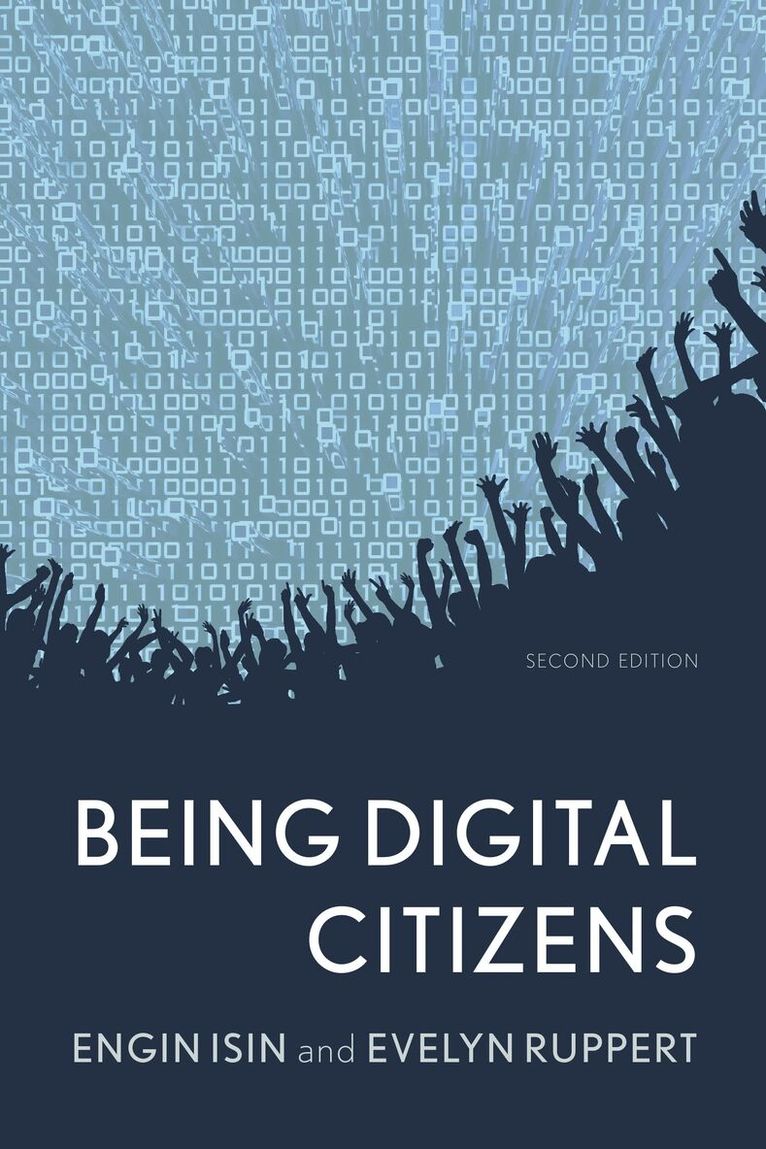
From the rise of cyberbullying and hactivism to the issues surrounding digital privacy rights and freedom of speech, the Internet is changing the ways in which we govern and are governed as citizens.This open access book examines how citizens encounter and perform new sorts of rights, duties, opportunities and challenges through the Internet. By disrupting prevailing understandings of citizenship and cyberspace, the authors highlight the dynamic relationship between these two concepts. Rather than assuming that these are static or established “facts” of politics and society, the book shows how the challenges and opportunities presented by the Internet inevitably impact upon the action and understanding of political agency. In doing so, it investigates how we conduct ourselves in cyberspace through digital acts. This book provides a new theoretical understanding of what it means to be a citizen today for students and scholars across the social sciences.This new and updated edition includes two new chapters. A Preface consists of reflections on developments in digital politics since the book was published in 2015. It considers how recent major political struggles over digital technologies and data can be understood in relation to the conceptualization of digital citizens that the book offers. While the Preface positions dominant responses to these struggles such as government regulations as ‘closings’, a new final chapter, Digital citizens-yet-to-come offers examples of ‘openings’ – digital acts such as new forms of data activism that are less recognised but which point to the emergence of paradoxical digital acts that are producing new digital political subjectivities.The ebook editions of this book are available open access under a CC BY-NC-ND 4.0 licence on bloomsburycollections.com. Open access was funded by European Research Council (ERC)
E-bok
Engelska, 2021430 kr
Läs direkt efter köp
Inbunden, Engelska, 2021
595 kr
Tillfälligt slut
How EU data practices establish and assign people to categories, and how this matters in enacting--"making up"--Europe as a population and people.What is "Europe" and who are "Europeans"? Data Practices approaches this contemporary political and theoretical question by treating it as a practical problem of counting. Only through the myriad data practices that make up methods such as censuses can EU member states know their national populations, and this in turn is utilized by the EU to understand the population of Europe. But this volume approaches data practices not simply as reflecting populations but as performative in two senses: they simultaneously enact--that is, "make up"--a European population and, by so doing--intentionally or otherwise--also contribute to making up a European people.The book develops a conception of data practices to analyze and interpret findings from collaborative ethnographic multisite fieldwork conducted by an interdisciplinary team of social science researchers as part of a five-year project, Peopling Europe: How Data Make a People. The book focuses on data practices that involve establishing and assigning people to categories and how this matters in enacting Europe as a population and people. Five core chapters explore key categories of people--usual residents, refugees, homeless people, migrants, and ethnic minorities--and how they come into being through specific data practices such as defining, estimating, recalibrating and inferring. Two additional chapters address two key subject positions that data practices produce and require: the data subject and the statistician subject.