Everette Dennis - Böcker
Visar alla böcker från författaren Everette Dennis. Handla med fri frakt och snabb leverans.
9 produkter
9 produkter
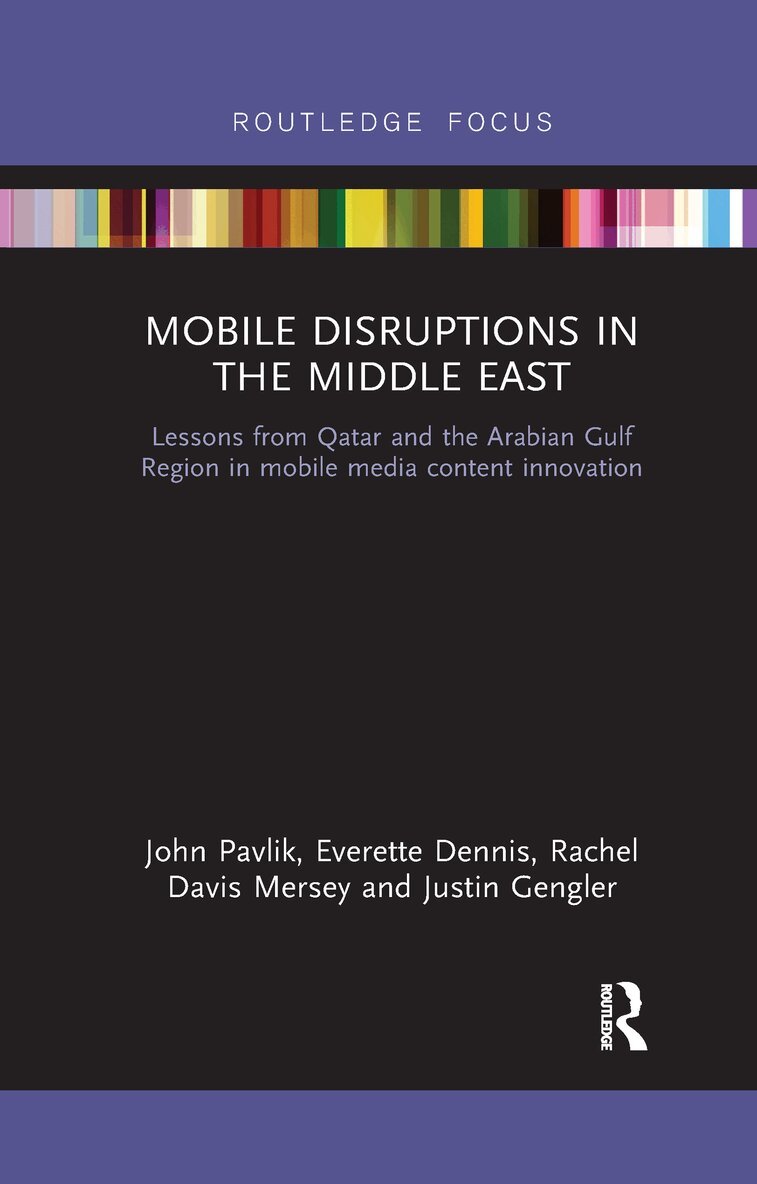
Mobile Disruptions in the Middle East
Lessons from Qatar and the Arabian Gulf Region in mobile media content innovation
Häftad, Engelska, 2021
331 kr
Skickas inom 10-15 vardagar
Mobile Disruptions in the Middle East identifies trends in mobile media use in Qatar and the United Arab Emirates and, more broadly, explores their impact on the nature of digital journalism. Mobility has long been an important aspect of life in the Middle East; therefore a study of this region presents a unique opportunity to examine the role of mobile media and its future directions.Basing its analysis on original research, including multiyear surveys and case studies, the book reveals patterns of audience engagement with mobile media in the Gulf area, with particular emphasis on online journalism. The research also illustrates how and to what extent media organizations are developing and delivering content uniquely designed for mobile media and consumption. Drawing on these findings, the authors look at possible developments in mobile media content strategies, including those for news content, as wearable and other emerging media forms enter the marketplace. Mobile Disruptions in the Middle East provides an important insight into a region that is both globally active and mobile-first, yet whose use of digital media is historically under-researched. As a result, the book helps to advance understanding of consumer preference for content types on mobile media, especially in relation to the transformation of journalism.
Mobile Disruptions in the Middle East
Lessons from Qatar and the Arabian Gulf Region in mobile media content innovation
Inbunden, Engelska, 2018
803 kr
Skickas inom 10-15 vardagar
Mobile Disruptions in the Middle East identifies trends in mobile media use in Qatar and the United Arab Emirates and, more broadly, explores their impact on the nature of digital journalism. Mobility has long been an important aspect of life in the Middle East; therefore a study of this region presents a unique opportunity to examine the role of mobile media and its future directions.Basing its analysis on original research, including multiyear surveys and case studies, the book reveals patterns of audience engagement with mobile media in the Gulf area, with particular emphasis on online journalism. The research also illustrates how and to what extent media organizations are developing and delivering content uniquely designed for mobile media and consumption. Drawing on these findings, the authors look at possible developments in mobile media content strategies, including those for news content, as wearable and other emerging media forms enter the marketplace. Mobile Disruptions in the Middle East provides an important insight into a region that is both globally active and mobile-first, yet whose use of digital media is historically under-researched. As a result, the book helps to advance understanding of consumer preference for content types on mobile media, especially in relation to the transformation of journalism.
1 762 kr
Skickas inom 10-15 vardagar
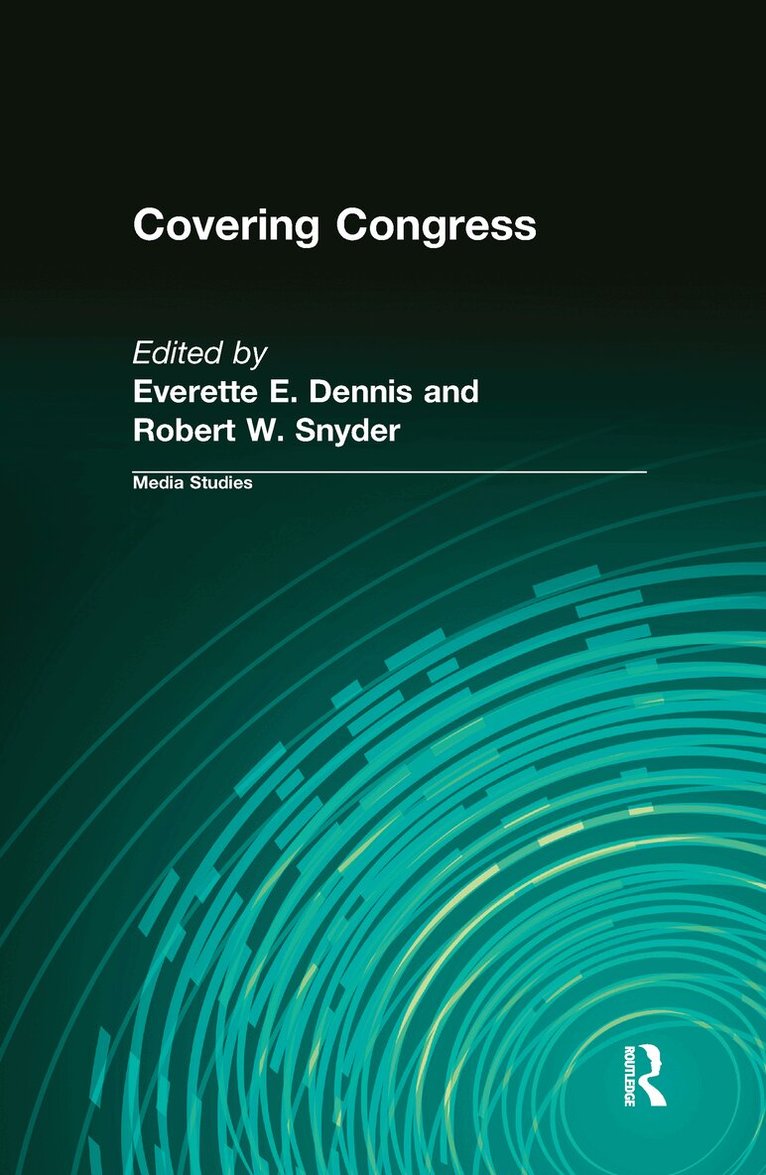
Observers of media-government relations most often think first of conflicts with the executive branch, yet interactions between Congress and the media have been extensive and varied since the first Washington "correspondents" began sending dispatches from the sessions of Congress. In recent years the relationship between Congress and the news media has grown more complex. Coverage of Congress by the print and electronic media is extensive. At the same tune, Congress has increasing power to make communications policy that will have an important impact on the ability of the media to conduct their affairs, both economically and politically. Covering Congress explores those aspects of the relationship between the media and Congress that shape the news that reaches an information-seeking public.The contributors consider Congress as the source of much news as well as a great deal of self-promotion. They note there is neither a broad nor deep understanding of our national legislature in the United States. Contributors try to remedy this shortcoming by looking at the overall picture, the media scene on Capitol Hill, the messages that reach beyond Washington, and the history of relations between the Congress and the press. They discuss such issues as: the relationship Newt Gingrich has forged between his office and the media, perhaps at his own peril; the importance of speed over substance when reporting from Capitol Hill; the unflattering image of Congress as depicted in political cartoons; and the unparalleled power wielded by Speaker of the House Sam Rayburn when he dealt with the national media.Congress depends on the media to reach the public but also has considerable muscle to shape its media relations when it has strong leadership and a coherent plan. It usually lacks these, but Congress does much to try to project a friendly face to the public through the media, facilitating interviews hi Capitol Hill radio and television studios. Regardless of what happens in any particular election, it is clear that Congress is fully alert to the modern communications age and that the consequences of this encounter are likely to be accentuated in the years ahead. Covering Congress is a necessary addition to the libraries of communications scholars, media specialists, political scientists, historians, and sociologists.
1 356 kr
Skickas inom 10-15 vardagar
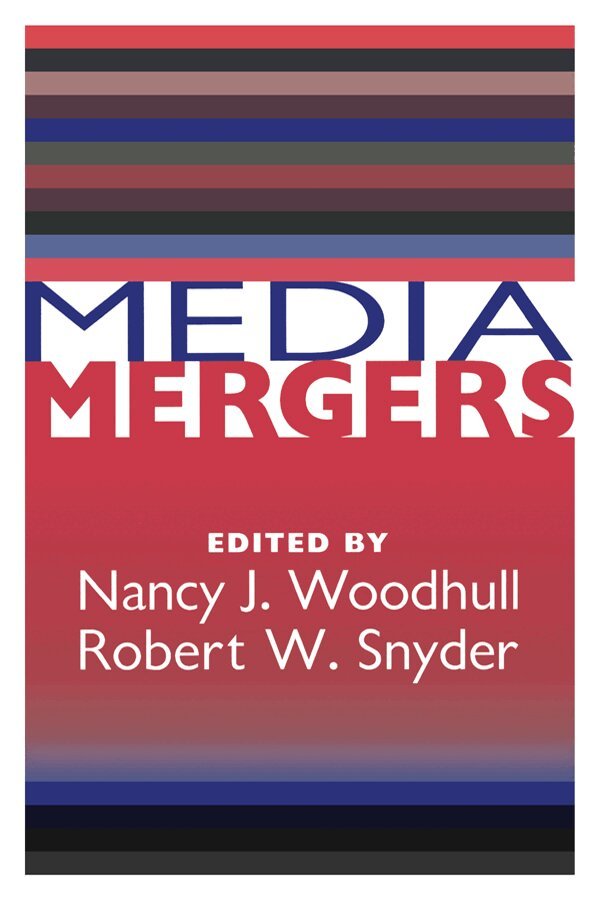
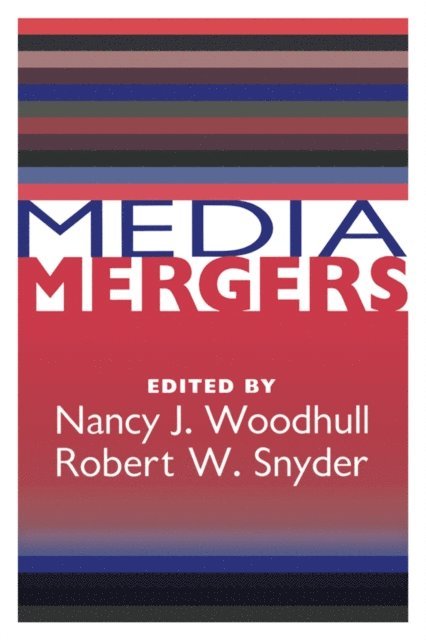
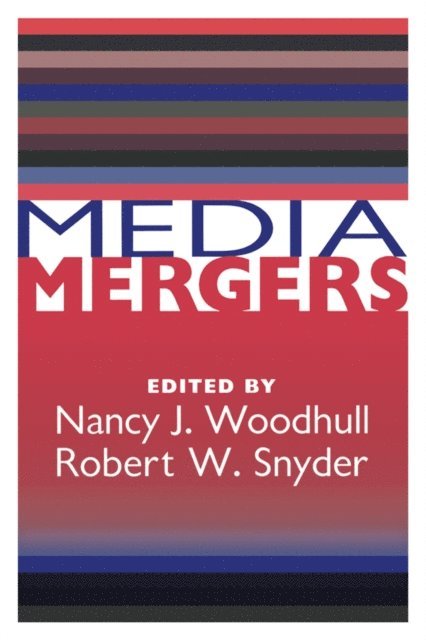
The recent surge in media mergers has set off a wave of stories that all hit very close to home. In some cases, the news organizations themselves become news. The formation of communication conglomerates raises profound questions for reporters' lives and work, such as: What is the best way to cover stories of high profile and complexity? Will the new giants broaden both the definition of journalism and the opportunities for journalists to practice their craft? What are the prospects for the new partnership of big news, new media, and big business? The consequences of consolidation vary by media industry. The evolution of communication technology is so fast that today's truisms can be undone tomorrow. Media Mergers provides a healthy dose of skepticism, a search for illuminating facts, and a willingness to consider all sides of the discussion.This book approaches the emergence of media giants from a variety of angles. The contributors offer many ways of understanding their scale and their significance. Media Mergers is divided into six parts: "Point/Counterpoint," "The Imperial Moment," "Captains of Communication," "States of Media," "The Consequences of Media Empires in the United States," and "The Consequences of Media Empires Around the World." Authors include: Todd Gitlin; Steven Rattner; Ken Auletta; Madeline Rogers; Danny Schechter; Barbara Maltby; and Mac Margolis.Included in this volume is a roundtable introduced by Walter Cronkite and moderated by Alex Jones. Participants are Frank A. Bennack, Jr., Neil S. Braun, P. Anthony Ridder, and Arthur Ochs Sulzberger, Jr. A review essay by Anne Wells Branscomb concludes book. She discusses various books on the subjects of media moguls, multimedia conglomerates, and media takeovers. Media Mergers is especially pertinent today, an age in which the communications industry is constantly changing, progressing, and being affected by business upheavals. It will be of interest to publishers, media specialists, and all those in communications, policy and research.
2 100 kr
Skickas inom 10-15 vardagar
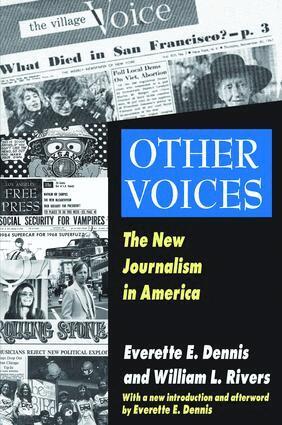
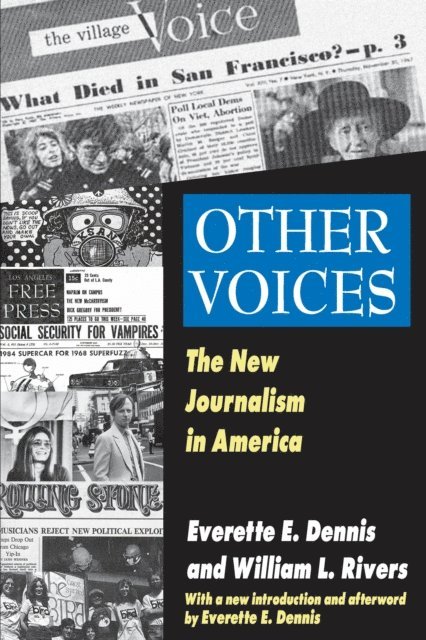
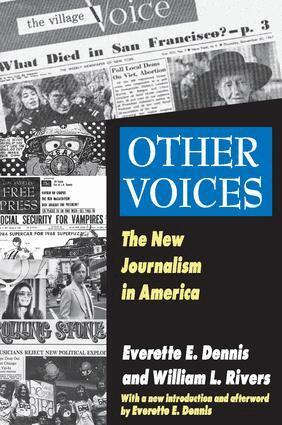
Conflicting journalistic voices that were raised in the past have become such a jumble that merely identifying them is difficult. Dennis and Rivers define, categorize, present, and examine the voices that contributed to what became known as "the new media" environment in the 1970s. This new journalism came about as a result of dissatisfaction with existing values and standards of the early 1960s style of journalism.The authors are comprehensive in their concerns, as reflected in the national scope presented. They cover developments in the major cities, on both coasts, in the Middle West and South in every major region of the United States. Most of the research required travel and interviews; all of it required reading almost endlessly and watching the video productions of journalists who built the structure of alternative television. Dennis and Rivers offer a representative view of forms and media, as well as the people who fashioned the new orientation.The authors claim that the wrangling over objective and interpretative reporting misses the main point, which is that neither is in close touch with reality. The best objective report may cover all surfaces of an event, the best interpretative report may explain all its meanings, but both are bloodless, a world away from the experience. Color, flavor, atmosphere, the ultimate human meaning all these, the new journalists contend, are far beyond the reach of traditional models of journalism. This is one of the central reasons for the emergence of different forms and practices in our time. This volume will help younger scholars understand the sources of quasi-journalistic practices extant today, including blogging and electronic-only publications.
2 100 kr
Skickas inom 10-15 vardagar
The media's treatment of and interaction with race, like race itself, is one of the most sensitive areas hi American society. Whether hi its coverage and treatment of racial matters or racial connections inside media organizations themselves, mass communication is deeply involved with race. The Media in Black and White brings together twenty journalists and scholars, of various racial backgrounds, to grapple with a controversial issue: the role that media industries, from advertising to newspapers to the information superhighway, play in helping Americans understand race.Contributors include Ellis Cose, a contributing editor for Newsweek; Manning Marable, chairman of Columbia University's African-American Research Center; William Wong, a columnist for the Oakland Tribune; Lisa Penaloza, a University of Illinois professor; and Melita Marie Garza, a Chicago Tribune reporter. Among the topics discussed are: the quality of reporting on immigrant issues; how sensationalism may be deepening the chasm of misunderstanding between the races; how the coverage of America's drug wars has been marked by racism; and whether politically correct language is interfering with coverage of vital issues and problems.The contributors of The Media in Black and White hope to broaden the narrow vision of the United States and the world beyond with their contributions to the debate over race and the media. The commentary found hi this important work will be of interest to sociologists, communication specialists, and black studies scholars.
695 kr
Skickas inom 10-15 vardagar
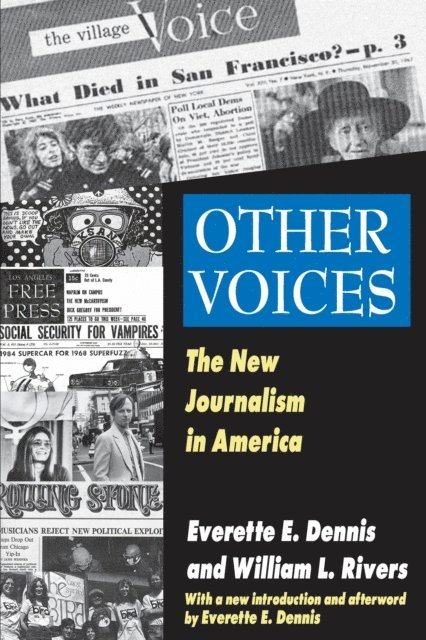
Conflicting journalistic voices that were raised in the past have become such a jumble that merely identifying them is difficult. Dennis and Rivers define, categorize, present, and examine the voices that contributed to what became known as "the new media" environment in the 1970s. This new journalism came about as a result of dissatisfaction with existing values and standards of the early 1960s style of journalism.The authors are comprehensive in their concerns, as reflected in the national scope presented. They cover developments in the major cities, on both coasts, in the Middle West and South—in every major region of the United States. Most of the research required travel and interviews; all of it required reading almost endlessly and watching the video productions of journalists who built the structure of alternative television. Dennis and Rivers offer a representative view of forms and media, as well as the people who fashioned the new orientation.The authors claim that the wrangling over objective and interpretative reporting misses the main point, which is that neither is in close touch with reality. The best objective report may cover all surfaces of an event, the best interpretative report may explain all its meanings, but both are bloodless, a world away from the experience. Color, flavor, atmosphere, the ultimate human meaning—all these, the new journalists contend, are far beyond the reach of traditional models of journalism. This is one of the central reasons for the emergence of different forms and practices in our time. This volume will help younger scholars understand the sources of quasi-journalistic practices extant today, including blogging and electronic-only publications.
668 kr
Skickas inom 10-15 vardagar
The media's treatment of and interaction with race, like race itself, is one of the most sensitive areas hi American society. Whether hi its coverage and treatment of racial matters or racial connections inside media organizations themselves, mass communication is deeply involved with race. The Media in Black and White brings together twenty journalists and scholars, of various racial backgrounds, to grapple with a controversial issue: the role that media industries, from advertising to newspapers to the information superhighway, play in helping Americans understand race.Contributors include Ellis Cose, a contributing editor for Newsweek; Manning Marable, chairman of Columbia University's African-American Research Center; William Wong, a columnist for the Oakland Tribune; Lisa Penaloza, a University of Illinois professor; and Melita Marie Garza, a Chicago Tribune reporter. Among the topics discussed are: the quality of reporting on immigrant issues; how sensationalism may be deepening the chasm of misunderstanding between the races; how the coverage of America's drug wars has been marked by racism; and whether politically correct language is interfering with coverage of vital issues and problems.The contributors of The Media in Black and White hope to broaden the narrow vision of the United States and the world beyond with their contributions to the debate over race and the media. The commentary found hi this important work will be of interest to sociologists, communication specialists, and black studies scholars.
668 kr
Skickas inom 10-15 vardagar
Observers of media-government relations most often think first of conflicts with the executive branch, yet interactions between Congress and the media have been extensive and varied since the first Washington "correspondents" began sending dispatches from the sessions of Congress. In recent years the relationship between Congress and the news media has grown more complex. Coverage of Congress by the print and electronic media is extensive. At the same tune, Congress has increasing power to make communications policy that will have an important impact on the ability of the media to conduct their affairs, both economically and politically. Covering Congress explores those aspects of the relationship between the media and Congress that shape the news that reaches an information-seeking public.The contributors consider Congress as the source of much news as well as a great deal of self-promotion. They note there is neither a broad nor deep understanding of our national legislature in the United States. Contributors try to remedy this shortcoming by looking at the overall picture, the media scene on Capitol Hill, the messages that reach beyond Washington, and the history of relations between the Congress and the press. They discuss such issues as: the relationship Newt Gingrich has forged between his office and the media, perhaps at his own peril; the importance of speed over substance when reporting from Capitol Hill; the unflattering image of Congress as depicted in political cartoons; and the unparalleled power wielded by Speaker of the House Sam Rayburn when he dealt with the national media.Congress depends on the media to reach the public but also has considerable muscle to shape its media relations when it has strong leadership and a coherent plan. It usually lacks these, but Congress does much to try to project a friendly face to the public through the media, facilitating interviews hi Capitol Hill radio and television studios. Regardless of what happens in any particular election, it is clear that Congress is fully alert to the modern communications age and that the consequences of this encounter are likely to be accentuated in the years ahead. Covering Congress is a necessary addition to the libraries of communications scholars, media specialists, political scientists, historians, and sociologists.