Evgeny Gavrilenkov – författare
Visar alla böcker från författaren Evgeny Gavrilenkov. Handla med fri frakt och snabb leverans.
6 produkter
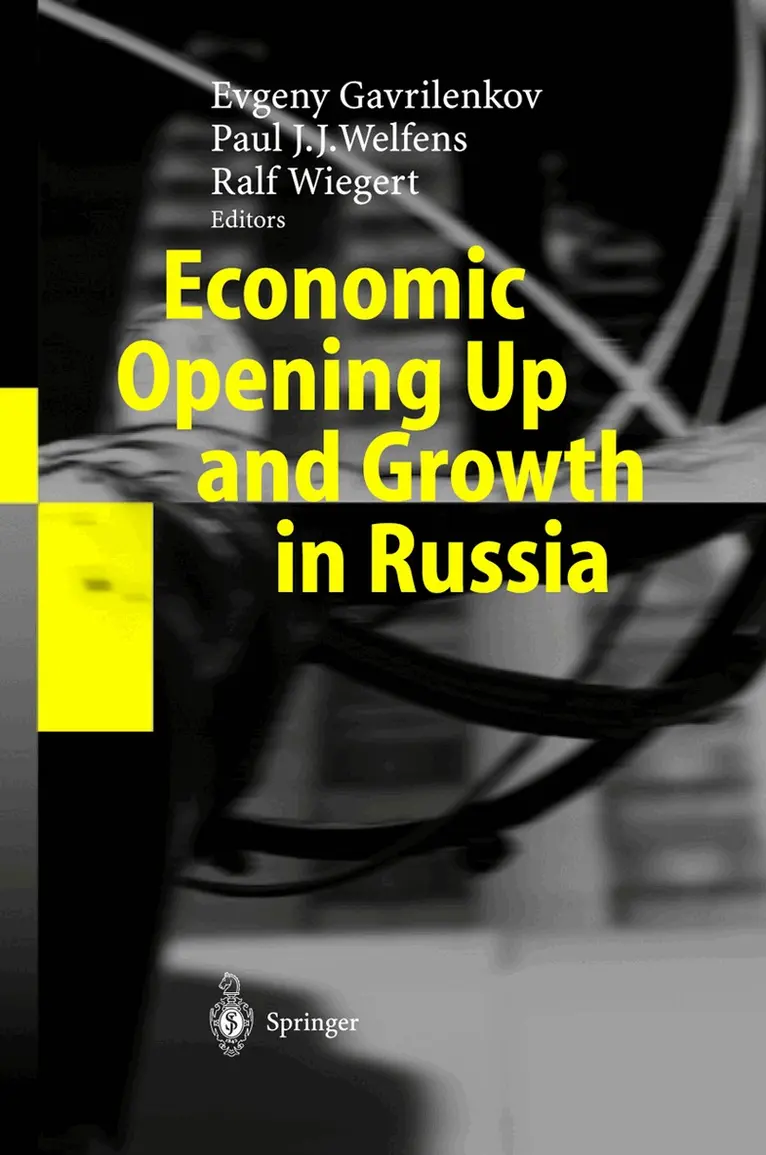
Economic Opening Up and Growth in Russia
Finance, Trade, Market Institutions, and Energy
Av Evgeny Gavrilenkov, Paul J.J. Welfens m. fl.
Inbunden, 2004
1122 kr
Lägg i varukorg
After a decade of sharp economic decline, Russia switched to an impressive period of economic growth. Yet the economic record is still mixed, and many key problems remain unresolved, both in the economic sphere and the political system. The focus is on economic dynamics in Russia, reasons for its …
Economic Opening Up and Growth in Russia
Finance, Trade, Market Institutions, and Energy
Av Ralf Wiegert, Paul J.J. Welfens m. fl.
E-bok, 2013
1459 kr
Lägg i varukorg
After a decade of sharp economic decline, Russia switched to an impressive period of economic growth. Yet the economic record is still mixed, and many key problems remain unresolved, both in the economic sphere and the political system. The focus is on economic dynamics in Russia, reasons for its …
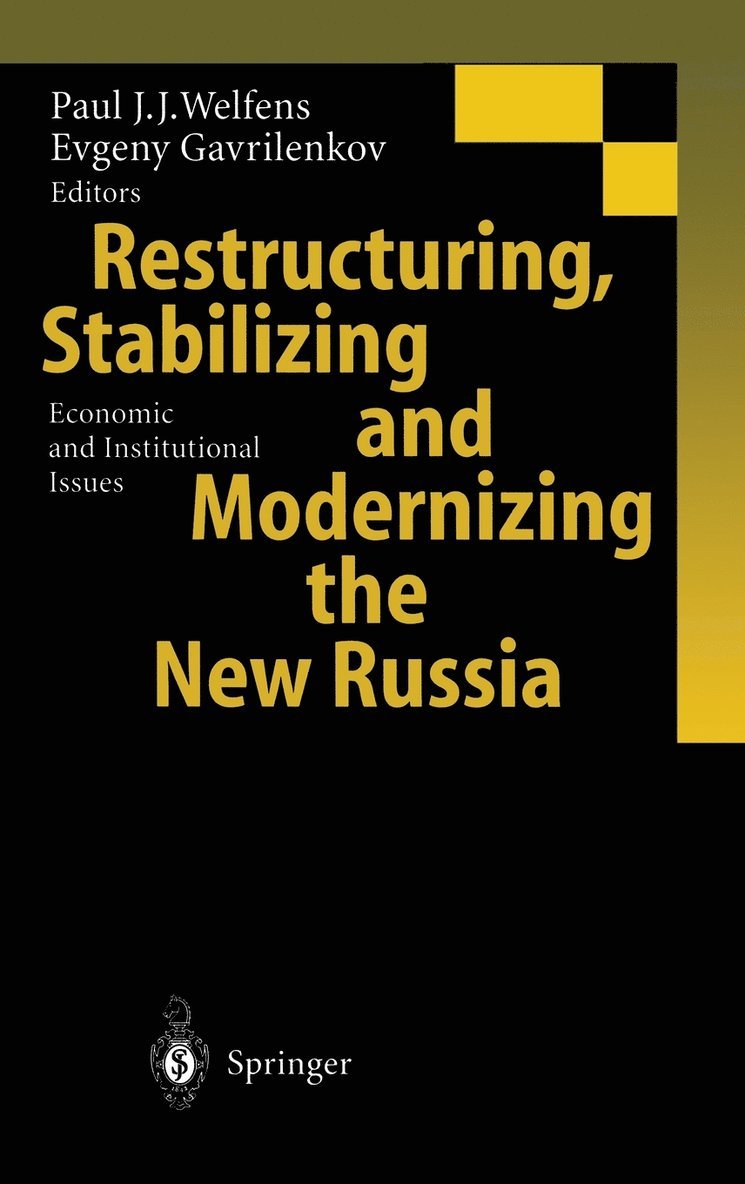
Restructuring, Stabilizing and Modernizing the New Russia
Economic and Institutional Issues
Av Paul J. J. Welfens, E. Gavrilenkov m. fl.
Inbunden, 2000
1202 kr
Lägg i varukorg
The Russian transformation crisis is analyzed and put into the context of national policy failures and international shocks. The study also has a focus on structural change and foreign direct investment - including an econometric perspective. Basic problems of economic opening-up, macroeconomic …
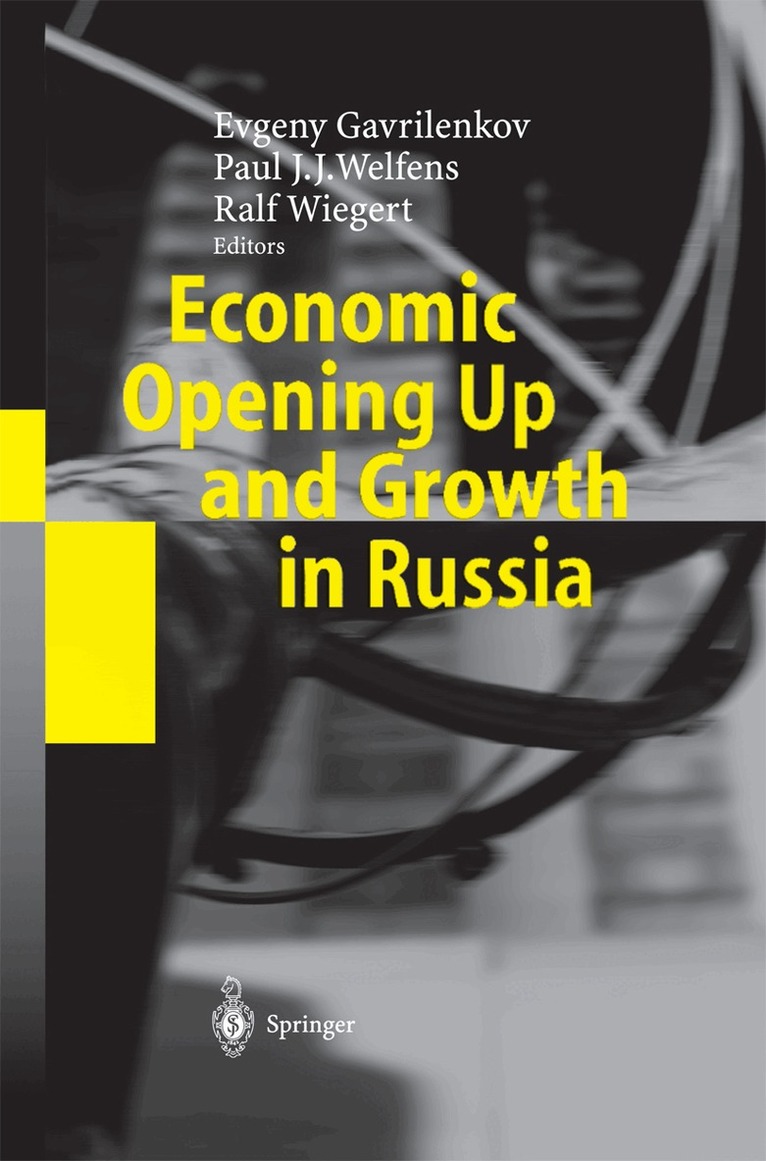
Economic Opening Up and Growth in Russia
Finance, Trade, Market Institutions, and Energy
Av Evgeny Gavrilenkov, Paul J.J. Welfens m. fl.
Häftad, 2010
1122 kr
Lägg i varukorg
After a decade of sharp economic decline, Russia switched to an impressive period of economic growth. Yet the economic record is still mixed, and many key problems remain unresolved, both in the economic sphere and the political system. The focus is on economic dynamics in Russia, reasons for its …
Restructuring, Stabilizing and Modernizing the New Russia
Economic and Institutional Issues
Av Evgeny Gavrilenkov, Paul J.J. Welfens
E-bok, 2012
1459 kr
Lägg i varukorg
Russia has embarked upon a difficult process of systemic transformation and economic opening up. While the initial strong GDP decline seemed to have ended in 1997, the real development was facing even more difficult problems as output declined sharply after the Ruble and banking crisis of August …
Restructuring, Stabilizing and Modernizing the New Russia
Economic and Institutional Issues
Av Paul J.J. Welfens, Evgeny Gavrilenkov
Häftad, 2012
1093 kr
Lägg i varukorg
Russia has embarked upon a difficult process of systemic transformation and economic opening up. While the initial strong GDP decline seemed to have ended in 1997, the real development was facing even more difficult problems as output declined sharply after the Ruble and banking crisis of August …