Evonne Levy – författare
Visar alla böcker från författaren Evonne Levy. Handla med fri frakt och snabb leverans.
8 produkter
8 produkter
307 kr
Skickas inom 5-8 vardagar
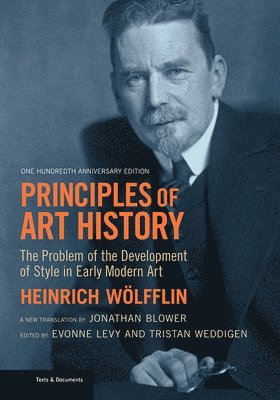
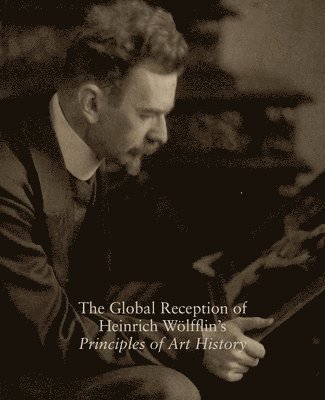
This book features a crystalline new translation of one of art history's most influential works-published on its one-hundredth anniversary. Principles of Art History by Heinrich Wolfflin (1864-1945), a revolutionary attempt to construct a science of art through the study of the development of style, has been a foundational work of formalist art history since it was first published in 1915. At once systematic and subjective, and remarkable for its compelling descriptions of works of art, Wolfflin's text has endured as an accessible yet rigorous approach to the study of style. Although Wolfflin applied his analysis to objects of early modern European art, Principles of Art History has been a fixture in the theoretical and methodological debates of the discipline of art history and has found a global audience. With translations in twenty-four languages and many reprints, Wolfflin's work may be the most widely read and translated book of art history ever. This new English translation, appearing one hundred years after the original publication, returns readers to Wolfflin's 1915 text and images.It also includes the first English translations of the prefaces and afterword that Wolfflin himself added to later editions. Introductory essays provide a historical and critical framework, referencing debates engendered by Principles in the twentieth century for a renewed reading of the text in the twenty-first.
561 kr
Skickas inom 5-8 vardagar
Unique among early modern artists, the Baroque painter, sculptor, and architect Gianlorenzo Bernini was the subject of two monographic biographies published shortly after his death in 1680: one by the Florentine connoisseur and writer Filippo Baldinucci (1682), and the second by Bernini’s son, Domenico (1713). This interdisciplinary collection of essays by historians of art and literature marks the first sustained examination of the two biographies, first and foremost as texts. A substantial introductory essay considers each biography’s author, genesis, and foundational role in the study of Bernini. Nine essays combining art-historical research with insights from philology, literary history, and art and literary theory offer major new insights into the multifarious connections between biography, art history, and aesthetics, inviting readers to rethink Bernini’s life, art, and milieu.Contributors are Eraldo Bellini, Heiko Damm, John D. Lyons, Sarah McPhee, Tomaso Montanari, Rudolf Preimesberger, Robert Williams, and the editors.
324 kr
Skickas inom 5-8 vardagar
Initially published by Penn State Press in 1965, Catherine Enggass’s translation of Filippo Baldinucci’s Life of Bernini was the first English-language edition of this historic biography. Out of print for many years, The Life of Bernini is now available in a new paperback edition with an introduction by Maarten Delbeke, Evonne Levy, and Steven F. Ostrow, the editors of Bernini’s Biographies.Baldinucci’s unusual stand-alone biography of Bernini, begun while his subject was still alive, offers important insights into contemporary perceptions of the artist, the motivations of its author, and the nature of literary biography in seventeenth-century Italy.
824 kr
Skickas inom 5-8 vardagar
Over the course of some two centuries following the conquests and consolidations of Spanish rule in the Americas during the late fifteenth and early sixteenth centuries-the period designated as the Baroque-new cultural forms sprang from the cross-fertilization of Spanish, Amerindian, and African traditions. This dynamism of motion, relocation, and mutation changed things not only in Spanish America, but also in Spain, creating a transatlantic Hispanic world with new understandings of personhood, place, foodstuffs, music, animals, ownership, money and objects of value, beauty, human nature, divinity and the sacred, cultural proclivities-a whole lexikon of things in motion, variation, and relation to one another.Featuring the most creative thinking by the foremost scholars across a number of disciplines, the Lexikon of the Hispanic Baroque is a uniquely wide-ranging and sustained exploration of the profound cultural transfers and transformations that define the transatlantic Spanish world in the Baroque era. Pairs of authors-one treating the peninsular Spanish kingdoms, the other those of the Americas-provocatively investigate over forty key concepts, ranging from material objects to metaphysical notions. Illuminating difference as much as complementarity, departure as much as continuity, the book captures a dynamic universe of meanings in the various midst of its own re-creations. The Lexikon of the Hispanic Baroque joins leading work in a number of intersecting fields and will fire new research-it is the indispensible starting point for all serious scholars of the early modern Spanish world.
The Global Reception of Heinrich Wolfflin's Principles of Art History: Studies in the History of Art, Volume 82
Inbunden, Engelska
953 kr
Tillfälligt slut
707 kr
Skickas inom 5-8 vardagar
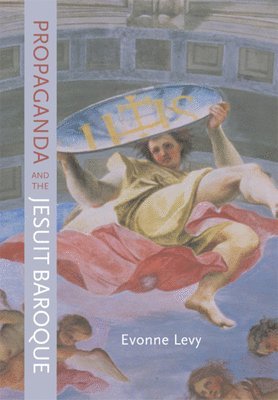
In this provocative revisionist work, Evonne Levy brings fresh theoretical perspectives to the study of the 'propagandistic' art and architecture of the Jesuit order as exemplified by its late Baroque Roman church interiors. The first extensive analysis of the aims, mechanisms, and effects of Jesuit art and architecture, this original and sophisticated study also evaluates how the term 'propaganda' functions in art history, distinguishes it from rhetoric, and proposes a precise use of the term for the visual arts for the first time. Levy begins by looking at Nazi architecture as a gateway to the emotional and ethical issues raised by the term 'propaganda'. Jesuit art once stirred similar passions, as she shows in a discussion of the controversial nineteenth-century rubric the 'Jesuit Style'. She then considers three central aspects of Jesuit art as essential components of propaganda: authorship, message, and diffusion. Levy tests her theoretical formulations against a broad range of documents and works of art, including the Chapel of St. Ignatius and other major works in Rome by Andrea Pozzo as well as chapels in Central Europe and Poland.Innovative in bringing a broad range of social and critical theory to bear on Baroque art and architecture in Europe and beyond, Levy's work highlights the subject-forming capacity of early modern Catholic art and architecture while establishing "propaganda" as a productive term for art history.
709 kr
Skickas inom 10-15 vardagar
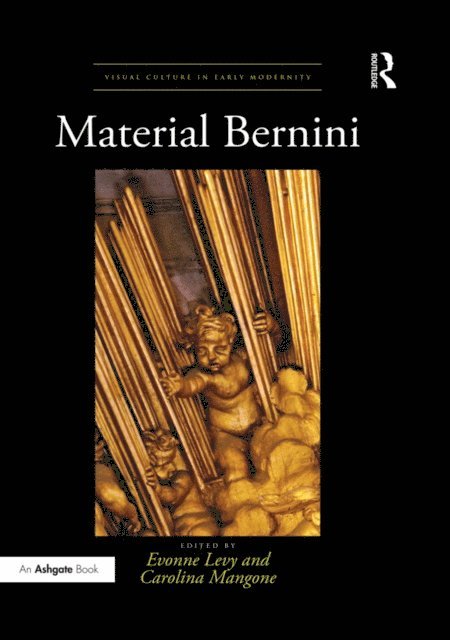
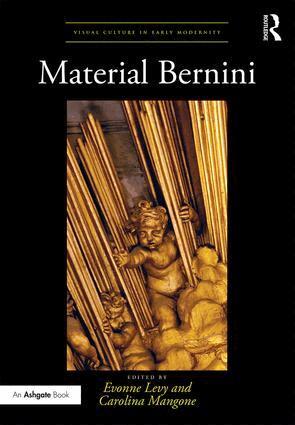
Bringing together established and emerging specialists in seventeenth-century Italian sculpture, Material Bernini is the first sustained examination of the conspicuous materiality of Bernini’s work in sculpture, architecture, and paint. The various essays demonstrate that material Bernini has always been tied (whether theologically, geologically, politically, or in terms of art theory) to his immaterial twin. Here immaterial Bernini and the historiography that sustains him is finally confronted by material Bernini. Central to the volume are Bernini’s works in clay, a fragmentary record of a large body of preparatory works by a sculptor who denied any direct relation between sketches of any kind and final works. Read together, the essays call into question why those works in which Bernini’s bodily relation to the material of his art is most evident, his clay studies, have been configured as a point of unmediated access to the artist’s mind, to his immaterial ideas. This insight reveals a set of values and assumptions that have profoundly shaped Bernini studies from their inception, and opens up new and compelling avenues of inquiry within a field that has long remained remarkably self-enclosed.
2 322 kr
Skickas inom 10-15 vardagar
Bringing together established and emerging specialists in seventeenth-century Italian sculpture, Material Bernini is the first sustained examination of the conspicuous materiality of Bernini’s work in sculpture, architecture, and paint. The various essays demonstrate that material Bernini has always been tied (whether theologically, geologically, politically, or in terms of art theory) to his immaterial twin. Here immaterial Bernini and the historiography that sustains him is finally confronted by material Bernini. Central to the volume are Bernini’s works in clay, a fragmentary record of a large body of preparatory works by a sculptor who denied any direct relation between sketches of any kind and final works. Read together, the essays call into question why those works in which Bernini’s bodily relation to the material of his art is most evident, his clay studies, have been configured as a point of unmediated access to the artist’s mind, to his immaterial ideas. This insight reveals a set of values and assumptions that have profoundly shaped Bernini studies from their inception, and opens up new and compelling avenues of inquiry within a field that has long remained remarkably self-enclosed.