
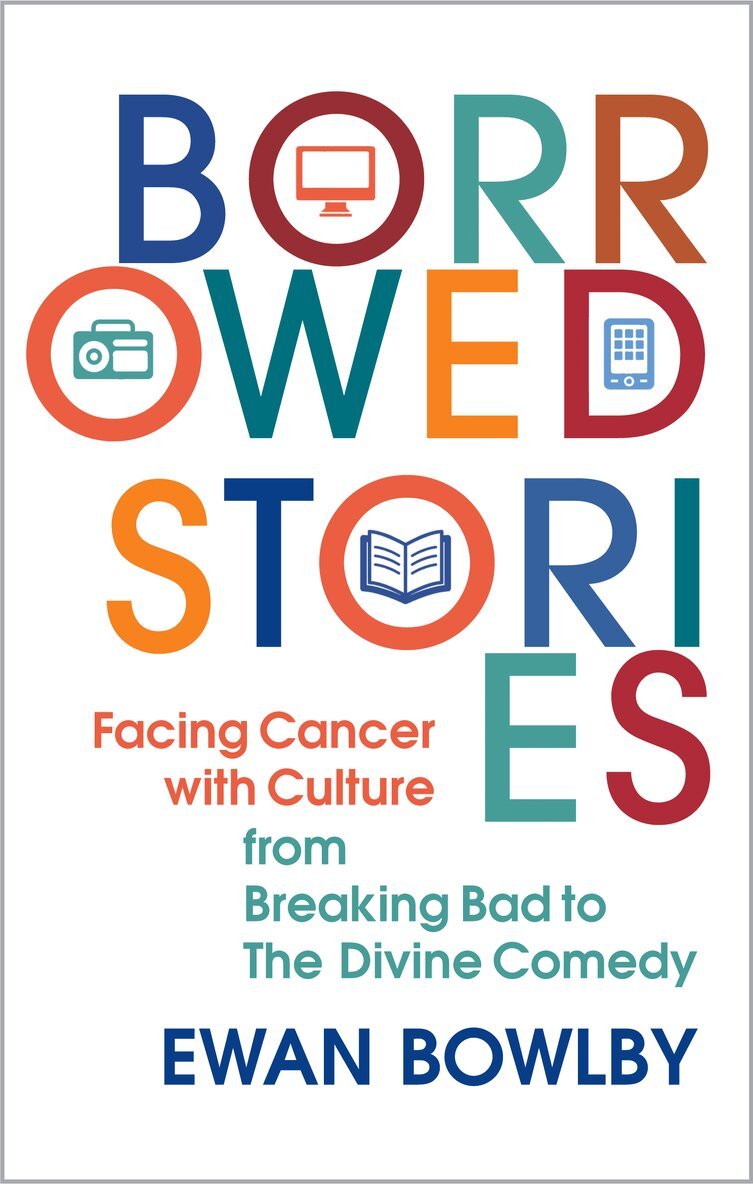
‘This book is an act of defiance: an attempt to cling to clarity, coherence and communication as my mind and body are overtaken by aggressive brain cancer. It is also an expression of gratitude, conveying my dependence on those who have shown me how to live – peacefully and honestly – with terminal illness.’When Ewan Bowlby was diagnosed with a brain tumour at the age of 17, he tackled the consequences head on. During the following, final decade of his life he recorded his experiences and searched for ways of approaching mortality with greater clarity, honesty and creativity than is found in contemporary healthcare.Ewan discovered the power of culture – as diverse as Dostoevsky’s The Brothers Karamazov and Dante’s Divine Comedy, John Green’s The Fault in Our Stars, and recent television dramas Breaking Bad and Cold Feet – to enable those confronting death and disease to map their own situations. Adopting Arthur Frank’s concept of ‘borrowed stories’, Ewan challenged the received wisdom that Western society is in ‘denial of death’; in fact, great works of culture can help people to find meaning and self-expression, even comfort and support.This remarkable book comprises two parts. Part I is autobiographical, as Ewan describes the onset, diagnosis and treatment of his illness, including the emotional, existential and physical trauma caused by awake brain surgery, seizures and aggressive radiation treatments. Part II presents an adaptation of his doctorate, in which he demonstrates the potential of the arts to provide spiritual care for people with cancer, focusing on four themes central to his own experience: death, time, humour and relationship.

Ewan Bowlby's research and writing uncovers a crucial way of improving the lives of anyone facing cancer's consequences Demonstrates that through engaging with all kinds of culture, a crucial way of improving the lives of anyone facing the consequences of cancer can be foundAn honest, moving and inspiring memoir about living with cancer and approaching death When Ewan Bowlby was diagnosed with a brain tumour at the age of 17, he tackled the consequences head on. In the last decade of his life, as cancer developed, he recorded his experience with great honesty. But much more than that, he discovered a crucial way of improving the lives of anyone facing cancer s consequences. Ewan believed evidence-based medicine had left a lost sense of humanity . Through all kinds of culture whether author John Green's The Fault in Our Stars, Alexander Solzhenitsn's Cancer Ward or TV's Breaking Bad everyone could find new ways of responding to such devastating illness. He revealed how sentimentality, even humour filled the huge hole left by cold clinical language. A brilliant student, he tested his ideas everywhere from top universities to groups of patients from every background. This book is Ewan s story of living with cancer and approaching death, and his unique insight into how everyone caught up in that world can learn to think differently about what they are facing.
‘This book is an act of defiance: an attempt to cling to clarity, coherence and communication as my mind and body are overtaken by aggressive brain cancer. It is also an expression of gratitude, conveying my dependence on those who have shown me how to live – peacefully and honestly – with terminal illness.’When Ewan Bowlby was diagnosed with a brain tumour at the age of 17, he tackled the consequences head on. During the following, final decade of his life he recorded his experiences and searched for ways of approaching mortality with greater clarity, honesty and creativity than is found in contemporary healthcare.Ewan discovered the power of culture – as diverse as Dostoevsky’s The Brothers Karamazov and Dante’s Divine Comedy, John Green’s The Fault in Our Stars, and recent television dramas Breaking Bad and Cold Feet – to enable those confronting death and disease to map their own situations. Adopting Arthur Frank’s concept of ‘borrowed stories’, Ewan challenged the received wisdom that Western society is in ‘denial of death’; in fact, great works of culture can help people to find meaning and self-expression, even comfort and support.This remarkable book comprises two parts. Part I is autobiographical, as Ewan describes the onset, diagnosis and treatment of his illness, including the emotional, existential and physical trauma caused by awake brain surgery, seizures and aggressive radiation treatments. Part II presents an adaptation of his doctorate, in which he demonstrates the potential of the arts to provide spiritual care for people with cancer, focusing on four themes central to his own experience: death, time, humour and relationship.
Ewan Bowlby's research and writing uncovers a crucial way of improving the lives of anyone facing cancer's consequences Demonstrates that through engaging with all kinds of culture, a crucial way of improving the lives of anyone facing the consequences of cancer can be foundAn honest, moving and inspiring memoir about living with cancer and approaching death When Ewan Bowlby was diagnosed with a brain tumour at the age of 17, he tackled the consequences head on. In the last decade of his life, as cancer developed, he recorded his experience with great honesty. But much more than that, he discovered a crucial way of improving the lives of anyone facing cancer s consequences. Ewan believed evidence-based medicine had left a lost sense of humanity . Through all kinds of culture whether author John Green's The Fault in Our Stars, Alexander Solzhenitsn's Cancer Ward or TV's Breaking Bad everyone could find new ways of responding to such devastating illness. He revealed how sentimentality, even humour filled the huge hole left by cold clinical language. A brilliant student, he tested his ideas everywhere from top universities to groups of patients from every background. This book is Ewan s story of living with cancer and approaching death, and his unique insight into how everyone caught up in that world can learn to think differently about what they are facing.