Exequiel Lacovsky - Böcker
Visar alla böcker från författaren Exequiel Lacovsky. Handla med fri frakt och snabb leverans.
4 produkter
4 produkter
2 358 kr
Skickas inom 10-15 vardagar
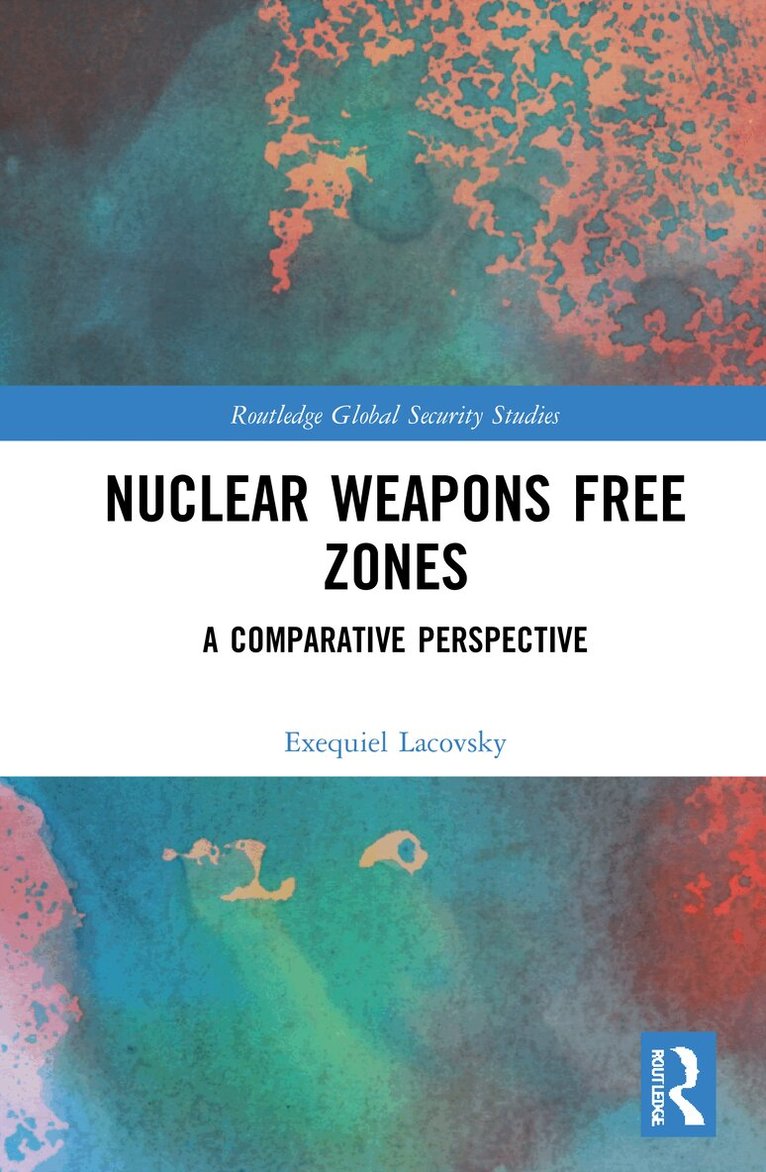
This book explores the conditions under which Nuclear Weapons Free Zones (NWFZs) can be established. It analyzes four hypotheses that explain the factors contributing to the formation of NWFZs, building upon realist, constructivist and liberal theories from international relations. Through structured focused comparison, the book presents and compares the emergence of NWFZs in Latin America, the South Pacific, Southeast Asia, Africa, Central Asia, and the Middle East, which is a prospect for a NWFZ. The book argues that NWFZ projects depend on the following conditions: the security interest of regional states in avoiding nuclear threats, preexisting regional institutions and regional economic cooperation, leadership by a core of regional powers and shared interest in spreading non-proliferation norms. Democracy is not a necessary condition, but democratization can help overcome barriers presented by hesitant or opposed regional governments. As too many of the mentioned necessary conditions are lacking in the Middle East, a NWFZ project, thus, will be possible only after major political changes.This book will be of much interest to students of nuclear proliferation, arms control, security studies and International Relations.
635 kr
Skickas inom 10-15 vardagar
This book explores the conditions under which Nuclear Weapons Free Zones (NWFZs) can be established. It analyzes four hypotheses that explain the factors contributing to the formation of NWFZs, building upon realist, constructivist and liberal theories from international relations. Through structured focused comparison, the book presents and compares the emergence of NWFZs in Latin America, the South Pacific, Southeast Asia, Africa, Central Asia, and the Middle East, which is a prospect for a NWFZ. The book argues that NWFZ projects depend on the following conditions: the security interest of regional states in avoiding nuclear threats, preexisting regional institutions and regional economic cooperation, leadership by a core of regional powers and shared interest in spreading non-proliferation norms. Democracy is not a necessary condition, but democratization can help overcome barriers presented by hesitant or opposed regional governments. As too many of the mentioned necessary conditions are lacking in the Middle East, a NWFZ project, thus, will be possible only after major political changes.This book will be of much interest to students of nuclear proliferation, arms control, security studies and International Relations.
The Unintended Consequences of Peace
Peaceful Borders and Illicit Transnational Flows
Häftad, Engelska, 2024
321 kr
Skickas inom 7-10 vardagar
Scholars of international relations generally consider that under conditions of violent conflict and war, smuggling and trans-border crime are likely to thrive. In contrast, this book argues that in fact it is globalisation and peaceful borders that have enabled transnational illicit flows conducted by violent non-state actors, including transnational criminal organizations, drug trafficking organizations, and terrorist cells, who exploit the looseness and demilitarization of borderlands. Empirically, the book draws on case studies from the Americas, compared with other regions of the world experiencing similar phenomena, including the European Union and Southeast Europe (the Western Balkans), Southern Africa, and Southeast Asia. To explain the phenomenon in itself, the authors examine the type of peaceful borders and regimes involved in each case; how strong each country is in the governance of their borderlands; their political willingness to control their peaceful borders; and the prevailing socio-economic conditions across the borderlands.
The Unintended Consequences of Peace
Peaceful Borders and Illicit Transnational Flows
Inbunden, Engelska, 2021
951 kr
Skickas inom 7-10 vardagar
Scholars of international relations generally consider that under conditions of violent conflict and war, smuggling and trans-border crime are likely to thrive. In contrast, this book argues that in fact it is globalisation and peaceful borders that have enabled transnational illicit flows conducted by violent non-state actors, including transnational criminal organizations, drug trafficking organizations, and terrorist cells, who exploit the looseness and demilitarization of borderlands. Empirically, the book draws on case studies from the Americas, compared with other regions of the world experiencing similar phenomena, including the European Union and Southeast Europe (the Western Balkans), Southern Africa, and Southeast Asia. To explain the phenomenon in itself, the authors examine the type of peaceful borders and regimes involved in each case; how strong each country is in the governance of their borderlands; their political willingness to control their peaceful borders; and the prevailing socio-economic conditions across the borderlands.