Eyal Poleg - Böcker
Visar alla böcker från författaren Eyal Poleg. Handla med fri frakt och snabb leverans.
5 produkter
5 produkter
1 089 kr
Skickas inom 7-10 vardagar
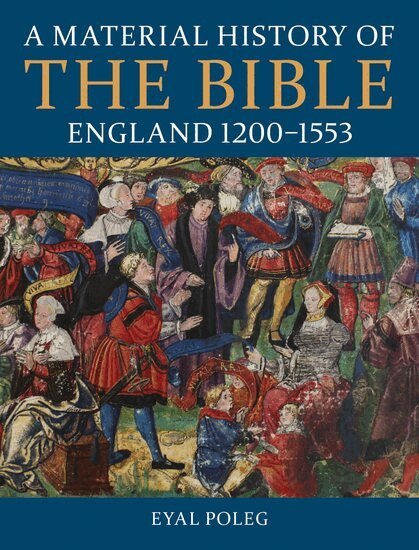
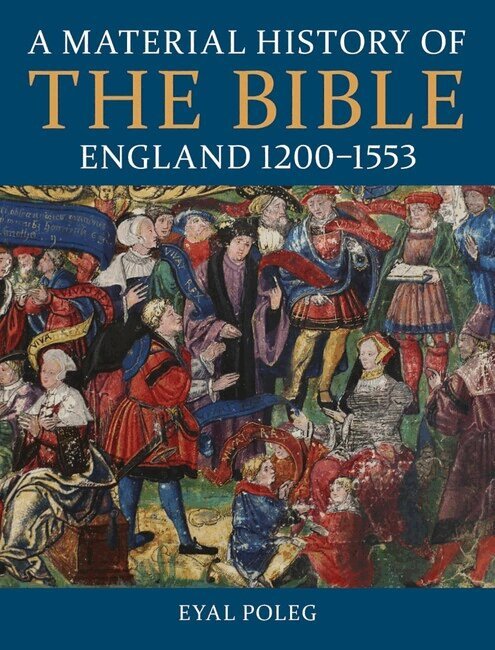
This book is the first in-depth study of the production and use of Bibles in late medieval and early modern England. Over three and a half centuries, from the nascent universities and Latin Bibles of the thirteenth century to the death of Edward VI in 1553, it puts a new perspective on the advent of moveable type print and religious reform. Based on the analysis of hundreds of biblical manuscripts and prints it reveals how scribes, printers, readers, and patrons have reacted to religious and political turmoil. The material evidence undermines traditional narratives, revealing, for example, evidence of Church worship in English prior to the Reformation, or seeing Henry VIII's Great Bible as a useless book.
415 kr
Skickas inom 7-10 vardagar
This book is the first in-depth study of the production and use of Bibles in late medieval and early modern England. Over three and a half centuries, from the nascent universities and Latin Bibles of the thirteenth century to the death of Edward VI in 1553, it puts a new perspective on the advent of moveable type print and religious reform. Based on the analysis of hundreds of biblical manuscripts and prints it reveals how scribes, printers, readers, and patrons have reacted to religious and political turmoil. The material evidence undermines traditional narratives, revealing, for example, evidence of Church worship in English prior to the Reformation, or seeing Henry VIII's Great Bible as a useless book.
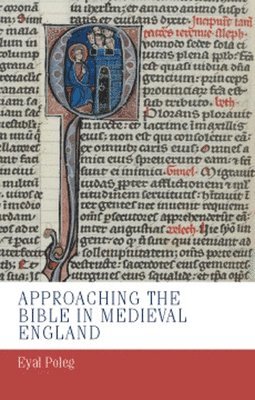
Del 8 - Manchester Medieval Studies
Approaching the Bible in Medieval England
Inbunden, Engelska, 2013
1 167 kr
Skickas inom 5-8 vardagar
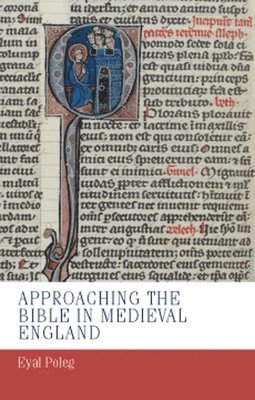
How did people learn their Bibles in the Middle Ages? Did church murals, biblical manuscripts, sermons or liturgical processions transmit the Bible in the same way?This book unveils the dynamics of biblical knowledge and dissemination in thirteenth- and fourteenth-century England. An extensive and interdisciplinary survey of biblical manuscripts and visual images, sermons and chants, reveals how the unique qualities of each medium became part of the way the Bible was known and recalled; how oral, textual, performative and visual means of transmission joined to present a surprisingly complex biblical worldview. This study of liturgy and preaching, manuscript culture and talismanic use introduces the concept of biblical mediation, a new way to explore Scriptures and society. It challenges the lay-clerical divide by demonstrating that biblical exegesis was presented to the laity in non-textual means, while the ‘naked text’ of the Bible remained elusive even for the educated clergy.
354 kr
Skickas inom 5-8 vardagar
How did people learn their Bibles in the Middle Ages? Did church murals, biblical manuscripts, sermons or liturgical processions transmit the Bible in the same way?This book unveils the dynamics of biblical knowledge and dissemination in thirteenth- and fourteenth-century England. An extensive and interdisciplinary survey of biblical manuscripts and visual images, sermons and chants, reveals how the unique qualities of each medium became part of the way the Bible was known and recalled; how oral, textual, performative and visual means of transmission joined to present a surprisingly complex biblical worldview. This study of liturgy and preaching, manuscript culture and talismanic use introduces the concept of biblical mediation, a new way to explore Scriptures and society. It challenges the lay-clerical divide by demonstrating that biblical exegesis was presented to the laity in non-textual means, while the ‘naked text’ of the Bible remained elusive even for the educated clergy.
Del 27 - Library of the Written Word - The Manuscript World
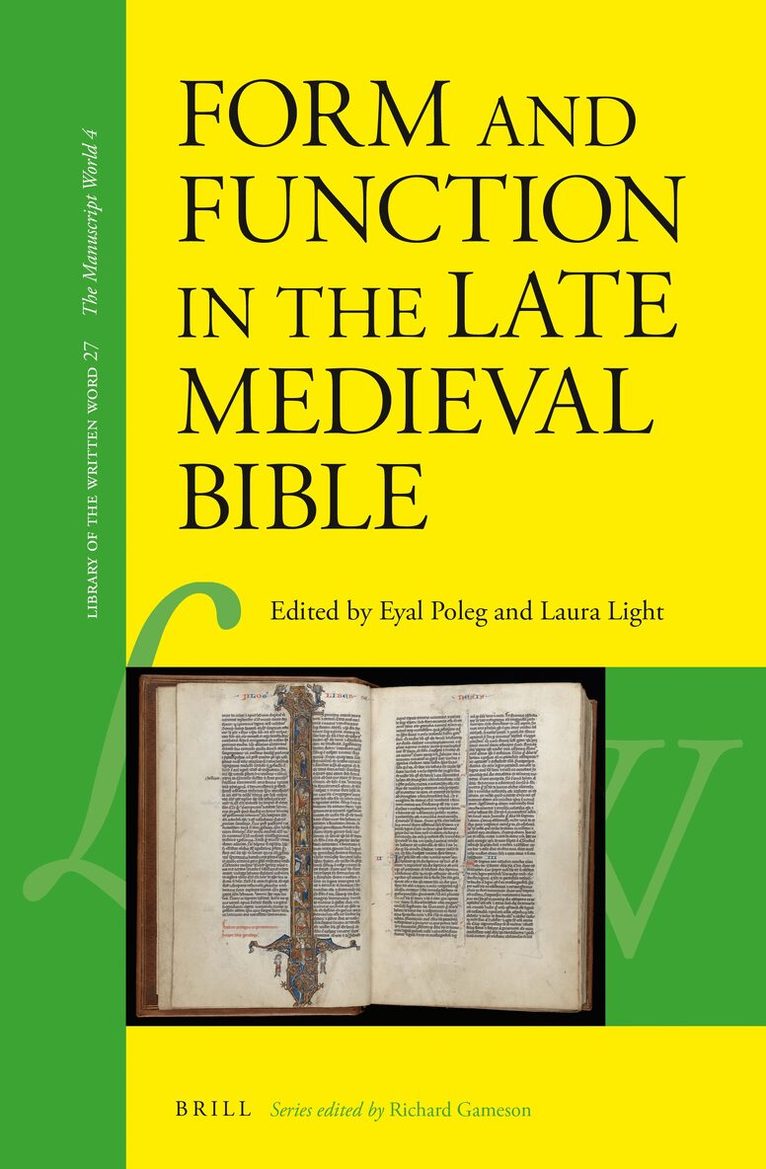
Form and Function in the Late Medieval Bible
Inbunden, Engelska, 2013
2 551 kr
Skickas inom 5-8 vardagar
Thirteenth- and fourteenth-century Latin Bibles survive in hundreds of manuscripts, one of the most popular books of the Middle Ages. Their innovative layout and organization established the norm for Bibles for centuries to come. This volume is the first study of these Bibles as a cohesive group. Multi- and inter-disciplinary analyses in art history, liturgy, exegesis, preaching and manuscript studies, reveal the nature and evolution of layout and addenda. They follow these Bibles as they were used by monks and friars, preachers and merchants. By addressing Latin Bibles alongside their French, Italian and English counterparts, this book challenges the Latin-vernacular dichotomy to show links, as well as discrepancies, between lay and clerical audiences and their books.Contributors include Peter Stallybrass, Diane Reilly, Paul Saenger, Richard Gameson, Chiara Ruzzier, Giovanna Murano, Cornelia Linde, Lucie Doležalová, Laura Light, Eyal Poleg, Sabina Magrini, Sabrina Corbellini, Margriet Hoogvliet, Guy Lobrichon, Elizabeth Solopova, and Matti Peikola.