F. Brown – författare
Visar alla böcker från författaren F. Brown. Handla med fri frakt och snabb leverans.
4 produkter
4 produkter
E-bok
Engelska, 2014779 kr
Läs direkt efter köp
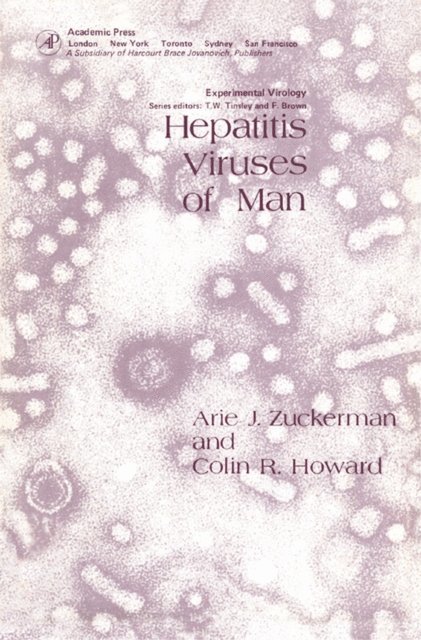
Hepatitis Viruses of Man covers the advances and developments in the study of viral hepatitis. The book discusses the history, epidemiology, and clinical features of viral hepatitis; the nomenclature and morphology of hepatitis viruses and their antigens; and the pathology of the liver in acute viral hepatitis. The text also describes the biochemical and biophysical properties of hepatitis B surface antigen; the nature and immunopathogenesis of hepatitis B; and the laboratory tests for hepatitis B surface antigen and antibody and hepatitis B core antigen and antibody. The carrier state; maternal transmission of hepatitis B and neonatal infection; and Hepatitis B virus and primary liver cancer are also considered. The book further tackles the laboratory tests for hepatitis A and the nature of the virus; immunization against hepatitis; and interferon and antiviral therapy in chronic hepatitis B infection. Microbiologists, pathologists, and medical doctors will find the book useful.
E-bok
PDF, Engelska, 2013779 kr
Läs direkt efter köp
Measles Virus and Its Biology deals with the biological and clinical problems of the viral disease, measles. This book also describes the behavior of the measles virus in terms of its immunological, biochemical, or molecular-biological aspects. The authors review the epidemiology and pathogenesis of measles and discuss how the virus flourishes and mobilizes in the human body through a close association with leukocytes and lymphoid organs. Biological characters and genetic markers of the virus can serve to separate different isolates of the measles virus from one another. Radioactive labeling techniques have detected six structural proteins associated with the virus; a schematic diagram in the book shows the structural components and the biochemical dissection of the virus. The authors also discuss that the various immune responses to the virus can be due to "variation in the patient" rather than virus mutation. The authors do not discount that the physiological behavior of the virus such as its location, number, or replication can also affect the host. This text is suitable for the clinical research workers dealing with immunology, infectious diseases, cellular chemistry, or molecular biology.
Häftad, Engelska, 1991
978 kr
Skickas inom 10-15 vardagar
The Fifth Report of the International Committee on Taxonomy of Viruses (ICTV), summarizes the proceedings and decisions reached by the ICTV at its meetings held at the International Congresses of Virology in Sendai (1984), Edmonton (1987) and Berlin (1990). This report has been organized in the same way as the previous ones (Wildy, 1971; Fenner, 1976; Matthews, 1979; 1982), yet it encompasses many more families and groups of viruses than previous reports, and it includes new tables, diagrams and keys. The officers and members of the ICTV study groups from 1984 to 1990 are listed, as the current ICTV statutes and rules of nomenclature. Information on the format for submission of new taxonomic proposals to the ICTV is also provided. Since the Fourth Report of the ICTV (1982), 19 new virus families and groups have been described. This report includes 2,430 viruses belonging to 73 families or groups, as well as virus satellites and viroids descriptions, but it does not include descriptions not approved by the ICTV. It now will be possible to publish such preliminary, and in some cases controversial, descriptions in the Virology Division pages of the Archives of Virology --this will allow virologists to carry on the kind of interim dialogue that is necessary for arriving at broad agreement on taxonomic matters.
E-bok
PDF, Engelska, 20121 168 kr
Läs direkt efter köp
The Fifth Report of the International Committee on Taxonomy of Viruses (ICTV), summarizes the proceedings and decisions reached by the ICTV at its meetings held at the International Congresses of Virology in Sendai (1984), Edmonton (1987) and Berlin (1990). This report has been organized in the same way as the previous ones (Wildy, 1971; Fenner, 1976; Matthews, 1979; 1982), yet it encompasses many more families and groups of viruses than previous reports, and it includes new tables, diagrams and keys. The officers and members of the ICTV study groups from 1984 to 1990 are listed, as the current ICTV statutes and rules of nomenclature. Information on the format for submission of new taxonomic proposals to the ICTV is also provided. Since the Fourth Report of the ICTV (1982), 19 new virus families and groups have been described. This report includes 2,430 viruses belonging to 73 families or groups, as well as virus satellites and viroids descriptions, but it does not include descriptions not approved by the ICTV. It now will be possible to publish such preliminary, and in some cases controversial, descriptions in the Virology Division pages of the Archives of Virology --this will allow virologists to carry on the kind of interim dialogue that is necessary for arriving at broad agreement on taxonomic matters.