F. Herbert Bormann - Böcker
Visar alla böcker från författaren F. Herbert Bormann. Handla med fri frakt och snabb leverans.
3 produkter
3 produkter
433 kr
Skickas inom 5-8 vardagar
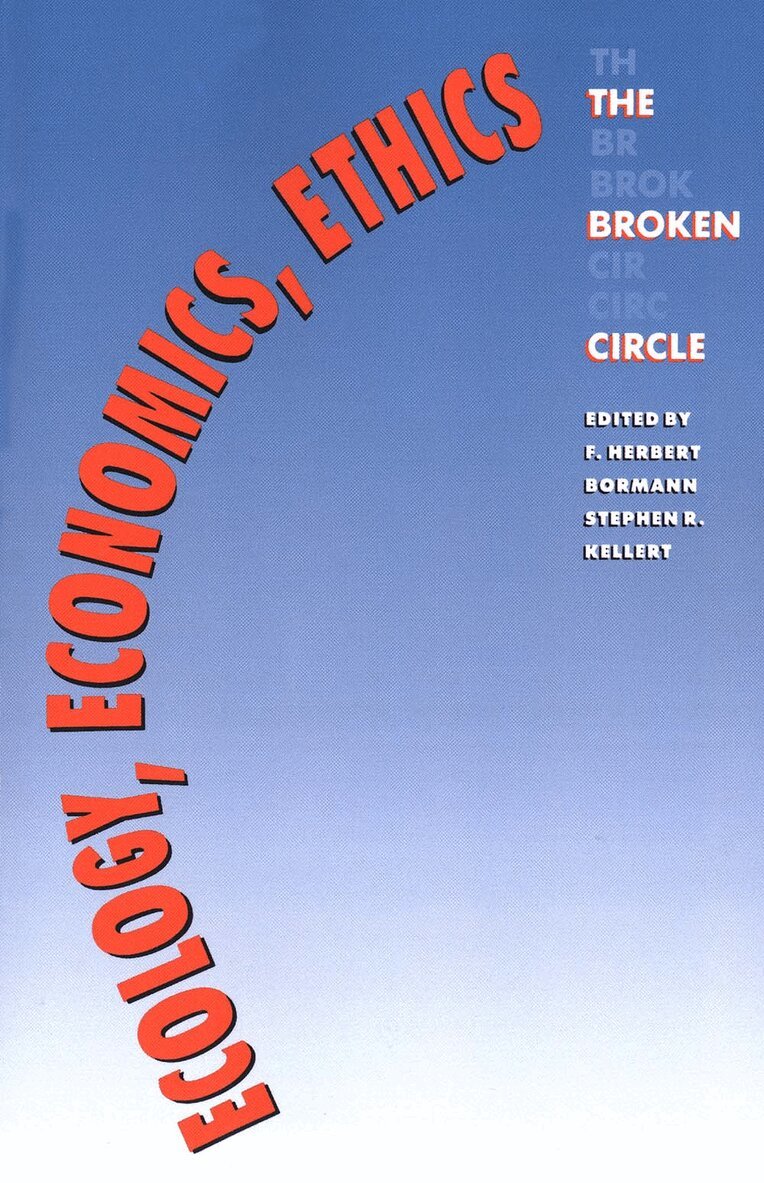
In this book a distinguished group of environmental experts argues that in order to solve global environmental problems, we must view them in a broad interdisciplinary perspective that recognizes the relations—the interconnected circle—among ecology, economics, and ethics. Currently the circle is broken, they say, because environmental policy is decided on short-term estimations of material that take little account of the economic or moral burdens that will be borne by future generations if we deplete our resources now. We must, assert the authors, have a better knowledge of the science underlying our environmental problems, we must understand their causes and consequences in relation to our economic and political systems, and we must recognize that an effective response will require a shift in a technologically oriented society’s ethical attitude toward the natural environment. The authors address a wide range of concerns from global atmospheric degradation and spreading toxification of the environment to loss of forests and massive species extinctions. They offer to general readers, students, and professionals practical assessments and remedies for many of these problems. They suggest, for example, mechanisms that provide economic incentives for conservation; engineering and technical adaptations to use resources more effectively and dispose of waste products; better economic accounting procedures for measuring the real environmental costs of our depletion of natural resources; and a remodeled education system that better prepares us to see each individual’s responsibility to the environment.
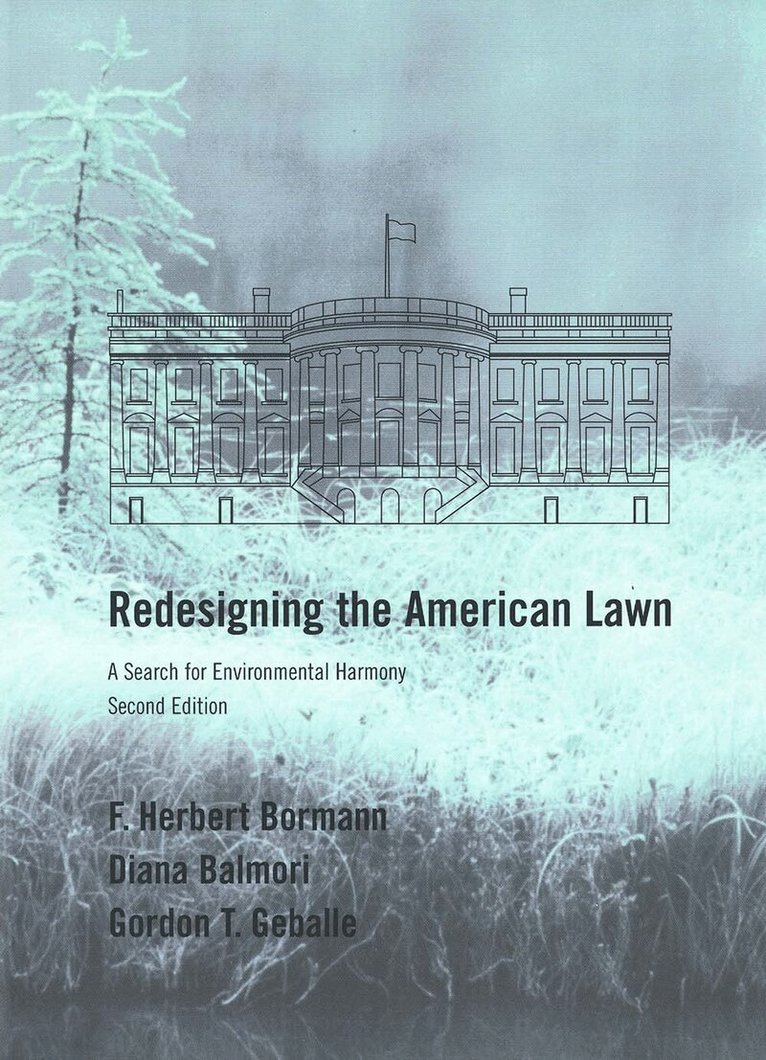
Redesigning the American Lawn
A Search for Environmental Harmony, Second Edition
Häftad, Engelska, 2001
348 kr
Skickas inom 7-10 vardagar
The authors in this book argue that our dedication to maintaining beautiful lawns is contributing to the serious environmental problems facing the planet, and they offer strategies for creating and caring for aesthetically pleasing and ecologically sound lawns. This new edition updates the original text and adds a chapter and illustrations showing what progress has been made in the ecological management of landscapes over the past decade.Reviews of the first edition:“An extremely readable summation of the origins of the addiction to lawns, and of the environmental reasons why Americans should kick the habit.”—Anne Raver, New York Times Book Review“A manual for improving a large part of the American environment while reducing pollution, saving Americans a large amount of money, and beautifying the landscape.”—Edward O. Wilson
2 118 kr
Skickas inom 10-15 vardagar
The 1996 NATO Advanced Study Institute (ASI) followed the international tradi tion of the schools held in Cargese in 1976, 1979, 1983, 1987 and 1991. Impressive progress in quantum field theory had been made since the last school in 1991. Much of it is connected with the interplay of quantum theory and the structure of space time, including canonical gravity, black holes, string theory, application of noncommutative differential geometry, and quantum symmetries. In addition there had recently been important advances in quantum field theory which exploited the electromagnetic duality in certain supersymmetric gauge theories. The school reviewed these developments. Lectures were included to explain how the "monopole equations" of Seiberg and Witten can be exploited. They were presented by E. Rabinovici, and supplemented by an extra 2 hours of lectures by A. Bilal. Both the N = 1 and N = 2 supersymmetric Yang Mills theory and resulting equivalences between field theories with different gauge group were discussed in detail. There are several roads to quantum space time and a unification of quantum theory and gravity. There is increasing evidence that canonical gravity might be a consistent theory after all when treated in. a nonperturbative fashion. H. Nicolai presented a series of introductory lectures. He dealt in detail with an integrable model which is obtained by dimensional reduction in the presence of a symmetry.