F. Kajzar - Böcker
Visar alla böcker från författaren F. Kajzar. Handla med fri frakt och snabb leverans.
13 produkter
13 produkter
2 101 kr
Skickas inom 10-15 vardagar
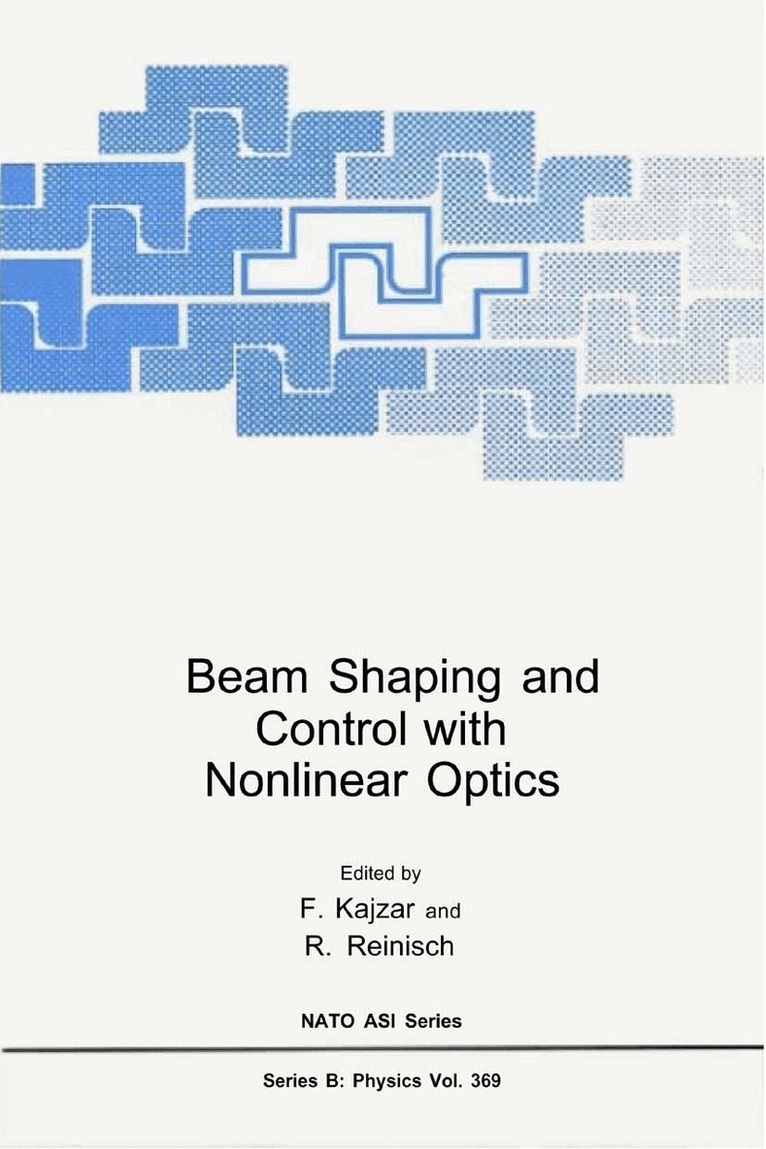
The field of nonlinear optics, which has undergone a very rapid development since the discovery of lasers in the early sixties, continues to be an active and rapidly developing - search area. The interest is mainly due to the potential applications of nonlinear optics: - rectly in telecommunications for high rate data transmission, image processing and recognition or indirectly from the possibility of obtaining large wavelength range tuneable lasers for applications in industry, medicine, biology, data storage and retrieval, etc. New phenomena and materials continue to appear regularly, renewing the field. This has proven to be especially true over the last five years. New materials such as organics have been developed with very large second- and third-order nonlinear optical responses. Imp- tant developments in the areas of photorefractivity, all optical phenomena, frequency conv- sion and electro-optics have been observed. In parallel, a number of new phenomena have been reported, some of them challenging the previously held concepts. For example, solitons based on second-order nonlinearities have been observed in photorefractive materials and frequency doubling crystals, destroying the perception that third order nonlinearities are - quired for their generation and propagation. New ways of creating and manipulating nonl- ear optical materials have been developed. An example is the creation of highly nonlinear (second-order active) polymers by static electric field, photo-assisted or all-optical poling. Nonlinear optics involves, by definition, the product of electromagnetic fields. As a con- quence, it leads to the beam control.
2 101 kr
Skickas inom 10-15 vardagar
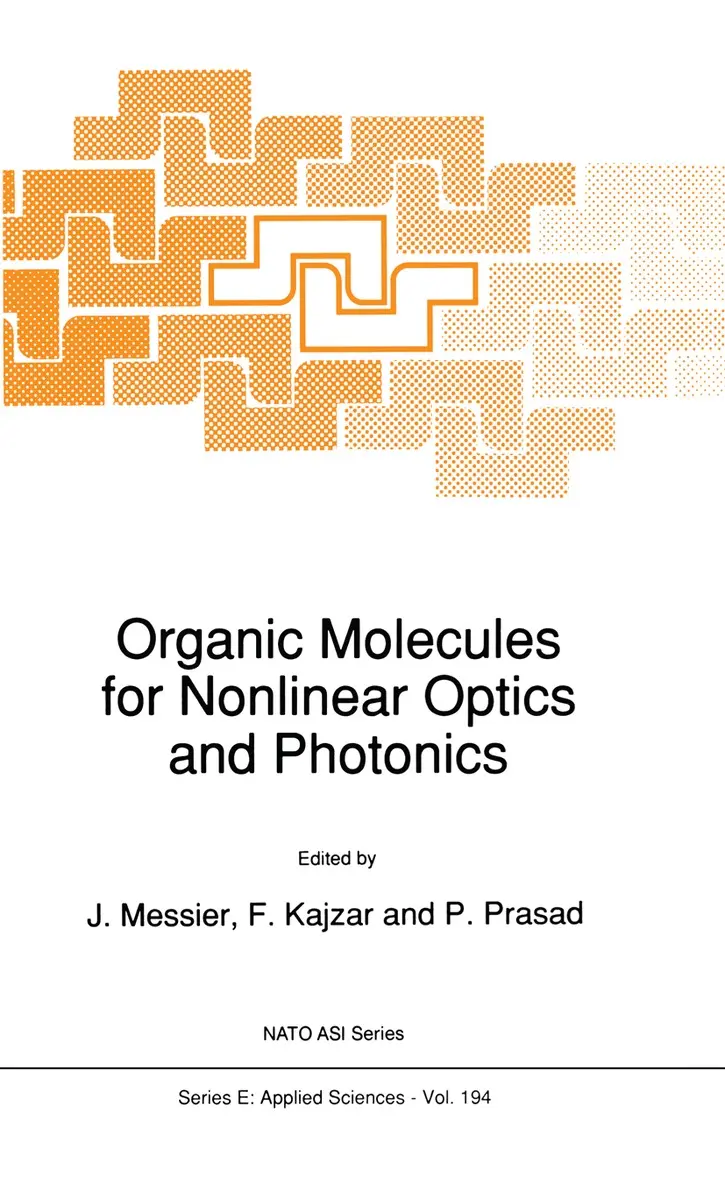
Photonics is being labelled by many as the technology for the 21st century. Because of the structural flexibility both at the molecular and bulk levels, organic materials are emerging as a very important class of nonlinear optical materials to be used for generating necessary nonlinear optical functions for the technology of photonics. Since the last NATO advanced research workshop on "Polymers for Nonlinear Optics"held in June 1988, at Nice - Sophia Antipolis, France. there has been a tremendous growth of interest worldwide and important development in this field. Significant progress has been made in theoretical modeling, material development, experimental studies and device concepts utilizing organic materials. These important recent developments provided the rationale for organizing the workshop on "Organic Materials for Nonlinear Optics and Photonics" which was held in La Rochelle, France, in August 1990. This proceeding is the outcome of the workshop held in La Rochelle. The objective of the workshop was to bring together scientists and engineers of varied backgrounds working in this field in order to assess the current status of this field by presenting significant recent developments and make recommendations on future directions of research. The workshop was multidisciplinary as it had contributions from chemists, physicists, materials scientists and device engineers. The participants were both from industries and universities. The workshop included plenary lectures by leading international scientists in this field, contributed research papers and a poster session. Panel discussion groups were organized to summarize important developments and to project future directions.
3 149 kr
Skickas inom 10-15 vardagar
The discussions presented in this work are grouped around three main aspects: molecular engineering; electroluminescence and photorefractive effects; and nonlinear optical material response. Progress, problems and possible developments are clearly described. The main topics covered (albeit with some overlap) are: theoretical considerations; nonlinear optical effects and applications; photorefractivity, photochromism and electroluminescence; molecular engineering, material processing, characterization and molecular electronics applications; new effects and phenomena.
2 101 kr
Skickas inom 10-15 vardagar
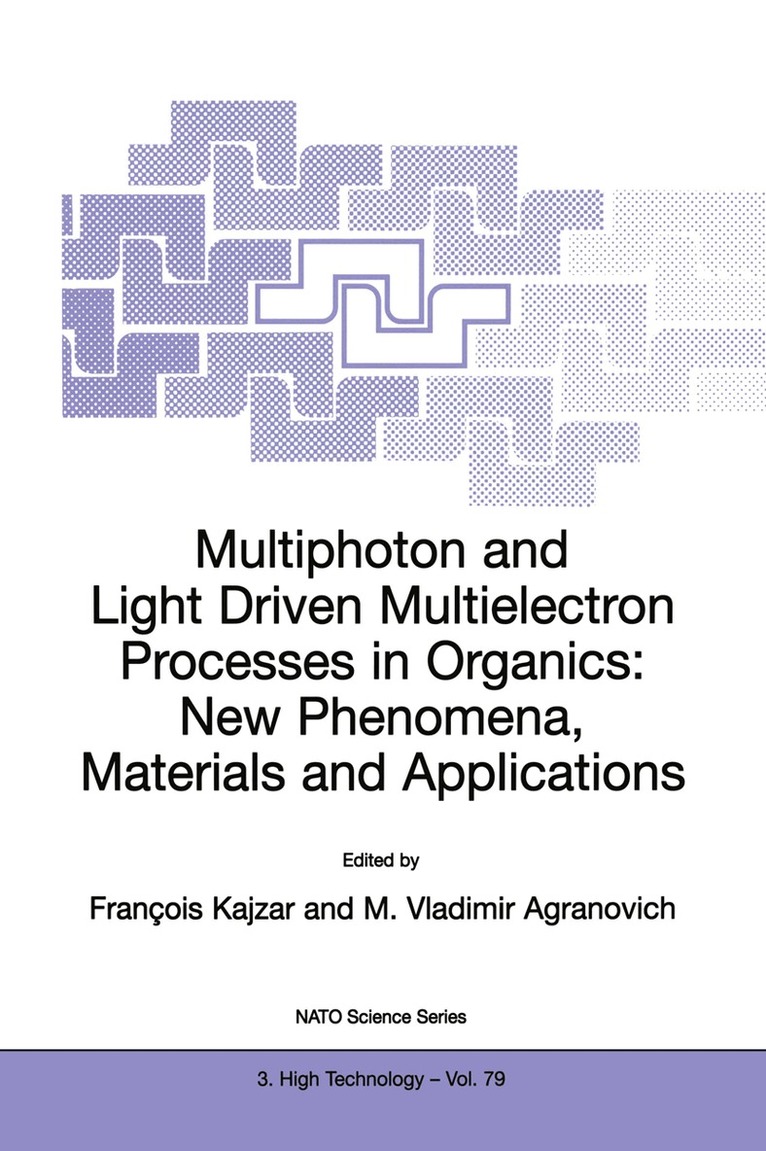
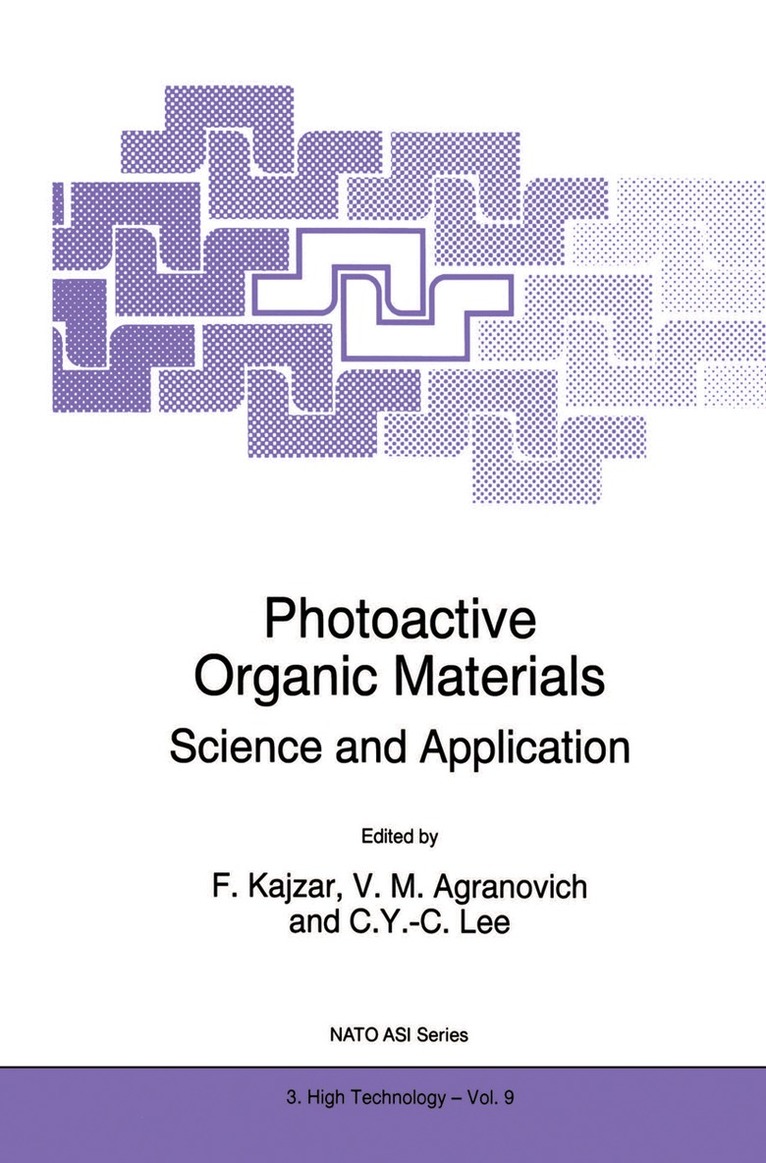
A state of the art description of organic photo- and electroactive molecules and their practical applications. Topics covered include molecular design and synthesis of highly light sensitive molecules and phenomena associated with electron-photon interaction in organic molecules: nonlinear beam propagation, photorefractivity, multiphoton excitations and absorption, charge photogeneration and mobility, photo- and electroluminescence, photochromism and electrochromism, organic synthesis, material engineering and processing. Applications are addresses: optical data storage, LEDs, optical signalling processing, optical power limiters.
2 101 kr
Skickas inom 10-15 vardagar
A state of the art description of organic photo- and electroactive molecules and their practical applications. Topics covered include molecular design and synthesis of highly light sensitive molecules and phenomena associated with electron-photon interaction in organic molecules: nonlinear beam propagation, photorefractivity, multiphoton excitations and absorption, charge photogeneration and mobility, photo- and electroluminescence, photochromism and electrochromism, organic synthesis, material engineering and processing. Applications are addresses: optical data storage, LEDs, optical signalling processing, optical power limiters.
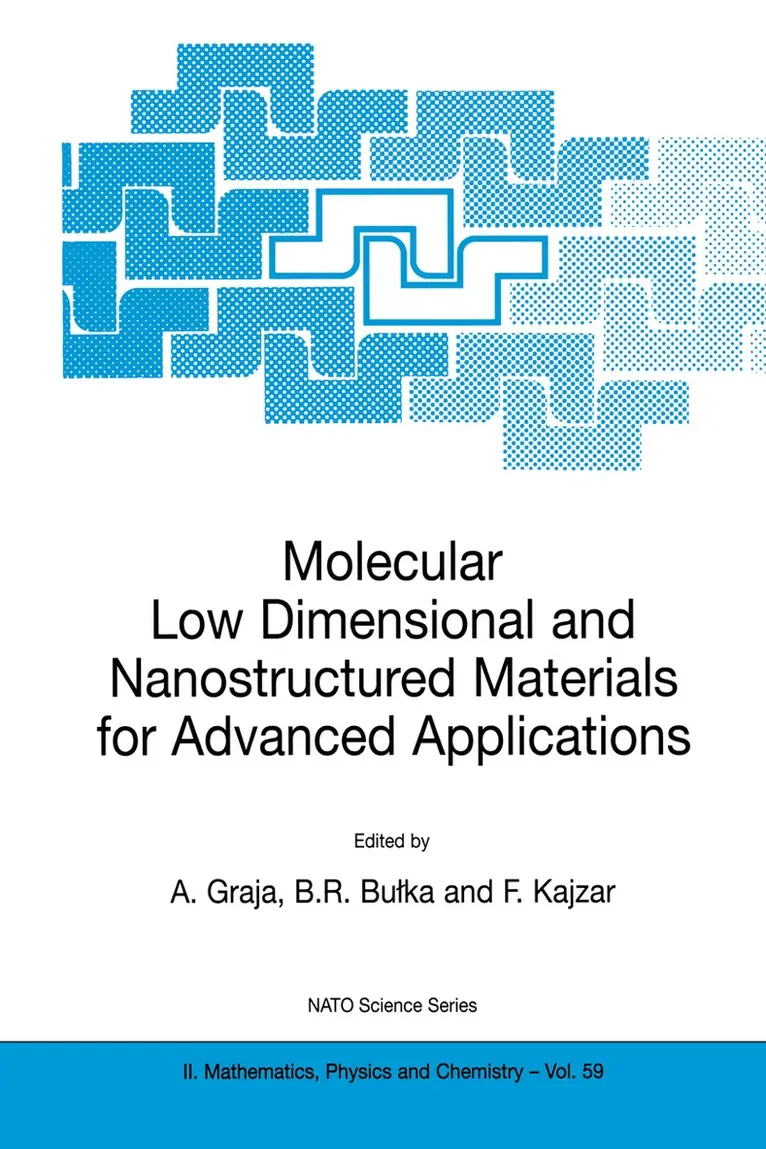
Molecular Low Dimensional and Nanostructured Materials for Advanced Applications
Inbunden, Engelska, 2002
1 064 kr
Skickas inom 10-15 vardagar
A presentation and discussion of advances in the field by some of the world's leading experts in 2002. Topics dealt with include new organic metals with quasi-two-dimensional structure, new organic superconductors, conducting and magnetic hybrid organic-inorganic materials, and highly conducting organic composites. Also reported are significant results on optically controllable gratings in liquid crystals and polymers, organic electroluminescent materials, functionalized polymers and photonics, and nonlinear optics. Some fullerene derivatives and organic and metallic clusters are also presented. The properties of semiconducting quantum wires, electronic transport through magnetic molecular nanostructure and electronic transport properties of nanostructures containing both ferromagnetic and superconductors are also presented and discussed. 4
Molecular Low Dimensional and Nanostructured Materials for Advanced Applications
Häftad, Engelska, 2002
1 064 kr
Skickas inom 10-15 vardagar
A presentation and discussion of advances in the field by some of the world's leading experts in 2002. Topics dealt with include new organic metals with quasi-two-dimensional structure, new organic superconductors, conducting and magnetic hybrid organic-inorganic materials, and highly conducting organic composites. Also reported are significant results on optically controllable gratings in liquid crystals and polymers, organic electroluminescent materials, functionalized polymers and photonics, and nonlinear optics. Some fullerene derivatives and organic and metallic clusters are also presented. The properties of semiconducting quantum wires, electronic transport through magnetic molecular nanostructure and electronic transport properties of nanostructures containing both ferromagnetic and superconductors are also presented and discussed.
2 101 kr
Skickas inom 10-15 vardagar
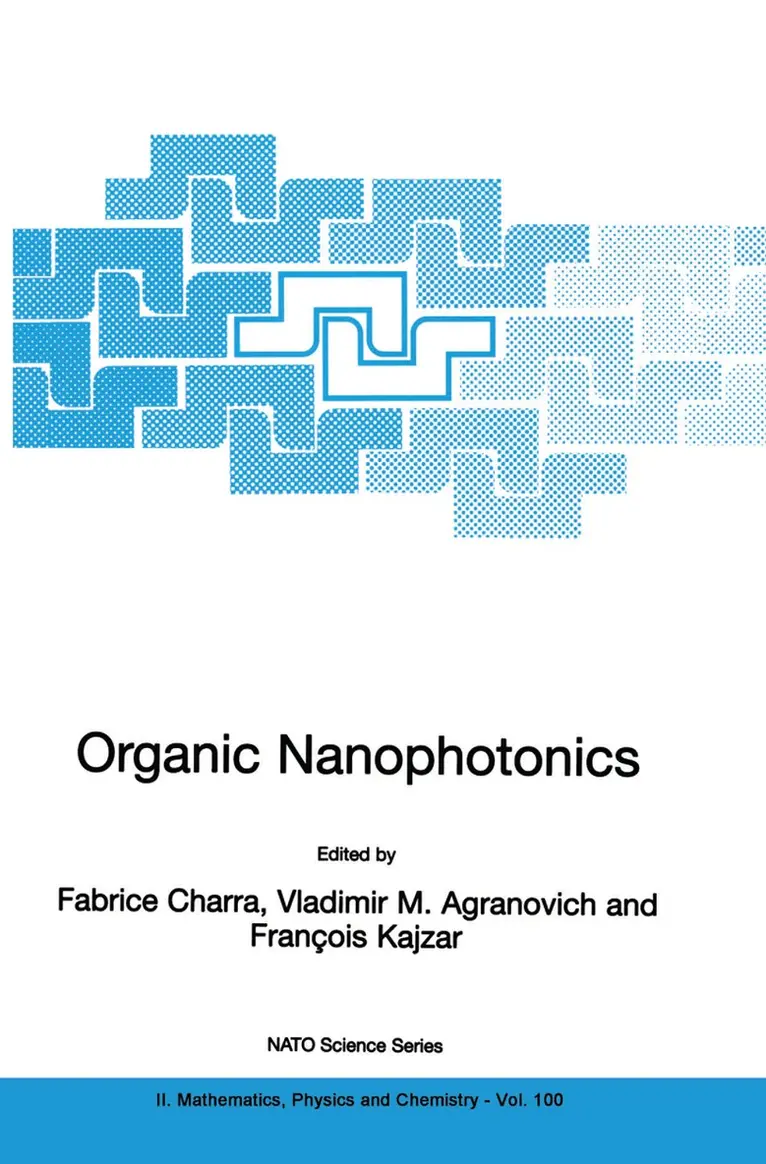
Photonics concerns the generation, transport, processing and detection of light. It underlies a large amount of industrial activity, mainly devoted to information technology, telecommunications, environmental monitoring, biomedical science and instrumentation. The field has received a powerful impetus with the introduction of nanoscale concepts. Moreover, organic materials now appear as key components in photonic devices such as light-emitting diodes, integrated lasers, or photovoltaic cells. Organic molecular systems offer unique opportunities in nanophotonics since both top-down and bottom-up strategies can be pursued towards the nanoscale. This text gathers the proceedings of the NATO advanced research workshop on "Organic Nanophotonics", held in Aix-en-Provence, France, August 25-29, 2002. It constitutes a snapshot of the state of the art in the novel, emerging research area of nanophotonics based on organic molecules and materials.
2 101 kr
Skickas inom 10-15 vardagar
Photonics concerns the generation, transport, processing and detection of light. It underlies a large amount of industrial activity, mainly devoted to information technology, telecommunications, environmental monitoring, biomedical science and instrumentation. The field has received a powerful impetus with the introduction of nanoscale concepts. Moreover, organic materials now appear as key components in photonic devices such as light-emitting diodes, integrated lasers, or photovoltaic cells. Organic molecular systems offer unique opportunities in nanophotonics since both top-down and bottom-up strategies can be pursued towards the nanoscale. This text gathers the proceedings of the NATO advanced research workshop on "Organic Nanophotonics", held in Aix-en-Provence, France, August 25-29, 2002. It constitutes a snapshot of the state of the art in the novel, emerging research area of nanophotonics based on organic molecules and materials.
2 101 kr
Skickas inom 10-15 vardagar
The field of nonlinear optics, which has undergone a very rapid development since the discovery of lasers in the early sixties, continues to be an active and rapidly developing - search area. The interest is mainly due to the potential applications of nonlinear optics: - rectly in telecommunications for high rate data transmission, image processing and recognition or indirectly from the possibility of obtaining large wavelength range tuneable lasers for applications in industry, medicine, biology, data storage and retrieval, etc. New phenomena and materials continue to appear regularly, renewing the field. This has proven to be especially true over the last five years. New materials such as organics have been developed with very large second- and third-order nonlinear optical responses. Imp- tant developments in the areas of photorefractivity, all optical phenomena, frequency conv- sion and electro-optics have been observed. In parallel, a number of new phenomena have been reported, some of them challenging the previously held concepts. For example, solitons based on second-order nonlinearities have been observed in photorefractive materials and frequency doubling crystals, destroying the perception that third order nonlinearities are - quired for their generation and propagation. New ways of creating and manipulating nonl- ear optical materials have been developed. An example is the creation of highly nonlinear (second-order active) polymers by static electric field, photo-assisted or all-optical poling. Nonlinear optics involves, by definition, the product of electromagnetic fields. As a con- quence, it leads to the beam control.
6 014 kr
Tillfälligt slut
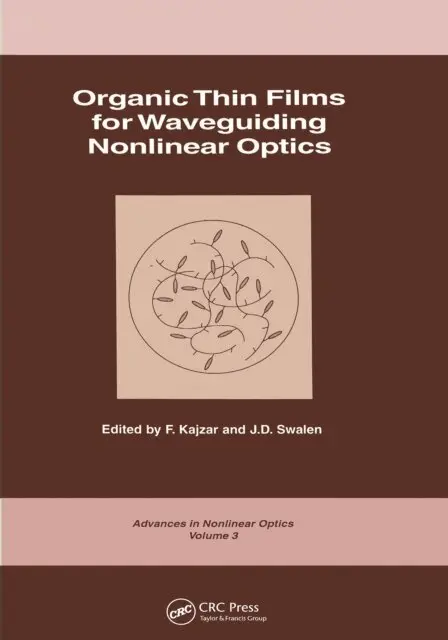
This work deals with the science and technology related to the application of thin organic films to the nonlinear optical processing of information and data storage. Organic materials offer several advantages: they exhibit high nonlinearity, can be easily made and integrated with semiconductor technology and are low in cost. This book offers an introduction for newcomers and gives the state of the art for those active in the area.
3 149 kr
Skickas inom 10-15 vardagar
The discussions presented in Photoactive Materials: Science and Applications are grouped around three main aspects: (i) molecular engineering; (ii) electroluminescence and photorefractive effects; and (iii) nonlinear optical material response. Progress, problems and possible developments are clearly described. The main topics covered (albeit with some overlap) are: Theoretical considerations; nonlinear optical effects and applications; photorefractivity, photochromism and electroluminescence; molecular engineering, material processing, characterization and molecular electronics applications; new effects and phenomena.
2 101 kr
Skickas inom 10-15 vardagar
Photonics is being labelled by many as the technology for the 21st century. Because of the structural flexibility both at the molecular and bulk levels, organic materials are emerging as a very important class of nonlinear optical materials to be used for generating necessary nonlinear optical functions for the technology of photonics. Since the last NATO advanced research workshop on "Polymers for Nonlinear Optics"held in June 1988, at Nice - Sophia Antipolis, France. there has been a tremendous growth of interest worldwide and important development in this field. Significant progress has been made in theoretical modeling, material development, experimental studies and device concepts utilizing organic materials. These important recent developments provided the rationale for organizing the workshop on "Organic Materials for Nonlinear Optics and Photonics" which was held in La Rochelle, France, in August 1990. This proceeding is the outcome of the workshop held in La Rochelle. The objective of the workshop was to bring together scientists and engineers of varied backgrounds working in this field in order to assess the current status of this field by presenting significant recent developments and make recommendations on future directions of research. The workshop was multidisciplinary as it had contributions from chemists, physicists, materials scientists and device engineers. The participants were both from industries and universities. The workshop included plenary lectures by leading international scientists in this field, contributed research papers and a poster session. Panel discussion groups were organized to summarize important developments and to project future directions.