F. Schuind – författare
Visar alla böcker från författaren F. Schuind. Handla med fri frakt och snabb leverans.
4 produkter
4 produkter
Del 256 - NATO Science Series A:
Advances in the Biomechanics of the Hand and Wrist
Inbunden, Engelska, 1994
2 201 kr
Skickas inom 10-15 vardagar
William P. Cooney III, R. A. Berger, and K. N. An Orthopedic Biomechanics Laboratory Department of Orthopedic Surgery Mayo Clinic and Mayo Foundation Rochester, MN 55905, U. S. A. As surgeons struggle to find new insights into the complex diseases and deformities that involve the wrist and hand, new insights are being provided by applied anatomy, physiology and biomechanics to these important areas. Indeed, a fresh new interaction of disciplines has immersed in which anatomists, bioengineers and surgeons examine together basic functions and principles that can provide a strong foundation for future growth. Clinical interest in the hand and wrist are now at a peak on an international level. Economic implications of disability affecting the hand and wrist are recognized that have international scope crossing oceans, cultures, languages and political philosophies. As with any struggle, a common ground for understanding is essential. NATO conferences such as this symposium on Biomechanics of the Hand and Wrist provides such a basis upon which to build discernment of fundamental postulates. As a start, basic research directed at studies of anatomy, pathology and pathophysiology and mechanical modeling is essential. To take these important steps further forward, funding from government and industry are needed to consider fundamental principles within the material sciences, biomechanical disciplines, applied anatomy and physiology and concepts of engineering modeling that have been applied to other areas of the musculoskeletal system.
Häftad, Engelska, 2013
2 137 kr
Skickas inom 10-15 vardagar
William P. Cooney III, R. A. Berger, and K. N. An Orthopedic Biomechanics Laboratory Department of Orthopedic Surgery Mayo Clinic and Mayo Foundation Rochester, MN 55905, U. S. A. As surgeons struggle to find new insights into the complex diseases and deformities that involve the wrist and hand, new insights are being provided by applied anatomy, physiology and biomechanics to these important areas. Indeed, a fresh new interaction of disciplines has immersed in which anatomists, bioengineers and surgeons examine together basic functions and principles that can provide a strong foundation for future growth. Clinical interest in the hand and wrist are now at a peak on an international level. Economic implications of disability affecting the hand and wrist are recognized that have international scope crossing oceans, cultures, languages and political philosophies. As with any struggle, a common ground for understanding is essential. NATO conferences such as this symposium on Biomechanics of the Hand and Wrist provides such a basis upon which to build discernment of fundamental postulates. As a start, basic research directed at studies of anatomy, pathology and pathophysiology and mechanical modeling is essential. To take these important steps further forward, funding from government and industry are needed to consider fundamental principles within the material sciences, biomechanical disciplines, applied anatomy and physiology and concepts of engineering modeling that have been applied to other areas of the musculoskeletal system.
Inbunden, Engelska, 1997
2 114 kr
Tillfälligt slut
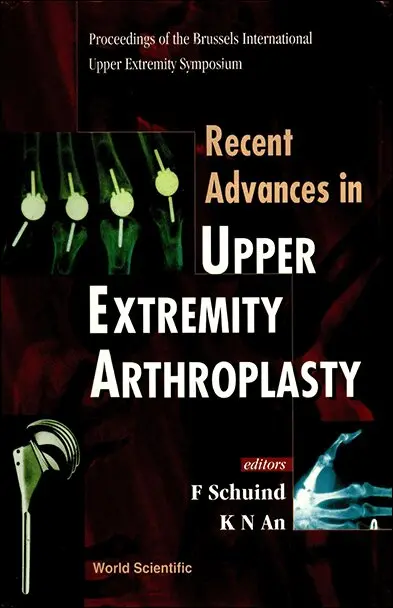
While joint replacements at the lower extremity, particularly at the hip and knee, are performed on a daily basis in most departments of Orthopaedics, with great clinical success and long longetivity of the implant, the indications are much less frequent at the upper limb. Basic research follows the same tendency: while there are numerous basic or clinical research projects devoted to the hip or knee, very scarce reports are published on upper extremity joint replacements.The aims of publishing this volume are to promote the exchange of ideas, and to forster collaborative investigations among clinicians, manufacturers, engineers and other basic scientists involved with the problems of replacement arthroplasty in upper extremity joints, from the finger to the shoulder. The specific aims are: (1) to summarize scientific knowledge in the area of upper extremity joint replacement; (2) to discuss currently unsolved clinical problems and potential solutions based on current scientific knowledge; (3) to review new prosthetic designs; and (4) to explore future directions of investigation.In the first section, general concepts of arthroplasty and of upper extremity reconstruction are presented. Ronald Linscheid presents a short history of finger joint replacement. Alain Potaznik and Franz Burny discuss the problems of friction, wear and biological responses after the implantation of artificial joint replacement. Laurie Faro presents the European legislation for medical devices, such as arthroplasties. Finally, Frédéric Schuind and Franz Burny review the indications and contraindications to upper extremity arthroplasty.The following sections discuss for each upper extremity joint the indications of joint replacement, including the most frequent diseases, the prostheses designed for that particular joint, the biomechanical evaluation after prosthetic implantation, and the early or long-term clinical results. We made a special effort to include at the end of each section some alternative procedures of reconstruction.We are convinced that this unique book fills an important gap in the medical literature.
Inbunden, Engelska, 2002
1 729 kr
Tillfälligt slut
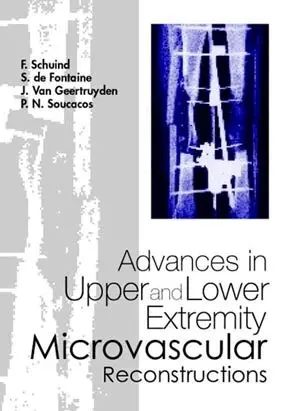
Advances made in microsurgical techniques during the last three decades have dramatically improved the treatment of complex limb injuries, such as a closed fracture covered by healthy tissue and a complex open fracture of the tibia. Microvascular transfers from the foot have revolutionized the treatment of digital amputations, and vascularized bone transfers are used in various indications.The microvascular techniques are still evolving. Many imaginative new flaps are being proposed to meet precisely the functional requirements of the various defects. Alternative anastomotic techniques are being investigated and the no-flow phenomenon has been extensively studied. Allotransplantation may be feasible in the future.This unique book is a result of the exchange of ideas among clinicians of various specialties noted for their innovations and basic researchers involved with the problems of microvascular reconstruction of upper and lower extremities. While most of the chapters are invited contributions, some are based on presentations made during an international symposium held in Brussels, Belgium, in 1997.