FAAN Mary De Chesnay, PhD, RN, PMHCNS-BC – författare
902 kr
Läs direkt efter köp
"PAR is the ultimate in social justice practice. I suggest that PAR should be the basis for all nursing research. This book will provide you with the basics for getting started."
óPatricia J. Kelly, PhD, MPH, APRN
University of MissouriñKansas City (From the Foreword)
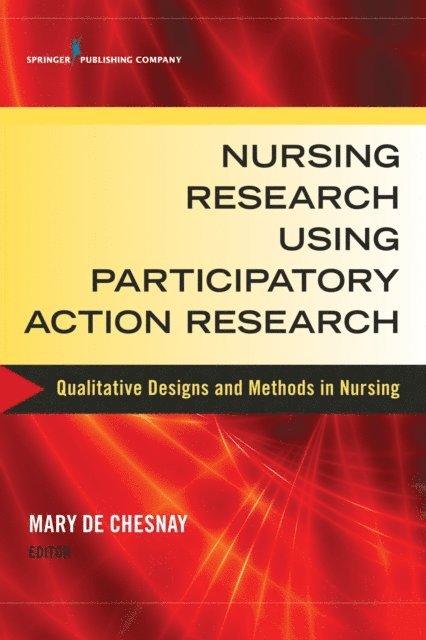
Participatory action research is a qualitative research method conducted in collaboration with a community of people in order to effect changes in the community that are relevant to the residents. This is a practical, "how-to" resource for conducting participatory action research that guides readers, step by step, through planning, conducting, and disseminating nursing research using this qualitative design. It is part of a unique series of seven books devoted to nursing research using qualitative designs and methods. Examples from actual research along with author commentary illustrate potential pitfalls and challenges that may occur during the process and how to resolve them.
Written by a leading scholar of nursing research and nurse experts in participatory action research, the book describes its philosophical underpinnings and state-of-the-art techniques, and provides a concrete road map for planning and conducting studies. It considers why this particular research method is best suited for a particular study, ethical considerations, and potential obstacles. The book also discusses how to ensure rigor during a study, providing examples from scholarly literature and the authorsí own work. Each case example features a description of the study, including why the investigator decided to use participatory action rather than another research design, how he or she solved gatekeeper and access-to-sample issues, and institutional review board concerns. Also included is a discussion of how to collect and analyze data and how to disseminate findings to both the scientific community and research participants. With a focus on practical problem solving throughout, the book will be of value to novice and experienced nurse researchers, graduate teachers, in-service educators, students, and nursing research staff at health care institutions.
Key Features:
Describes, step by step, how to plan, conduct, and disseminate participatory action researchDelivers new designs and methodsFocuses on solving practical problems related to the conduct of researchFeatures rich nursing exemplars in a variety of health/mental health clinical conditions in the United States and internationally902 kr
Läs direkt efter köp
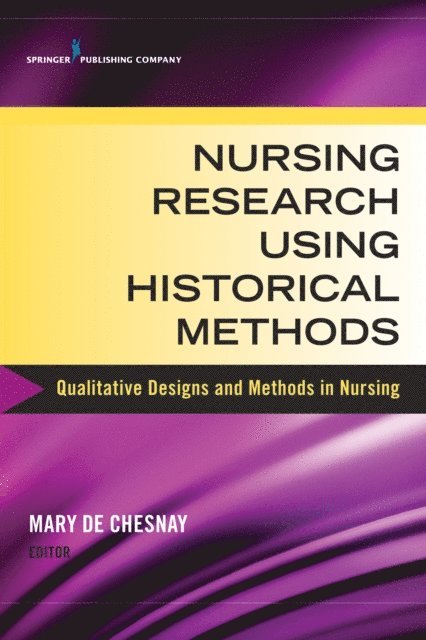
This is a concise, step-by-step guide to conducting qualitative nursing research using various forms of historical analysis. It is part of a unique series of books devoted to seven different qualitative designs and methods in nursing, written for both novice researchers and specialists seeking to develop or expand their competency. Historical research is a qualitative research method that systematically examines past events from existing documents or other data, or by interviewing individuals who lived through those events, in order to understand the past.
Written by a noted qualitative research scholar and contributing experts, the book describes the philosophical basis for conducting research using historical analysis and delivers an in-depth plan for applying its methodologies to a particular study, including appropriate methods, ethical considerations, and potential challenges. It presents practical strategies for solving problems related to the conduct of research using the various forms of analysis and presents a rich array of case examples from published nursing research. These include author analyses to support readers in decision making regarding their own projects. The book provides a variety of examples of historical method studies, on topics such as mental health research, working with Navajo communities, World War II evacuation nursing, and many others. Focused on the needs of both novice researchers and specialists, it will be of value to health institution research divisions, in-service educators and students, and graduate nursing educators and students.
Key Features:
Explains how to conduct nursing research using autobiography, biography, oral history, and document reviewPresents state-of-the-art designs and protocolsFocuses on solving practical problems related to the conduct of researchFeatures rich nursing exemplars in a variety of health/mental health clinical settings in the United States and internationally902 kr
Läs direkt efter köp
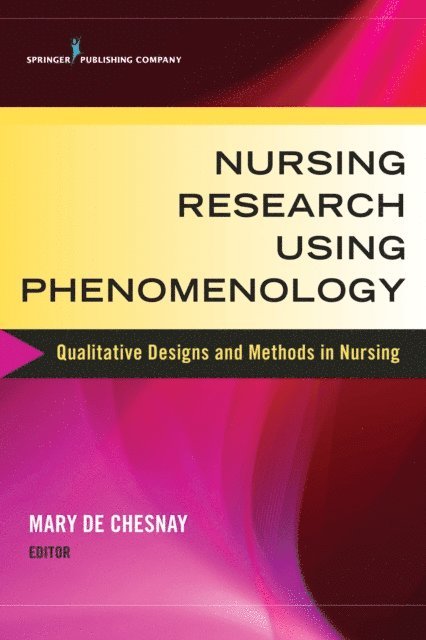
"Phenomenology recognizes that...the work of a nurse is the work of an embodied subject, a feeling and knowing and experiencing person in relationship to another embodied subject, the patient, who is another feeling and knowing and experiencing person. Phenomenology in nursing will be concerned with the subjective, living person in her or his lived body in the experience of health and illnessóboth nurse and patient. As such, it could have radical effects."
Jeffrey McCurry, Director, Simon Silverman Phenomenology Center Duquesne University, Pittsburgh, Pennsylvania (From the Foreword)
Phenomenology is a descriptive approach to obtaining knowledge that focuses on capturing the essence of human experience through the point of view of a distinct individual. As a form of qualitative nursing research, it provides a perspective apart from that of empirical sciences, which see the human mind and body as physical or material objects open to study only through empirical science and treatable only through physical remedies. This "how-to" book describes the foundations of phenomenology and the specifics of how to conduct nursing research using phenomenological designs. It is part of an innovative series for novice researchers and specialists alike focusing on state-of-the-art methodologies from a nursing perspective.
Authored by international scholars of qualitative nursing research, the book elucidates the theoretical rationale for using phenomenology, describes its components, and delineates a plan to conduct studies that includes appropriate methods, ethical considerations, and potential pitfalls. The book provides guidance for writing a research proposal that justifies the importance or potential impact of a study and describes how to conduct interviews that best elicit information. It focuses on achieving rigor in phenomenological research in regard to accuracy and replicability, and discusses different types of data collection and analysis and when to use them. Appendices include a list of qualitative research journals, textbooks, and other resources for more in-depth study. Chapters provide helpful advice on interviewing and data analysis. The book will be of value to novice and experienced nurse researchers, graduate teachers and students, in-service educators and students, and nursing research staff at health care institutions.
Key Features:
Comprises the first "how-to" guide to conducting qualitative phenomenological research from a nursing perspectivePresents a comprehensive plan for conducting studies and appropriate measures, ethical considerations, and potential challengesGuides readers in construction of a research proposal that justifies the importance or potential impact of a studyProvides examples of interviews that best elicit information902 kr
Läs direkt efter köp
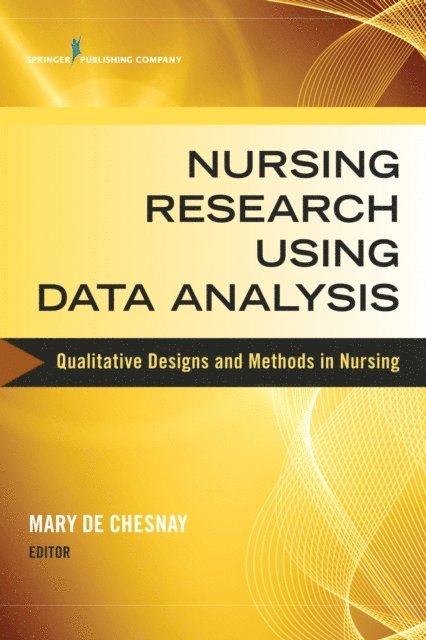
This is a concise, step-by-step guide to conducting qualitative nursing research using various forms of data analysis. It is part of a unique series of books devoted to seven different qualitative designs and methods in nursing, written for both novice researchers and specialists seeking to develop or expand their competency. This practical resource encompasses such methodologies as content analysis, a means of organizing and interpreting data to elicit themes and concepts; discourse analysis, used to analyze language to understand social or historical context; narrative analysis, in which the researcher seeks to understand human experience through participant stories; and focus groups and case studies, used to understand the consensus of a group or the experience of an individual and his or her reaction to a difficult situation such as disease or trauma.
Written by a noted qualitative research scholar and contributing experts, the book describes the philosophical basis for conducting research using data analysis and delivers an in-depth plan for applying its methodologies to a particular study, including appropriate methods, ethical considerations, and potential challenges. It presents practical strategies for solving problems related to the conduct of research using the various forms of data analysis and presents a rich array of case examples from published nursing research. These include author analyses to support readers in decision making regarding their own projects. The book embraces such varied topics as data security in qualitative research, the image of nursing in science fiction literature, the trajectory of research in several nursing studies throughout Africa, and many others. Focused on the needs of both novice researchers and specialists, it will be of value to health institution research divisions, in-service educators and students, and graduate nursing educators and students.
Key Features:
Explains how to conduct nursing research using content analysis, discourse analysis, narrative analysis, and focus groups and case studiesPresents state-of-the-art designs and protocolsFocuses on solving practical problems related to the conduct of researchFeatures rich nursing exemplars in a variety of health/mental health clinical settings in the United States and internationally2 974 kr
Läs direkt efter köp
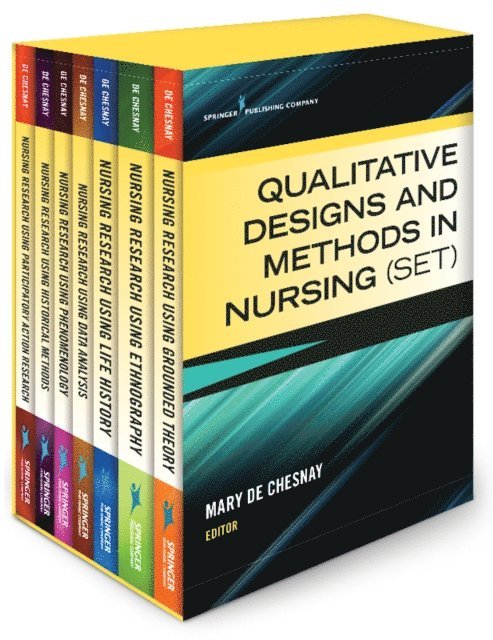
This is the first series to comprehensively address leading qualitative research designs and methods from a nursing perspective, and is a must-have for every research library. These are practical, how-to guides to conducting research using seven different qualitative designs that encompass new and traditional methodologies. Written by Dr. Mary de Chesnay, a noted qualitative research scholar, and contributing specialists in each of the qualitative methods, each of the seven books discusses the theoretical rationale for using a particular design, describes its components, and delineates a practical plan to conduct studies. Utilizing a practical, problem-solving approach, the books delineate appropriate methods, ethical considerations, critical issues, and potential pitfalls. Examples of published qualitative nursing research worldwide, along with author commentary, support the new researcher in making decisions and facing challenges. Case studies follow a template that includes a description of the study, data collection and analysis, and dissemination. Also included are techniques whereby researchers can ensure high standards of rigor, and an extensive bibliography and list of resources.
The bookís practical point of view is geared to help novice researchers and specialists alike develop or expand their competencies, engage graduate faculty and students, and aid nursing research staff in larger hospitals and other healthcare institutions, as well as in-service educators and students.
Key Features of this One-of-a-Kind Resource Library:
Focuses on practical problem solvingReviews the philosophical basis for each qualitative designDisseminates the most current references in each designProvides a plan to conduct studies using the design and discusses appropriate methods, ethical considerations, and potential challengesShowcases the research of international scholarsIs peer reviewed by design and method experts986 kr
Läs direkt efter köp
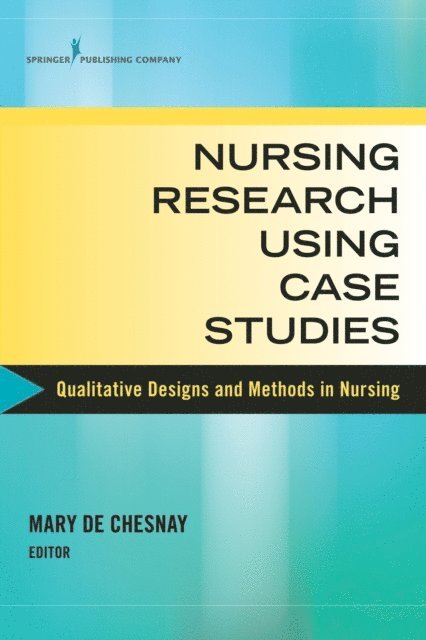
Once considered to be a lesser pedagogical method, the case study is indeed a powerful, in-depth tool with which to examine evidence-based practice around patient care, family dynamics, professional roles, and organizational systems. Here is a unique “how-to” guide to conducting research using case studies. Focusing on leading and newer methodologies, the text describes the philosophical basis and state of the art for using this qualitative method. The peer-reviewed designs (including interviews, physiological measurements, psychological tests, and analysis of patients’ diaries and journals) are accompanied by an in-depth research plan, a discussion of appropriate methods, and ethical considerations. The text provides clear directives—bolstered by nursing examples--on how to solve practical problems a researcher may encounter.
Examples from international scholars who have published research using case studies are included along with coaching designed to support the new researcher in making decisions and facing challenges. Also included are book and chapter objectives, competencies, review questions, critical thinking exercises, and web links to additional information. The text is part of a series of eight concise volumes addressing a variety of methods for conducting qualitative research. Conceived and edited by a noted expert in qualitative research, the book is designed for both novice and practicing researchers seeking to develop or expand their competency, health institution research divisions, in-service educators and students, and graduate nursing educators and students.
Key Features:
Explains clearly and concisely how to conduct research using case studies
Reviews the philosophical basis for using case studies
Focuses on solving practical problems related to conducting research
Offers rich nursing exemplars and coaching from international health/mental health contributors
Includes objectives, critical thinking exercises, competencies, resources, and review material for each book.
902 kr
Läs direkt efter köp
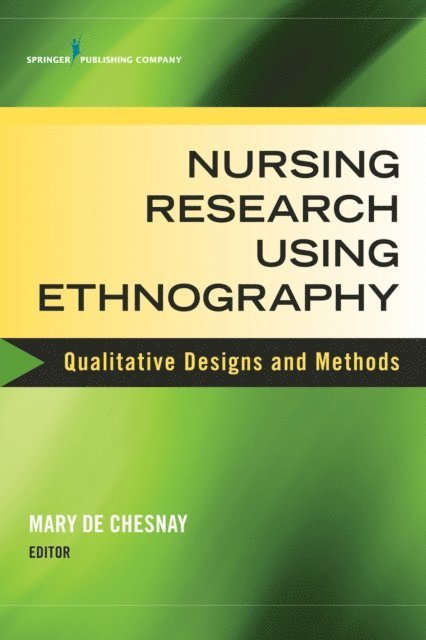
"[A]n excellent book for researchers who want to conduct nursing research using ethnography... Weighted Numerical Score: 99 - 5 Stars!" -- Doody''s Book Reviews
Ethnography is a qualitative research design that focuses on the study of people to explore cultural phenomena. This concise, ìhow toî guide to conducting qualitative ethnography research spearheads a new series, Qualitative Designs and Methods, for novice researchers and specialists alike focusing on state-of-the-art methodologies from a nursing perspective. Scholars of qualitative ethnography research review the philosophical basis for choosing ethnography as a research tool and describe in depth its key features and development level. They provide directives on how to solve practical problems related to ethnography research, nursing examples, and discussion of the current state of the art. This includes a comprehensive plan for conducting studies and a discussion of appropriate measures, ethical considerations, and potential problems.
Examples of published ethnography nursing research worldwide, along with author commentary, support the new researcher in making decisions and facing challenges. Each chapter includes objectives, competencies, review questions, critical thinking exercises, and web links for more in-depth research. A practical point of view pervades the book, which is geared to help novice researchers and specialists expand their competencies, engage graduate teachers and students and in-service educators and students, and aid nursing research in larger health institutions.
Key Features:
Includes examples of state-of-the-art ethnography nursing research with content analysis Presents a comprehensive plan for conducting studies and appropriate measures, ethical considerations, and potential challenges Describes theoretical underpinnings, key features, and development level Written by ethnography scholars from around the world902 kr
Läs direkt efter köp
Awarded third place in the 2013 AJN Book of the Year Awards in the Community-Public Health category
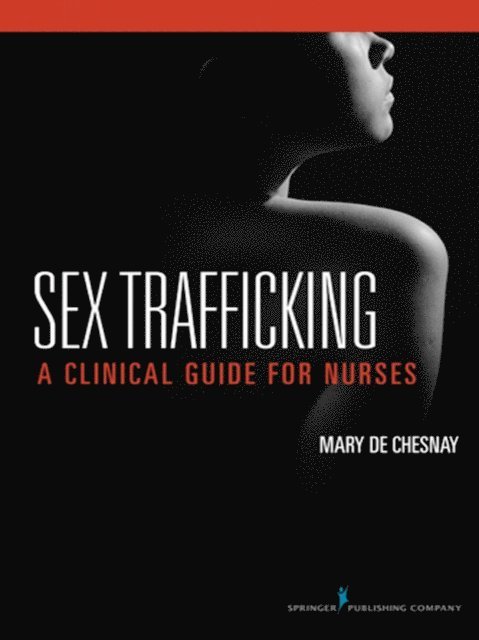
"[A]n indispensable volume for nurse educators to use to help to inform new generations of nurses about the topic of sex trafficking...What is striking about this book is its readability. It draws the reader into the chapters with its engaging scenarios and pertinent information... A highly readable guide to sex trafficking for U.S. nurses and other health care professionals." -- Journal of Transcultural Nursing
"This is a valuable resource for emergency departments everywhere! It is the gold standard for information about this topic."--Doody''s Medical Reviews
"This excellent text puts forensic nurses in an excellent position to make an impact one of the 27 million people who are victims, just in the United States, of sex trafficking crimes. It is incumbent on the forensic community to take a stand and lead a charge in first learning about and then putting into action a plan to give a voice to the victims, caring for them as our patients and developing a strategy to help end this crime. This book will help to create the awareness and passion that is needed to accomplish just that."--Forensic Nursing News
The statistics are staggering: nearly 27 million people worldwide are currently victims of human trafficking, most frequently girls between the ages of 12 and 14. This is the first clinical guide to assessing and treating victims of sex trafficking, encompassing best practices and strategies for overcoming the severe barriers that this group presents. These barriers most notably include separating victims from their pimps/handlers who exert tight control over their lives, speech, and interactions with healthcare providers.
At the heart of the book are consistently organized chapters addressing the major injuries, diseases and psychological traumas for which trafficked victims are likely to seek treatment. These chapters include a description of each condition, culturally based best practices for treatment, special considerations for male, female, and child victims, and expected outcomes. Citing the specialized circumstances of this population, the book discusses how to adapt current treatments to the special needs of these young victims. Additional features include case studies, short bullet points, and easy-to-follow recommendations. The book also discusses human trafficking as a global issue with particular attention to the United States. The guide describes the countrywide resources available for practitioners to learn about sex trafficking in the United States, focusing on Georgia as the only state to offer a comprehensive approach to sex trafficking and a model for the rest of the country. It also addresses health policy implications for practitioners and how to harness the support of law enforcement entities.
Key Features:Provides best practices to date in a concise reference-style guide to medical and psychological assessment and treatment of sex trafficking victims Includes case studies and easy-to-follow practice recommendationsDescribes strategies on overcoming handlersí control over their victims Provides phone numbers and contact information by state or region regarding how to safely involve law enforcement1 587 kr
Läs direkt efter köp
“Dorman and De Chesnay…offer a wealth of valuable information students and other healthcare providers would normally not receive until they were in the trenches of their global experience…[They] deliver…nuances of ideology about care and disease from a number of different countries, what global health policy entails and means to healthcare providers traveling the world, along with case studies from a number of guides/experienced global experts.”
-Lorna Kendrick, PhD, APRN, PMHCNS-BC
Professor and Director, School of Nursing, California State University San Marcos
From the Foreword
Case Studies in Global Health Policy Nursing unpacks key global health issues and analyzes the surrounding health care policies and their impact through case studies. Designed specifically for graduate nursing students, this text explores the implications of global initiatives designed to eradicate disease and promote physical and mental health. As globalization takes a front row seat in the digital age and political dynamics shift more rapidly than ever, possibilities and opportunities for health care have arisen beyond the hospital-based focus, especially for diseases and trends that cross continental divides.
Every case study contains a multidisciplinary perspective, featuring contributions by expert nurses, public health professionals, and policy researchers. Presented in a consistent format for ease of use, each case study includes an overview, background, relevant research, and in-depth information on its significance as a critical global issue. This text covers critical, current topics such as health care for transgender individuals, refugees, and patients on the autism spectrum, as well as ongoing problems like access to clean water, HIV/AIDS, and human trafficking. End-of-chapter exercises reinforce content and supplementary instructor materials are available.
Key Features:
Delivers topical, in-depth examination of key global issues for graduate-level nursing studentsProvides consistent format for each case study for ease of usePresents an interdisciplinary approach with content from expert nurses, public health professionals, and policy researchers