Fabian Brändle - Böcker
Visar alla böcker från författaren Fabian Brändle. Handla med fri frakt och snabb leverans.
2 produkter
2 produkter
319 kr
Skickas inom 7-10 vardagar
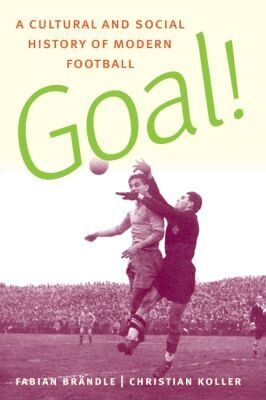
Goal! covers the history of the beautiful game from its origins in English public schools in the early 19th century to its current role as a crucial element of a globalized entertainment industry. The authors explain how football transformed from a sport at elite boarding schools in England to become a pastime popular with the working classes, enabling factories such as the Thames Iron Works and the Woolwich Arsenal to give birth to the teams that would become the Premier League mainstays known as West Ham United and Arsenal. They also explore how the age of amateur soccer ended and, with the advent of professionalism, how football became a sport dominated by big clubs with big money and with an international audience.There are intense rivalries in soccer, such as that in Glasgow, Scotland, between (Catholic) Celtic and (Protestant) Rangers, and the authors examine closely the social causes that make for such passionate fans. The book also discusses the use of soccer for political purposes, such as in Hitler's Germany and Franco's Spain. And - given the long-standing association of soccer as a man's sport and the rise of women's soccer, especially in the United States - the authors look at the gendered history of the world's most popular sport. This book, which will appeal to all connoisseurs of soccer, provides a lens through which to view the social and cultural history of modern Europe.The book is published by The Catholic University of America Press.
Del 8 - Sport, History and Culture
European Football During the Second World War
Training and Entertainment, Ideology and Propaganda
Häftad, Engelska, 2018
666 kr
Tillfälligt slut
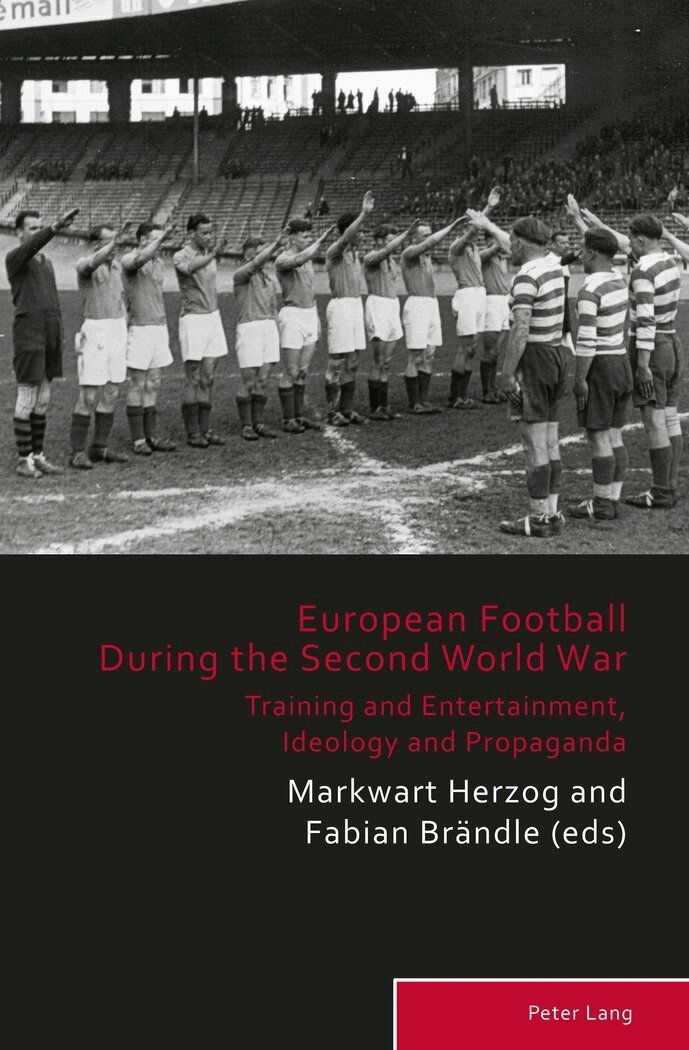
When German troops marched into Poland on 1 September 1939, this also affected sport – sometimes dramatically. Official propaganda no longer viewed football as a game that was played for fun, but one that could be instrumentalized for political goals and military strategy. Due to the unpredictability of the game, football did not appear to be well suited to such a purpose. However, as the sport was able to create a politically neutral space that offered exciting entertainment and an escapist distraction, it was eminently important for the dictatorship. Soldiers and the civilian population benefited from this, as did the National Socialist regime itself. Football was vital for the war effort and also helped to stablilize the system precisely because it was not a vehicle for political propaganda. In this edited volume, an international team of authors examines the development of football during the Second World War in a dozen European states. The volume concludes with essays on the representation of the topic in the arts and the media.