FAHEY - Böcker
Visar alla böcker från författaren FAHEY. Handla med fri frakt och snabb leverans.
5 produkter
5 produkter
1 078 kr
Skickas inom 5-8 vardagar
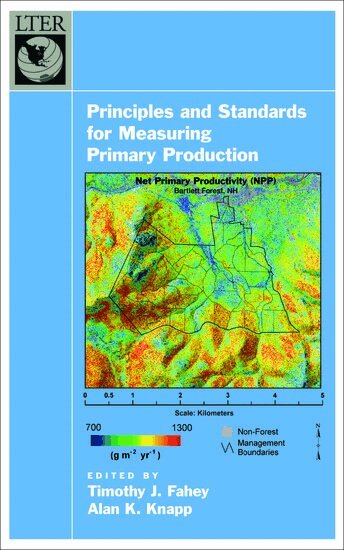
This volume will lay out the best methods for measuring net primary productivity (NPP) in ecological research. Primary productivity is the rate at which energy is stored in the organic matter of plants per unit area of the earth's surface. NPP is the beginning point of the carbon cycle, so our ability to accurately measure NPP is important. The book includes chapters for each of the critical biome types to offer special techniques that work best in each biome. For example, there are chapters that discuss grassland ecosystems, urban ecosystems, marine pelagic ecosystems, forest ecosystems, and salt marsh ecosystems, among others. All 26 LTER sites will be expected to collect and report data using these methods, but ecologists more generally should also find these methods useful and authoritative. Currently no standard methods or standards exist. Measuring NPP is fundamental to many ecosystem studies at thousands of sites, and having identified standards and methods would be extremely useful for comparing measurements among sites and for compiling a broad scale understanding of the environmental, biological, and nutrition controls on NPP. This book would resemble the Standard Soil Measurement volume in the LTER series in that it reaches well beyond any single LTER site to apply to any ecosystem. It should be rather more widely used than the soil measurements volume, in that measuring productivity is so fundamental to any ecological analyses as well as agronomy, forestry, fisheries, limnology and oceanography.
562 kr
Skickas inom 7-10 vardagar
Over 525,000 Copies of the Portable MBA Series Sold Learn the best new ideas in BUSINESS STRATEGY from the brightest lights in the field This Second Edition of the phenomenally successful Portable MBA in Strategy brings you the latest developments in strategic thought, analysis, and implementation from an all-star team of teachers, authors, and consultants. Harvard's Michael E. Porter shows you how to enhance competitive advantage through a global strategy. C. K. Prahalad explains how to create and leverage core competencies-a strategy that has led many organizations to overwhelming success. Jeffrey Sampler of the London Business School demonstrates how the Internet and the rapidly evolving e-business economy challenge many of our fundamental ideas about strategy. H. Kurt Christensen and Anil Gupta map strategy alternatives for the corporate organization and its business units. Irene Duhaime demonstrates the relevance of strategy for small businesses. And John F. Mahon, Barbara Bigelow, and Liam Fahey explore political strategy-the need to manage relationships with the concerned segments of the public, trade associations, governmental agencies, community groups, and other stakeholders. You'll find penetrating insights about strategy-making from David Collis of Yale, George Day of the Wharton School at the University of Pennsylvania, Ellen Hart of Gemini Consulting, and many others. To take advantage of the newest, most innovative, most effective ideas in business strategy from minds that thrive on the cutting edge, start reading The Portable MBA in Strategy, Second Edition today.
431 kr
Skickas inom 7-10 vardagar
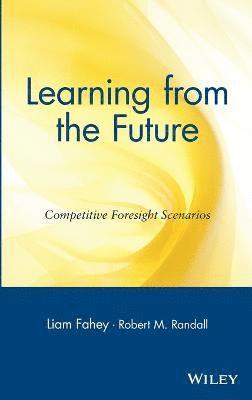
"Scenarios are now a part of every successful manager's toolkit. This book is the first comprehensive guide to the latest developments in scenario thinking written by today's leading practitioners in the field." -Napier Collyns, a pioneer of scenario planning at Dutch/Shell now Managing Director, Gloal Business Network (GBN) "In twenty years of helping companies create and plan for their futures, I have never come across a book that dealt with the use of scenario-based planning as comprehensively as this one." -David Kelley CEO, IDEO Product Development the creators of the Apple Mouse "This book is the greatest reference today on scenario planning-the preeminent tool for those who believe that the future belongs to those with the imagination to create it. The combination of scenario planning and strategy formulation can be a wondrous right brain process that galvanizes teams with a compelling vision and common purpose." -David E. Schnedler Director, Corporate Planning Sun Microsystems, Inc. "Organizations must create intellectual and organizational tension around distinctly different views of the future. Learning from the Future demonstrates why scenarios are ideally suited to generate such tension and how to use scenario learning as a steppingstone to superior strategies." -Richard Pascale, Associate Fellow of Oxford University and author of Managing on the Edge: How the Smartest Companies Use Conflict to Stay Ahead "An invaluable guide to the mind-stretching benefits of scenarios that are fully embedded in the strategic thinking process. It should be required reading for any management team embarking on scenario development so they can realize the benefits and evade the pitfalls." -George Day, Geoffrey T. Boisi Professor and Director of the Huntsman Center for Global Competition and Innovation Wharton School, University of Pennsylvania
303 kr
Skickas inom 5-8 vardagar
2 280 kr
Skickas inom 5-8 vardagar
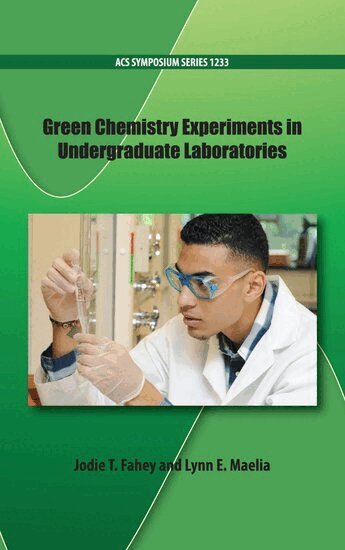
Since the introduction of green chemistry principles in industrial processes, interest has continued to grow and green chemistry has started to take roots in educational laboratories of all disciplines of chemistry. Entire courses centered around green chemistry are becoming more prevalent. By introducing students to green chemistry at a collegiate level, they will better be prepared for industry, graduate schools, and also have a better appreciation for theenvironment. This book includes experiments that cover a range of green chemistry principles, particularly in the field of organic chemistry. Green chemistry, as we know it today, revolves around a set of twelve principles that were outlined 1998. The experiments presented in this text utilize many of the 12 Principles of Green Chemistry. Each chapter presents an experiment that utilizes at least one, if not more, of these principles. This book is targeted for any professor who would like to introduce green or "greener" laboratory experiments for their students in any chemistry course regardless of level. The book is designed tointroduce students to the ideas, principles, and benefits of green chemistry and inspire educators to adopt more green chemistry principles in their course.