Farid Laroussi – författare
Visar alla böcker från författaren Farid Laroussi. Handla med fri frakt och snabb leverans.
2 produkter
2 produkter
811 kr
Skickas inom 7-10 vardagar
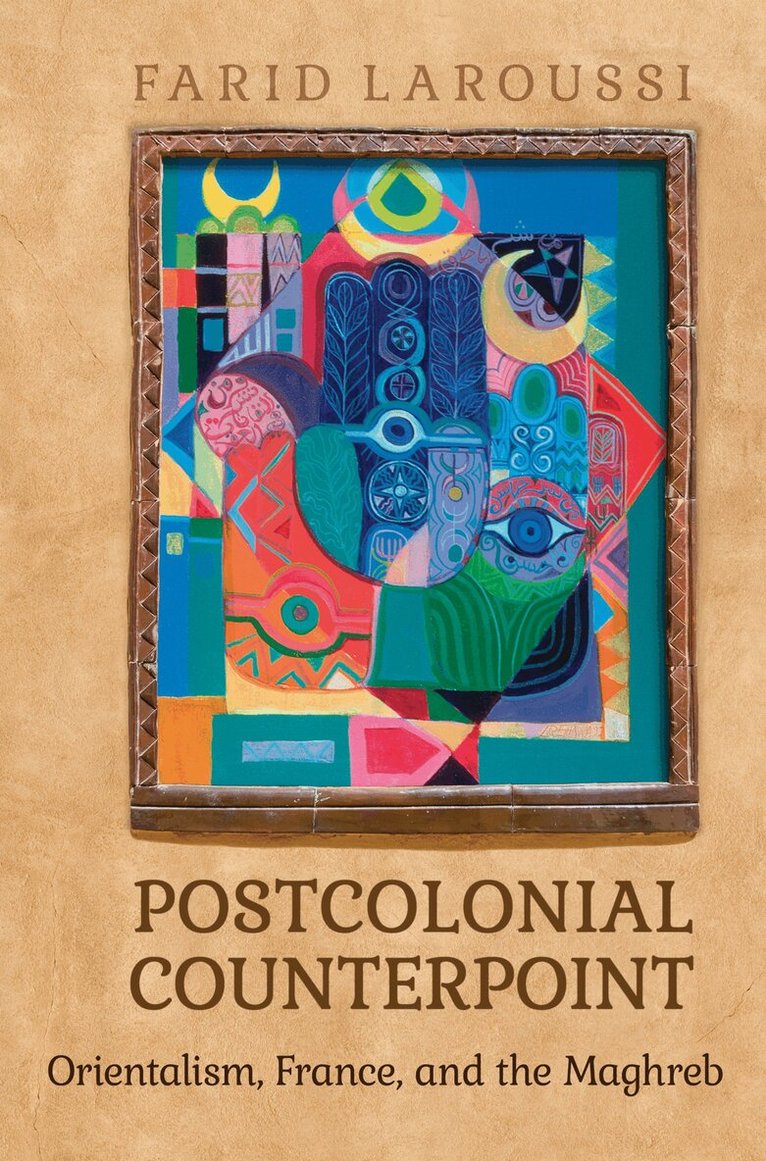
Postcolonial Counterpoint is a critical study of Orientalism and the state of Francophone and postcolonial studies, examined through the lens of the historical and cross-cultural relations between France and North Africa. Thoroughly questioning the inability of Western academia to shake free of universalism and essentialism and come to grips with the Orientalism within postcolonial discourse, Farid Laroussi offers a cultural tour d’horizon which considers AndrÉ Gide’s writing on Algeria, literature by French authors of Maghrebi descent, and the conversation surrounding secularism and the headscarf in France. A provocative investigation of the place of Muslims and Islam in Francophone culture, Postcolonial Counterpoint asks how we must proceed if postcolonial studies is to make a difference in reconciling history, identity, citizenship, and Islam in the West.
1 252 kr
Skickas inom 10-15 vardagar
Francophone Literature After the Postcolonial Age argues that Francophone literature extends beyond the postcolonial critical landmarks that helped define the field since the late 1980s. Today Francophone literature maps out different paths that highlight its emancipation from both the Francophonie’s cultural ascendency and postcolonial theory’s scholarly hegemony. Farid Laroussi’s argument is that three main forces have reshaped the French postcolonial in the twenty-first century: digital globalization, intertextuality, and ecocriticism. With digital globalization, Francophone literature finds new voices, unfettered from former aesthetic, print and distribution diktats. Home and the exilic paradigm are redefined in the postcolonial subject’s own terms. Intertextuality reconnects with poetic dialogism, sans the mimicry burden. The intertextuality challenge showcases a new writers’ community, across time and cultures. The old anxiety around one’s own poetic voice now provides valid responses to literary reconfigurations. The book’s study cases operate around three specific pairings: Segalen/Glissant, Kafka/Maghreb literature, and Morrison/Miano. Lastly, ecocriticism, along the decolonial discourse, comes to discuss the place of the postcolonial home as well as the responsibility category. The author contends that the attention to the land cannot be separated from imaginaries, collective and individual. Francophone writers stand at the crossroads of activism and poetics moving further away from French metropolitan preoccupations.