Felicia Low – författare
Visar alla böcker från författaren Felicia Low. Handla med fri frakt och snabb leverans.
10 produkter
10 produkter
E-bok
PDF, Engelska, 2016474 kr
Läs direkt efter köp
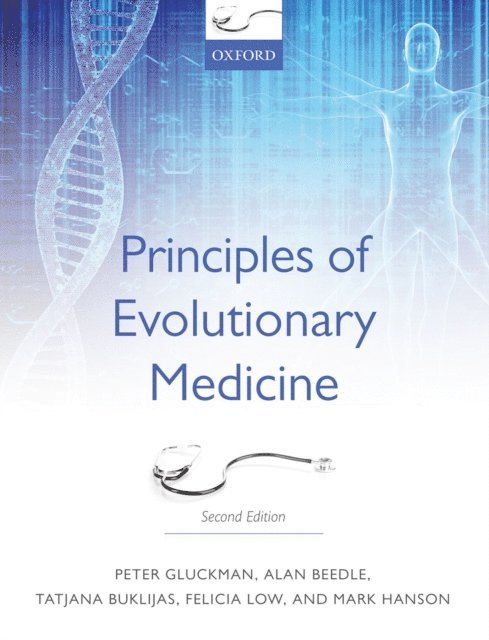
Evolutionary science is critical to an understanding of integrated human biology and is increasingly recognised as a core discipline by medical and public health professionals. Advances in the field of genomics, epigenetics, developmental biology, and epidemiology have led to the growing realisation that incorporating evolutionary thinking is essential for medicine to achieve its full potential. This revised and updated second edition of the first comprehensivetextbook of evolutionary medicine explains the principles of evolutionary biology from a medical perspective and focuses on how medicine and public health might utilise evolutionary thinking. It is written to be accessible to a broad range of readers, whether or not they have had formal exposure toevolutionary science.The general structure of the second edition remains unchanged, with the initial six chapters providing a summary of the evolutionary theory relevant to understanding human health and disease, using examples specifically relevant to medicine. The second part of the book describes the application of evolutionary principles to understanding particular aspects of human medicine: in addition to updated chapters on reproduction, metabolism, and behaviour, there is an expanded chapter on ourcoexistence with micro-organisms and an entirely new chapter on cancer. The two parts are bridged by a chapter that details pathways by which evolutionary processes affect disease risk and symptoms, and how hypotheses in evolutionary medicine can be tested. The final two chapters of the volume areconsiderably expanded; they illustrate the application of evolutionary biology to medicine and public health, and consider the ethical and societal issues of an evolutionary perspective. A number of new clinical examples and historical illustrations are included.This second edition of a novel and popular textbook provides an updated resource for doctors and other health professionals, medical students and biomedical scientists, as well as anthropologists interested in human health, to gain a better understanding of the evolutionary processes underlying human health and disease.
E-bok
Engelska, 2016474 kr
Läs direkt efter köp
Evolutionary science is critical to an understanding of integrated human biology and is increasingly recognised as a core discipline by medical and public health professionals. Advances in the field of genomics, epigenetics, developmental biology, and epidemiology have led to the growing realisation that incorporating evolutionary thinking is essential for medicine to achieve its full potential. This revised and updated second edition of the first comprehensivetextbook of evolutionary medicine explains the principles of evolutionary biology from a medical perspective and focuses on how medicine and public health might utilise evolutionary thinking. It is written to be accessible to a broad range of readers, whether or not they have had formal exposure toevolutionary science.The general structure of the second edition remains unchanged, with the initial six chapters providing a summary of the evolutionary theory relevant to understanding human health and disease, using examples specifically relevant to medicine. The second part of the book describes the application of evolutionary principles to understanding particular aspects of human medicine: in addition to updated chapters on reproduction, metabolism, and behaviour, there is an expanded chapter on ourcoexistence with micro-organisms and an entirely new chapter on cancer. The two parts are bridged by a chapter that details pathways by which evolutionary processes affect disease risk and symptoms, and how hypotheses in evolutionary medicine can be tested. The final two chapters of the volume areconsiderably expanded; they illustrate the application of evolutionary biology to medicine and public health, and consider the ethical and societal issues of an evolutionary perspective. A number of new clinical examples and historical illustrations are included.This second edition of a novel and popular textbook provides an updated resource for doctors and other health professionals, medical students and biomedical scientists, as well as anthropologists interested in human health, to gain a better understanding of the evolutionary processes underlying human health and disease.
Inbunden, Engelska, 2016
1 947 kr
Skickas inom 5-8 vardagar
Evolutionary science is critical to an understanding of integrated human biology and is increasingly recognised as a core discipline by medical and public health professionals. Advances in the field of genomics, epigenetics, developmental biology, and epidemiology have led to the growing realisation that incorporating evolutionary thinking is essential for medicine to achieve its full potential. This revised and updated second edition of the first comprehensive textbook of evolutionary medicine explains the principles of evolutionary biology from a medical perspective and focuses on how medicine and public health might utilise evolutionary thinking. It is written to be accessible to a broad range of readers, whether or not they have had formal exposure to evolutionary science. The general structure of the second edition remains unchanged, with the initial six chapters providing a summary of the evolutionary theory relevant to understanding human health and disease, using examples specifically relevant to medicine. The second part of the book describes the application of evolutionary principles to understanding particular aspects of human medicine: in addition to updated chapters on reproduction, metabolism, and behaviour, there is an expanded chapter on our coexistence with micro-organisms and an entirely new chapter on cancer. The two parts are bridged by a chapter that details pathways by which evolutionary processes affect disease risk and symptoms, and how hypotheses in evolutionary medicine can be tested. The final two chapters of the volume are considerably expanded; they illustrate the application of evolutionary biology to medicine and public health, and consider the ethical and societal issues of an evolutionary perspective. A number of new clinical examples and historical illustrations are included.This second edition of a novel and popular textbook provides an updated resource for doctors and other health professionals, medical students and biomedical scientists, as well as anthropologists interested in human health, to gain a better understanding of the evolutionary processes underlying human health and disease.
Häftad, Engelska, 2016
593 kr
Skickas inom 5-8 vardagar
Evolutionary science is critical to an understanding of integrated human biology and is increasingly recognised as a core discipline by medical and public health professionals. Advances in the field of genomics, epigenetics, developmental biology, and epidemiology have led to the growing realisation that incorporating evolutionary thinking is essential for medicine to achieve its full potential. This revised and updated second edition of the first comprehensive textbook of evolutionary medicine explains the principles of evolutionary biology from a medical perspective and focuses on how medicine and public health might utilise evolutionary thinking. It is written to be accessible to a broad range of readers, whether or not they have had formal exposure to evolutionary science. The general structure of the second edition remains unchanged, with the initial six chapters providing a summary of the evolutionary theory relevant to understanding human health and disease, using examples specifically relevant to medicine. The second part of the book describes the application of evolutionary principles to understanding particular aspects of human medicine: in addition to updated chapters on reproduction, metabolism, and behaviour, there is an expanded chapter on our coexistence with micro-organisms and an entirely new chapter on cancer. The two parts are bridged by a chapter that details pathways by which evolutionary processes affect disease risk and symptoms, and how hypotheses in evolutionary medicine can be tested. The final two chapters of the volume are considerably expanded; they illustrate the application of evolutionary biology to medicine and public health, and consider the ethical and societal issues of an evolutionary perspective. A number of new clinical examples and historical illustrations are included.This second edition of a novel and popular textbook provides an updated resource for doctors and other health professionals, medical students and biomedical scientists, as well as anthropologists interested in human health, to gain a better understanding of the evolutionary processes underlying human health and disease.
E-bok
Engelska, 201577 kr
Läs direkt efter köp
The essays in this compilation address social, political and ethical issues surrounding arts practices with communities, using the theoretical framework of Community Cultural Development. The writers of this compilation have a variety of experiences working with communities in Myanmar, Thailand, China, Australia, and Singapore. Through a series of theoretical essays and writings that reflect on individual practices, this compilation provides readers with an insight into the agendas, processes and outcomes of arts practices with communities in Asia.
Häftad, Engelska, 2016
392 kr
Skickas inom 5-8 vardagar
E-bok
Engelska, 201651 kr
Läs direkt efter köp
In Singapore, the discussion of all things community is highly sensitive and potentially provocative. Artists who work with communities risk being politicised for various identitarian purposes. This book presents an auto-ethnographical account of three participatory art projects conducted by the author, with the incarcerated in a governmental disciplinary centre, a Non-Governmental Organization that supports sex workers and three young women in an independent art project in Singapore. It proposes a concept of autogenous cultural practices, which are defined by life practices that neither rely on nor protest the influence of the state on the site of the body and everyday life. Instead autogenous cultural practices establish their own forms of life and measures of value that are in no way dictated by predetermined institutional forms of social life and engagement.
Häftad, Engelska, 2018
340 kr
Skickas inom 5-8 vardagar
Häftad, Engelska, 2018
306 kr
Skickas inom 5-8 vardagar
Häftad, Engelska, 2022
392 kr
Skickas inom 5-8 vardagar