Felipe Souza Melo – författare
Visar alla böcker från författaren Felipe Souza Melo. Handla med fri frakt och snabb leverans.
4 produkter
4 produkter
Inbunden, Engelska, 2026
2 492 kr
Skickas inom 10-15 vardagar
From the role of sugar in the early history of the colonial era to coffee in the long nineteenth century, commodities have played a crucial role in the development of the Brazilian economy.Drawing on the history of commodities approach, this book explores both the external and internal commodity markets since the time that Portuguese settlers established new commodity frontiers to supply global markets based on the coerced labor of the native population and of millions of enslaved Africans and their descendants. The chapters in this book each focus on a specific commodity – including cotton, leather, timber, and soy – that have shaped not only the history of Brazil but also of the wider world. Each contributor outlines how a particular export sector integrated Brazil into global circuits of trade, thus contributing to the making of the modern capitalist economy. This approach also allows for the exploration of different aspects of the extraction and production of these goods, including the various labor regimes employed and the environmental conditions and impacts that accompanied them.The book will be of interest to all readers in economic history, especially in its intersections with social, political, cultural, and environmental processes and in the broader context of the development of global capitalism.
E-bok
PDF, Engelska, 2026831 kr
Läs direkt efter köp
From the role of sugar in the early history of the colonial era to coffee in the long nineteenth century, commodities have played a crucial role in the development of the Brazilian economy.Drawing on the history of commodities approach, this book explores both the external and internal commodity markets since the time that Portuguese settlers established new commodity frontiers to supply global markets based on the coerced labor of the native population and of millions of enslaved Africans and their descendants. The chapters in this book each focus on a specific commodity - including cotton, leather, timber, and soy - that have shaped not only the history of Brazil but also of the wider world. Each contributor outlines how a particular export sector integrated Brazil into global circuits of trade, thus contributing to the making of the modern capitalist economy. This approach also allows for the exploration of different aspects of the extraction and production of these goods, including the various labor regimes employed and the environmental conditions and impacts that accompanied them.The book will be of interest to all readers in economic history, especially in its intersections with social, political, cultural, and environmental processes and in the broader context of the development of global capitalism.
E-bok
Engelska, 20262 684 kr
Läs direkt efter köp
From the role of sugar in the early history of the colonial era to coffee in the long nineteenth century, commodities have played a crucial role in the development of the Brazilian economy.Drawing on the history of commodities approach, this book explores both the external and internal commodity markets since the time that Portuguese settlers established new commodity frontiers to supply global markets based on the coerced labor of the native population and of millions of enslaved Africans and their descendants. The chapters in this book each focus on a specific commodity - including cotton, leather, timber, and soy - that have shaped not only the history of Brazil but also of the wider world. Each contributor outlines how a particular export sector integrated Brazil into global circuits of trade, thus contributing to the making of the modern capitalist economy. This approach also allows for the exploration of different aspects of the extraction and production of these goods, including the various labor regimes employed and the environmental conditions and impacts that accompanied them.The book will be of interest to all readers in economic history, especially in its intersections with social, political, cultural, and environmental processes and in the broader context of the development of global capitalism.
Del 52 - European Expansion and Indigenous Response
Raw Cotton Trade: Brazil, Portugal, and Europe during the Industrial Revolution
Inbunden, Engelska, 2026
1 358 kr
Skickas inom 5-8 vardagar
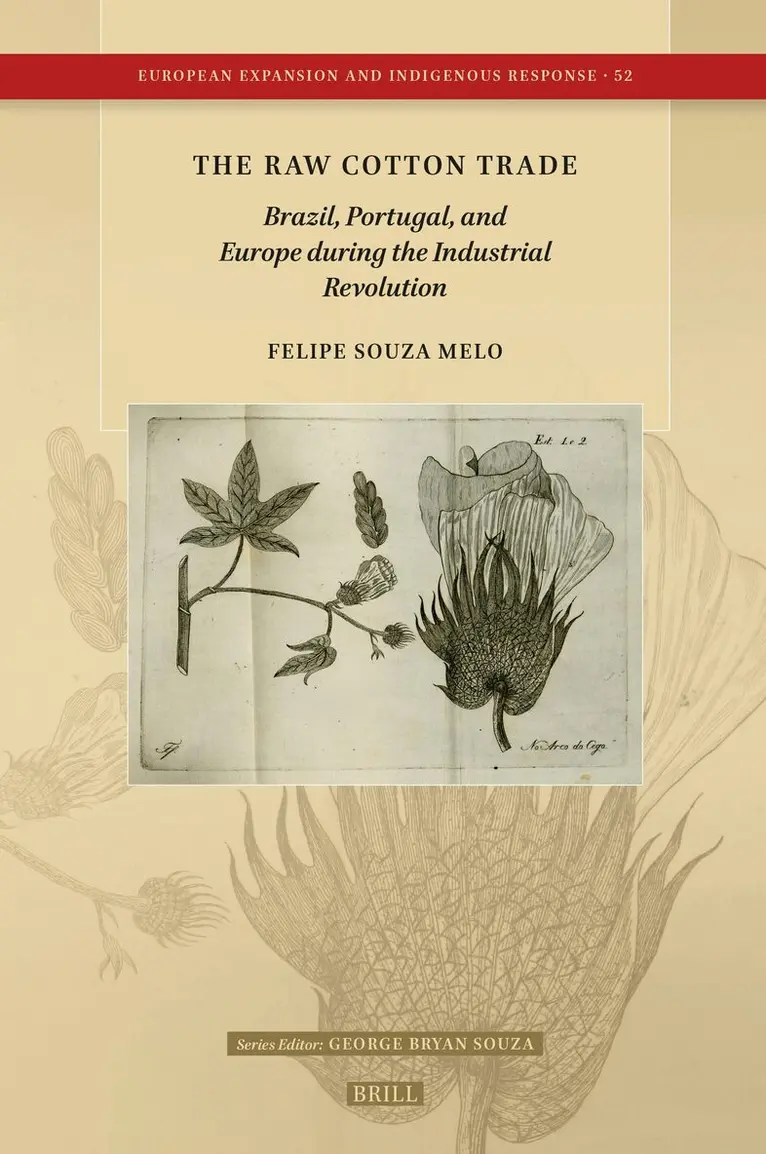
The open access publication of this book has been published with the support of the Swiss National Science Foundation.Without Brazilian cotton, Europe’s first factories would have struggled to thrive. This book reveals how Maranhão plantations, Northeastern Brazilian smallholders, and Lisbon merchants sustained an Atlantic trade that supplied France, England, and beyond. It exposes how diverse labor systems, imperial monopolies, and foreign merchant networks shaped global commerce in ways that historians have overlooked. Drawing on unpublished archives and using new data, Felipe Souza Melo demonstrates how Brazil powered early industrialization and why scholarship has largely ignored it. To have a more comprehensive story of cotton and capitalism, it is essential to start with Brazil, and this book provides the missing chapter.