Ferenc Jordan – författare
Visar alla böcker från författaren Ferenc Jordan. Handla med fri frakt och snabb leverans.
5 produkter
5 produkter
Inbunden, Engelska, 2013
1 690 kr
Skickas inom 10-15 vardagar
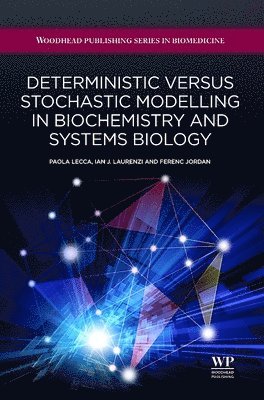
Stochastic kinetic methods are currently considered to be the most realistic and elegant means of representing and simulating the dynamics of biochemical and biological networks. Deterministic versus stochastic modelling in biochemistry and systems biology introduces and critically reviews the deterministic and stochastic foundations of biochemical kinetics, covering applied stochastic process theory for application in the field of modelling and simulation of biological processes at the molecular scale. Following an overview of deterministic chemical kinetics and the stochastic approach to biochemical kinetics, the book goes onto discuss the specifics of stochastic simulation algorithms, modelling in systems biology and the structure of biochemical models. Later chapters cover reaction-diffusion systems, and provide an analysis of the Kinfer and BlenX software systems. The final chapter looks at simulation of ecodynamics and food web dynamics.Introduces mathematical concepts and formalisms of deterministic and stochastic modelling through clear and simple examplesPresents recently developed discrete stochastic formalisms for modelling biological systems and processesDescribes and applies stochastic simulation algorithms to implement a stochastic formulation of biochemical and biological kinetics
2 138 kr
Läs direkt efter köp
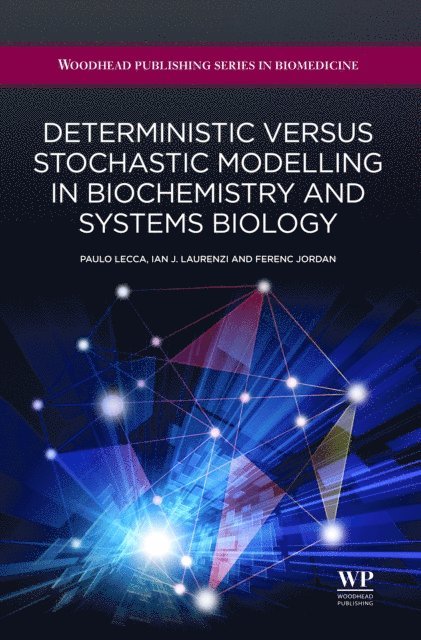
Stochastic kinetic methods are currently considered to be the most realistic and elegant means of representing and simulating the dynamics of biochemical and biological networks. Deterministic versus stochastic modelling in biochemistry and systems biology introduces and critically reviews the deterministic and stochastic foundations of biochemical kinetics, covering applied stochastic process theory for application in the field of modelling and simulation of biological processes at the molecular scale. Following an overview of deterministic chemical kinetics and the stochastic approach to biochemical kinetics, the book goes onto discuss the specifics of stochastic simulation algorithms, modelling in systems biology and the structure of biochemical models. Later chapters cover reaction-diffusion systems, and provide an analysis of the Kinfer and BlenX software systems. The final chapter looks at simulation of ecodynamics and food web dynamics.- Introduces mathematical concepts and formalisms of deterministic and stochastic modelling through clear and simple examples- Presents recently developed discrete stochastic formalisms for modelling biological systems and processes- Describes and applies stochastic simulation algorithms to implement a stochastic formulation of biochemical and biological kinetics
Inbunden, Engelska, 2020
1 083 kr
Skickas inom 10-15 vardagar
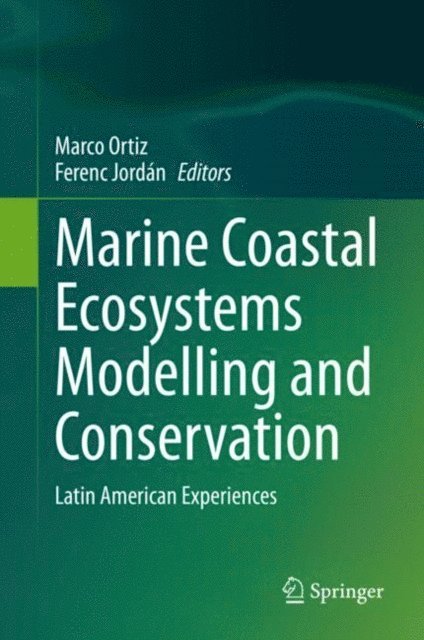
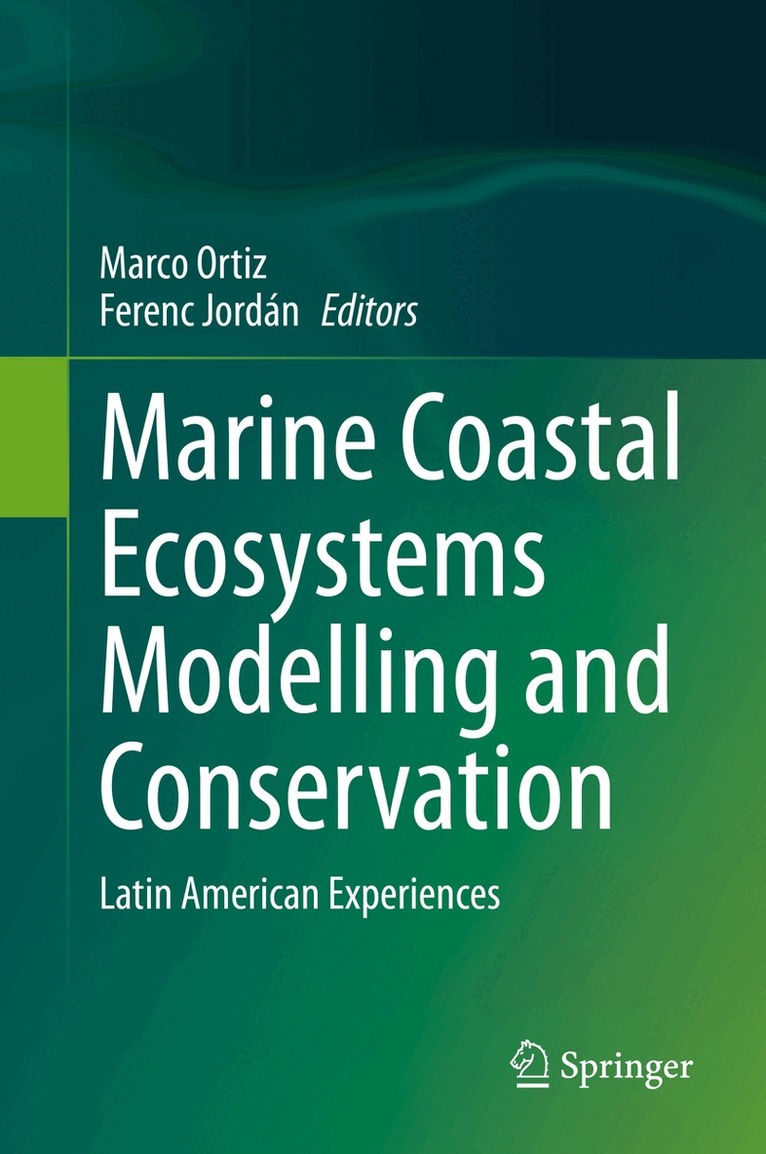
The book presents a collection of large-scale network-modeling studies on coastal systems in Latin America. It includes a novel description of the functioning of coastal complex ecosystems and also predicts how natural and human-made disturbances percolate through the networks. Coastal areas belong to the most populated ecosystems around the globe, and are massively influenced by human impacts such as shipping, mining, fisheries, tourism, pollution and human settlements. Even though many of these activities have facilitated socio-economic development, they have also caused a significant deterioration in natural populations, communities and ecosystems worldwide. Covering coastal marine ecosystems of Latin America such as the NE and SE Pacific, NW Atlantic and Caribbean areas, it discusses the construction of quantitative (Ecopath-Ecosim-Ecospace and Centrality of Node Sets) and semi-quantitative (Loop Analysis) multispecies trophic-network models to describe and assess the impacts of natural and human interventions like pelagic and benthic fishing as well as natural events such as El Niño, and La Niña. The book also features steady state (and/or near moving equilibrium) and dynamical models to support the management of exploited organisms, and applies and quantifies macroscopic indices, based on Ascendency (Ulanowicz) and Local Stability (Levins´ Loop Analysis). Further, it discusses the determination of the Keystone Species Complex Index, which is a holistic extension of the classical concept of Keystone Species (Paine), offering novel strategies for conservation monitoring and management.
1 367 kr
Läs direkt efter köp
The book presents a collection of large-scale network-modeling studies on coastal systems in Latin America. It includes a novel description of the functioning of coastal complex ecosystems and also predicts how natural and human-made disturbances percolate through the networks. Coastal areas belong to the most populated ecosystems around the globe, and are massively influenced by human impacts such as shipping, mining, fisheries, tourism, pollution and human settlements. Even though many of these activities have facilitated socio-economic development, they have also caused a significant deterioration in natural populations, communities and ecosystems worldwide. Covering coastal marine ecosystems of Latin America such as the NE and SE Pacific, NW Atlantic and Caribbean areas, it discusses the construction of quantitative (Ecopath-Ecosim-Ecospace and Centrality of Node Sets) and semi-quantitative (Loop Analysis) multispecies trophic-network models to describe and assess the impacts of natural and human interventions like pelagic and benthic fishing as well as natural events such as El Niño, and La Niña. The book also features steady state (and/or near moving equilibrium) and dynamical models to support the management of exploited organisms, and applies and quantifies macroscopic indices, based on Ascendency (Ulanowicz) and Local Stability (Levins´ Loop Analysis). Further, it discusses the determination of the Keystone Species Complex Index, which is a holistic extension of the classical concept of Keystone Species (Paine), offering novel strategies for conservation monitoring and management.
Häftad, Engelska, 2021
1 083 kr
Skickas inom 10-15 vardagar
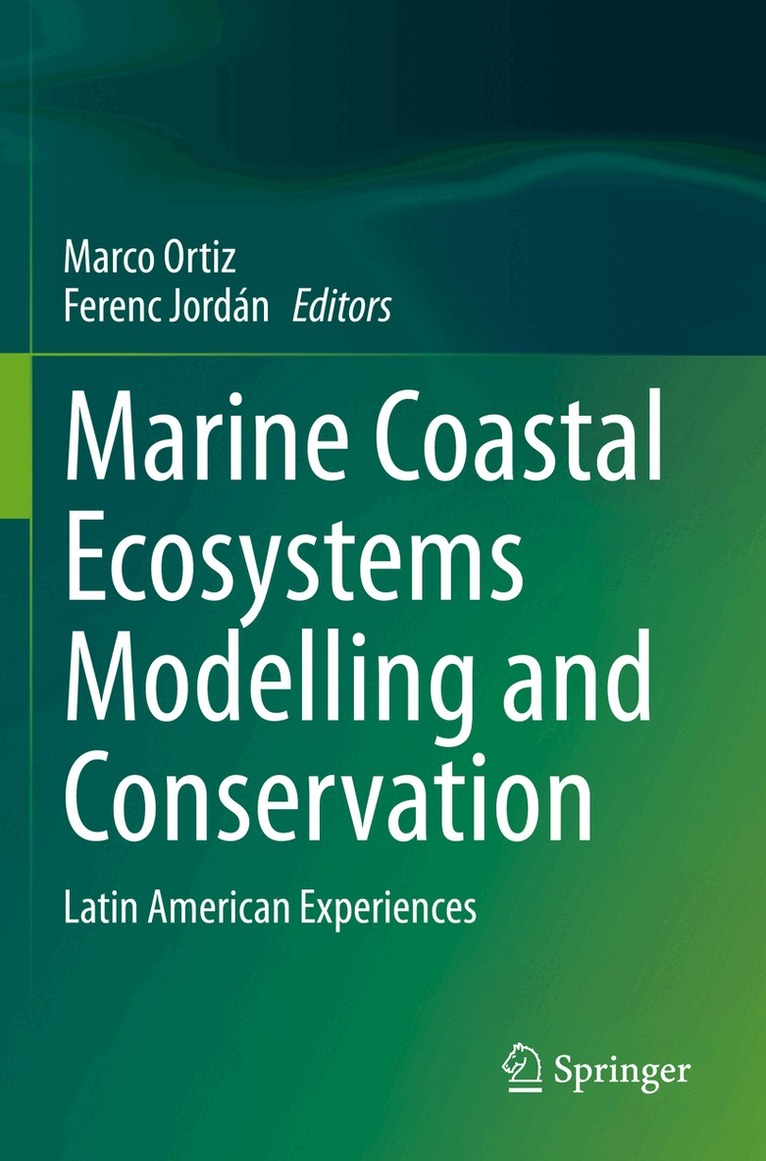
The book presents a collection of large-scale network-modeling studies on coastal systems in Latin America. It includes a novel description of the functioning of coastal complex ecosystems and also predicts how natural and human-made disturbances percolate through the networks. Coastal areas belong to the most populated ecosystems around the globe, and are massively influenced by human impacts such as shipping, mining, fisheries, tourism, pollution and human settlements. Even though many of these activities have facilitated socio-economic development, they have also caused a significant deterioration in natural populations, communities and ecosystems worldwide. Covering coastal marine ecosystems of Latin America such as the NE and SE Pacific, NW Atlantic and Caribbean areas, it discusses the construction of quantitative (Ecopath-Ecosim-Ecospace and Centrality of Node Sets) and semi-quantitative (Loop Analysis) multispecies trophic-network models to describe and assess the impacts of natural and human interventions like pelagic and benthic fishing as well as natural events such as El Niño, and La Niña. The book also features steady state (and/or near moving equilibrium) and dynamical models to support the management of exploited organisms, and applies and quantifies macroscopic indices, based on Ascendency (Ulanowicz) and Local Stability (Levins´ Loop Analysis). Further, it discusses the determination of the Keystone Species Complex Index, which is a holistic extension of the classical concept of Keystone Species (Paine), offering novel strategies for conservation monitoring and management.