Fergus I. M. Craik – författare
Visar alla böcker från författaren Fergus I. M. Craik. Handla med fri frakt och snabb leverans.
4 produkter
4 produkter
E-bok
Engelska, 2005849 kr
Läs direkt efter köp
Written by the world''s leading memory scientists in a highly accessible language, this volume brings together facts and theories of cognitive psychology; memory development in childhood and old age; memory impairment in brain injury and disease; the emergence of memory functions from the brain; as well as reviews of current behavioral, neuroimaging, and computer simulation theories of memory. philosophers and thinkers for hundreds of years. The last decades in particular have seen the emergence of a genuine science of memory, based first on behavioral studies and more recently on the new technologies of brain scanning. These recent studies have resulted in theories that are rich, complex, and far-reaching in their implications. The Oxford Handbook of Memory lays out these theories, and the evidence on which the theories are based. The important new discoveries of the last few years are described, along with their consequences for professionals in the areas of law, engineering, and clinical medicine. Endel Tulving and Fergus Craik, two world-class experts on memory, provide this handbook as a guide to the dynamic and exciting field of memory research. Individual chapters are written by eminent researchers who provide insight into their special areas, and outline challenges for the work that lies ahead. The book is exhaustive in its coverage-examining such topics as the development of memory, the contents of memory, memory in the laboratory and in everyday use, memory in decline, the organization of memory, and theories of memory-making this book ideal for psychologists, memory researchers, neuroscientists, and graduate students of psychology.
Del 34 - Oxford Psychology Series
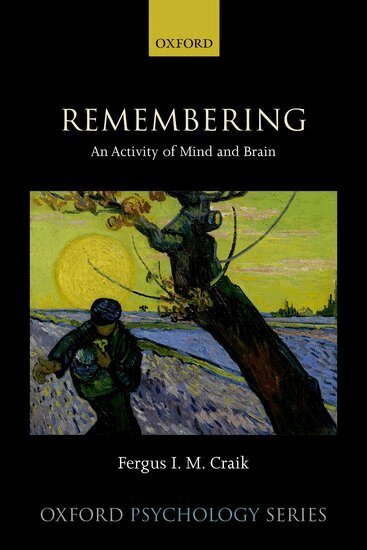
Remembering
An Activity of Mind and Brain
Inbunden, Engelska, 2021
668 kr
Skickas inom 5-8 vardagar
Memory is typically thought of as a set of neural representations - 'memory traces' - that must be found and reactivated in order to be experienced. It is often suggested that 'memory traces' are represented by a hierarchically organized system of analyzers, modified, sharpened and differentiated by encounters with successive events. Remembering: An activity of mind and brain is the magnum opus of one of the leading figures in the psychology of memory. It sets out Fergus Craik's current view of human memory as a dynamic activity of mind and brain. The author argues that remembering should be understood as a system of active cognitive processes, similar to (perhaps identical to) the processes underlying attending, perceiving and thinking. Thus, encoding processes are essentially viewed as the mental activities involved in perceiving and understanding, and retrieval is described as the partial reactivation of these same processes. This account proposes that episodic and semantic memory should be thought of as levels in a continuum of specificity rather than as separate systems of memory. In addition, the book presents Craik's views on working memory and on age-related memory impairments. In the latter case the losses are attributed largely to a difficulty with the self-initiation of appropriate encoding and retrieval operations compensated, when needed, by support from the external environment. The development of these ideas is discussed throughout the book and illustrated substantially by experiments from the author's lab, but also by empirical and theoretical contributions from other researchers. A broad account of current ideas and findings in contemporary memory research, but viewed from the author's personal theoretical standpoint, Remembering: An activity of mind and brain will be essential for researchers, graduate and postdoctoral students working in the field of human memory.
Inbunden, Engelska, 2006
941 kr
Skickas inom 5-8 vardagar
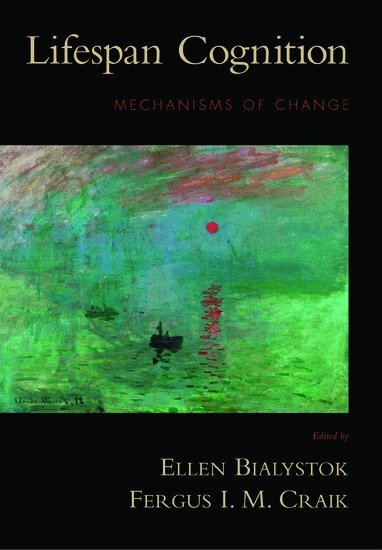
This volume creates a bridge across cognitive development and cognitive aging. Pairs of researchers study the rise and fall of specific cognitive functions, such as attention, executive functioning, memory, working memory, representations, language, problem solving, intelligence, and individual differences to find ways in which the study of development and decline converge on common processes and mechanisms. The contributed chapters are framed by an introduction that sets out the problems to be discussed and a conclusion that extracts the common themes and speculates on the implications for theory building. The book is unique in offering a lifespan approach to cognition by experts in the individual facts of cognitive functioning from either the developmental or the aging perspective.
E-bok
PDF, Engelska, 2000849 kr
Läs direkt efter köp
Written by the world''s leading memory scientists in a highly accessible language, this volume brings together facts and theories of cognitive psychology; memory development in childhood and old age; memory impairment in brain injury and disease; the emergence of memory functions from the brain; as well as reviews of current behavioral, neuroimaging, and computer simulation theories of memory. philosophers and thinkers for hundreds of years. The last decades in particular have seen the emergence of a genuine science of memory, based first on behavioral studies and more recently on the new technologies of brain scanning. These recent studies have resulted in theories that are rich, complex, and far-reaching in their implications. The Oxford Handbook of Memory lays out these theories, and the evidence on which the theories are based. The important new discoveries of the last few years are described, along with their consequences for professionals in the areas of law, engineering, and clinical medicine. Endel Tulving and Fergus Craik, two world-class experts on memory, provide this handbook as a guide to the dynamic and exciting field of memory research. Individual chapters are written by eminent researchers who provide insight into their special areas, and outline challenges for the work that lies ahead. The book is exhaustive in its coverage-examining such topics as the development of memory, the contents of memory, memory in the laboratory and in everyday use, memory in decline, the organization of memory, and theories of memory-making this book ideal for psychologists, memory researchers, neuroscientists, and graduate students of psychology.