Fiona Gordon-Ashworth - Böcker
Visar alla böcker från författaren Fiona Gordon-Ashworth. Handla med fri frakt och snabb leverans.
3 produkter
3 produkter
1 292 kr
Skickas inom 10-15 vardagar
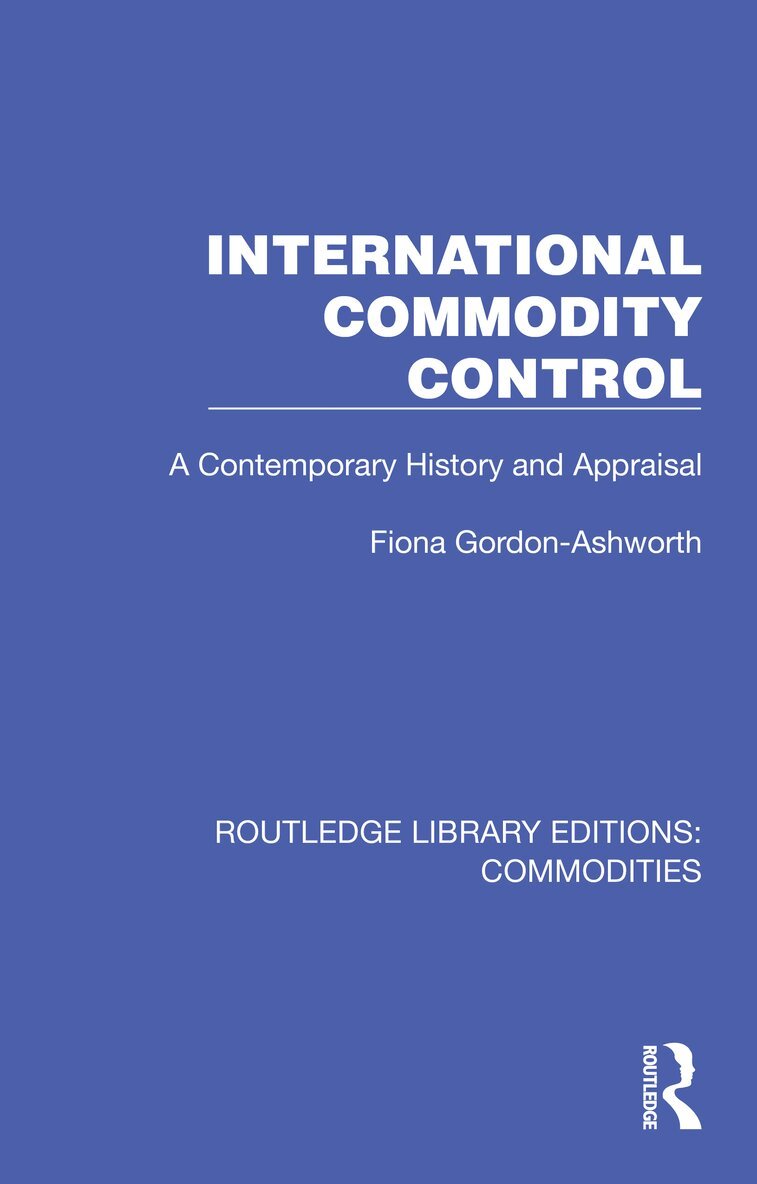
Originally published in 1984, at a time when international commodity control was brought from the periphery to the centre of international trade policy, this book provided a new and more comprehensive approach to, and an analytical appraisal of, international commodity controls, from their origins in the 1920s to their widespread acceptance as an important element in international trade policy in the 1970s. The first part establishes the economic and institutional background against which controls were introduced and includes sections on a wide range of issues such as the changing structure of world commodity trade and the roles of GATT, UNCTAD and the former EEC. Part 2 considers the principal control mechanisms which have been used at the international level and review the national counterparts and alternatives. Part 3 assesses on a commodity-by-commodity basis how the control worked in practice. It covers all the international commodity agreements to 1982 and also considers examples of raw material cartels.
440 kr
Skickas inom 10-15 vardagar
Originally published in 1984, at a time when international commodity control was brought from the periphery to the centre of international trade policy, this book provided a new and more comprehensive approach to, and an analytical appraisal of, international commodity controls, from their origins in the 1920s to their widespread acceptance as an important element in international trade policy in the 1970s. The first part establishes the economic and institutional background against which controls were introduced and includes sections on a wide range of issues such as the changing structure of world commodity trade and the roles of GATT, UNCTAD and the former EEC. Part 2 considers the principal control mechanisms which have been used at the international level and review the national counterparts and alternatives. Part 3 assesses on a commodity-by-commodity basis how the control worked in practice. It covers all the international commodity agreements to 1982 and also considers examples of raw material cartels.
9 139 kr
Skickas inom 10-15 vardagar
Originally published between 1982 and 1989, the volumes in this set were written at a time of instability in the global commodity markets. Then, just as now with the effects of the war in Ukraine, these volumes highlighted the extent to which events in primary commodity markets continue to influence the economies of developing and industrialized economies alike.They discuss the adequacy of world mineral supplies and the problems of resource conservation; examine patterns of trade, changing demand and the effects of fluctuations in spot and futures markets, all of which are crucially important for developing countries which above all need stability in primary commodities trade to guarantee their future development; provide an overview of the nature of the different types of commodity model as well as their diverse applications; introduce modelling methodologies, including their advantages, limitations and commodity specific implications; explain the role of futures and options in agriculture and their uses in reducing risks and maximizing profits; offer an analytical appraisal of international commodity controls, from their origins in the 1920s to their widespread acceptance as an important element in international trade policy in the 1970s.