Fiona Haines - Böcker
Visar alla böcker från författaren Fiona Haines. Handla med fri frakt och snabb leverans.
8 produkter
8 produkter
1 191 kr
Skickas inom 10-15 vardagar
This volume brings together key articles in the burgeoning field of regulation. The collection is interdisciplinary, in keeping with study of regulation itself, yet the book arranges and explores these articles to make the bewildering array of issues and concepts that comprise the study of regulation comprehensible to a criminological audience. It will be of interest to all scholars and students of criminology and criminal justice, as well as those concerned with reducing the crimes and harms of the powerful.
Globalization and Regulatory Character
Regulatory Reform after the Kader Toy Factory Fire
Inbunden, Engelska, 2019
1 735 kr
Skickas inom 10-15 vardagar
Originally published in 2005. Uniting critical debates on globalization with those on regulation, this book provides an innovative account of the fate of safety regulation in the face of global pressures. The author addresses the key question of whether globalization is making safety standards better or worse. She analyzes the diverse strands of globalization that threaten safety standards and examines the measures that hold potential for beneficial change. Regulatory character, a theoretical model that captures local economic, political and cultural influence developed in the work, sheds light on how and why regulation and safety standards do or do not change in the face of a crisis. The theoretical work is grounded and illuminated by research on the Thai government's response to the Kader fire, set in the rapidly industrializing context of Southeast Asia. Theoretically rigorous and empirically rich, the book has critical contemporary social relevance. It demonstrates a diverse theoretical heritage (embracing Weber, Douglas and Christopher Hood amongst others) that critically and productively engages with research and policy making to raise safety standards.
488 kr
Skickas inom 7-10 vardagar
This up-to-date book takes a fresh look at regulation and risk and argues that the allure of regulation lies in its capacity to reduce risk while preserving the benefits of trade, travel and commerce. Regulation appears as a politically attractive, targeted and effective way to ensure that disasters of the past are not repeated. Diverse challenges are tackled through regulatory means - including the industrial, financial and terrorist-related hazards analyzed in this book. Fiona Haines' empirical work shows, however, that regulation attempts to reduce risks beyond their stated remit of preventing future disaster. Her analysis reveals a complex nexus between risk and regulation where fulfilment of regulatory potential depends on managing three fundamentally different types of risk: actuarial, socio-cultural and political. This complex risk management task affects both reform and compliance efforts, generating tension and paradoxical outcomes. Nonetheless, Haines argues, enhancing political legitimacy and public reassurance are central, not peripheral, to successful regulation. This insightful book will appeal to academics, researchers and postgraduate researchers working in regulation across law, politics, sociology, criminology and public management. Masters of public management, MBA students, public administrators and regulators, as well as political commentators, will also find this book invaluable.
Global Business and Local Struggle
Reimagining Non-Judicial Remedy for Human Rights
Inbunden, Engelska, 2025
1 218 kr
Skickas inom 7-10 vardagar
In the quest for human rights justice for communities and workers whose rights are breached by transnational businesses, non-judicial mechanisms (NJMs) are often deployed, but how effective are they? This book creates a blueprint for reforming transnational human rights NJMs and for helping communities and workers to use them. Through 587 interviews with 1100 individuals over five years of research in Indonesia and India, the authors delve into the practical workings of NJMs in diverse industries and contexts. The findings reveal that while NJMs are limited in providing standalone remedies, they can play a valuable role within a broader regulatory ecosystem. Combining rich empirical data, multi-method analyses and a new theoretical framework, the authors argue for a multi-pronged approach to human rights redress. Their findings will advance both academic and policy debates about the merits and shortcomings of NJMs.
Globalization and Regulatory Character
Regulatory Reform after the Kader Toy Factory Fire
Häftad, Engelska, 2020
530 kr
Skickas inom 10-15 vardagar
Originally published in 2005. Uniting critical debates on globalization with those on regulation, this book provides an innovative account of the fate of safety regulation in the face of global pressures. The author addresses the key question of whether globalization is making safety standards better or worse. She analyzes the diverse strands of globalization that threaten safety standards and examines the measures that hold potential for beneficial change. Regulatory character, a theoretical model that captures local economic, political and cultural influence developed in the work, sheds light on how and why regulation and safety standards do or do not change in the face of a crisis. The theoretical work is grounded and illuminated by research on the Thai government's response to the Kader fire, set in the rapidly industrializing context of Southeast Asia. Theoretically rigorous and empirically rich, the book has critical contemporary social relevance. It demonstrates a diverse theoretical heritage (embracing Weber, Douglas and Christopher Hood amongst others) that critically and productively engages with research and policy making to raise safety standards.
498 kr
Skickas inom 10-15 vardagar
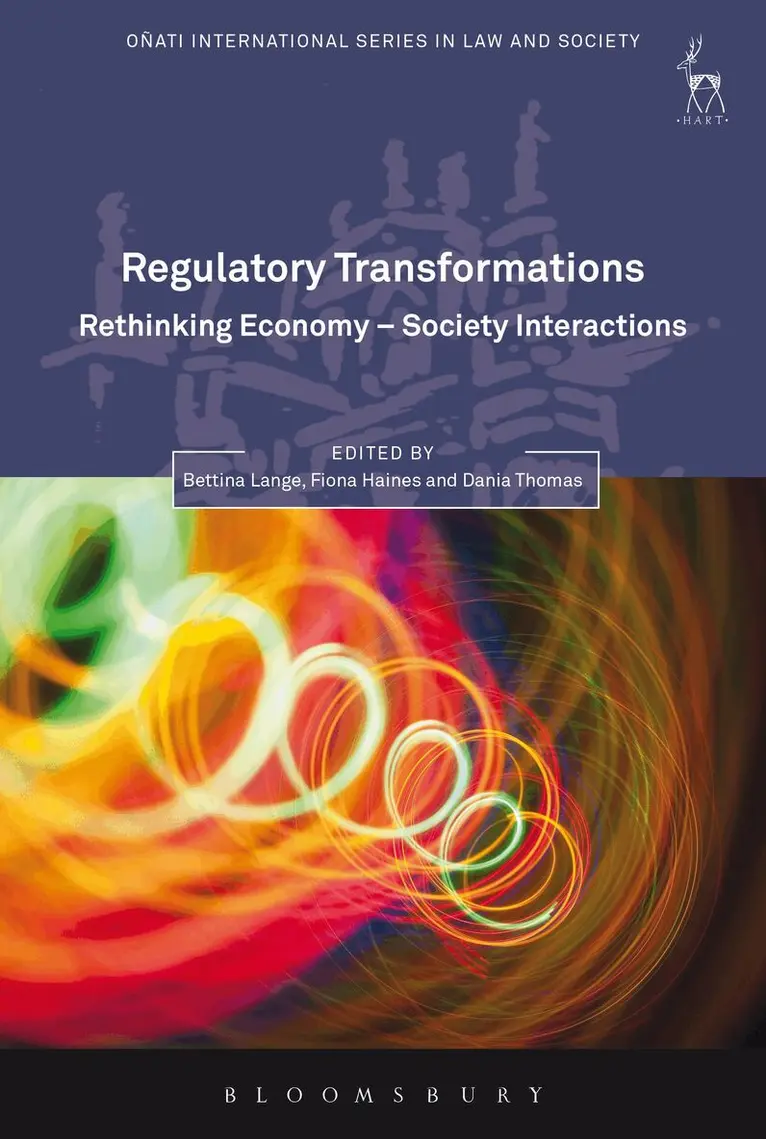
The issue of whether transnational risk can be regulated through a social sphere goes to the heart of what John Ruggie has described as ‘embedded liberalism’: how capitalist countries have reconciled markets with the social community that markets require to survive and thrive. This collection, located in the wider debates about global capitalism and its regulation, tackles the challenge of finding a way forward for regulation. It rejects the old divisions of state and market, citizens and consumers, social movements and transnational corporations, as well as ‘economic’ and ‘social’ regulation. Instead this rich, multidisciplinary collection engages with a critical theme—the idea of harnessing the regulatory capacity of a social sphere by recognising the embeddedness of economic transactions within a social and political landscape. This collection therefore explores how social norms, practices, actors and institutions frame economic transactions, and thereby regulate risks generated by and for business, state and citizens.A key strength of this book is its integration of three distinct areas of scholarship: Karl Polanyi's economic sociology, regulation studies and socio-legal studies of transnational hazards. The collection is distinct in that it links the study of specific transnational risk regulatory regimes back to a social–theoretical discussion about economy–society interactions, informed by Polanyi's work. Each of the chapters addresses the way in which economics, as well as economic and social regulation, can never be understood separately from the social, particularly in the transnational context.Endorsement‘This thought-provoking collection asks the most critical question of our time – how to civilise markets through social accountability and political action. The climate and financial crises we face show how crucial this challenge is. Lange, Haines and Thomas have put together a series of fruitful case studies of the possibilities for embedding economic relationships in social relationships by a series of top-class researchers within their own illuminating and sensitive framing of the issue’.Professor Christine Parker, Professor of Regulatory Studies at Monash University.
1 717 kr
Skickas inom 7-10 vardagar
This up-to-date book takes a fresh look at regulation and risk and argues that the allure of regulation lies in its capacity to reduce risk while preserving the benefits of trade, travel and commerce. Regulation appears as a politically attractive, targeted and effective way to ensure that disasters of the past are not repeated. Diverse challenges are tackled through regulatory means - including the industrial, financial and terrorist-related hazards analyzed in this book. Fiona Haines' empirical work shows, however, that regulation attempts to reduce risks beyond their stated remit of preventing future disaster. Her analysis reveals a complex nexus between risk and regulation where fulfilment of regulatory potential depends on managing three fundamentally different types of risk: actuarial, socio-cultural and political. This complex risk management task affects both reform and compliance efforts, generating tension and paradoxical outcomes. Nonetheless, Haines argues, enhancing political legitimacy and public reassurance are central, not peripheral, to successful regulation. This insightful book will appeal to academics, researchers and postgraduate researchers working in regulation across law, politics, sociology, criminology and public management. Masters of public management, MBA students, public administrators and regulators, as well as political commentators, will also find this book invaluable.
1 235 kr
Skickas inom 10-15 vardagar
The issue of whether transnational risk can be regulated through a social sphere goes to the heart of what John Ruggie has described as ‘embedded liberalism’: how capitalist countries have reconciled markets with the social community that markets require to survive and thrive. This collection, located in the wider debates about global capitalism and its regulation, tackles the challenge of finding a way forward for regulation. It rejects the old divisions of state and market, citizens and consumers, social movements and transnational corporations, as well as ‘economic’ and ‘social’ regulation. Instead this rich, multidisciplinary collection engages with a critical theme—the idea of harnessing the regulatory capacity of a social sphere by recognising the embeddedness of economic transactions within a social and political landscape. This collection therefore explores how social norms, practices, actors and institutions frame economic transactions, and thereby regulate risks generated by and for business, state and citizens.A key strength of this book is its integration of three distinct areas of scholarship: Karl Polanyi's economic sociology, regulation studies and socio-legal studies of transnational hazards. The collection is distinct in that it links the study of specific transnational risk regulatory regimes back to a social–theoretical discussion about economy–society interactions, informed by Polanyi's work. Each of the chapters addresses the way in which economics, as well as economic and social regulation, can never be understood separately from the social, particularly in the transnational context.Endorsement‘This thought-provoking collection asks the most critical question of our time – how to civilise markets through social accountability and political action. The climate and financial crises we face show how crucial this challenge is. Lange, Haines and Thomas have put together a series of fruitful case studies of the possibilities for embedding economic relationships in social relationships by a series of top-class researchers within their own illuminating and sensitive framing of the issue’.Professor Christine Parker, Professor of Regulatory Studies at Monash University.