Florencia E. Mallon – författare
Visar alla böcker från författaren Florencia E. Mallon. Handla med fri frakt och snabb leverans.
10 produkter
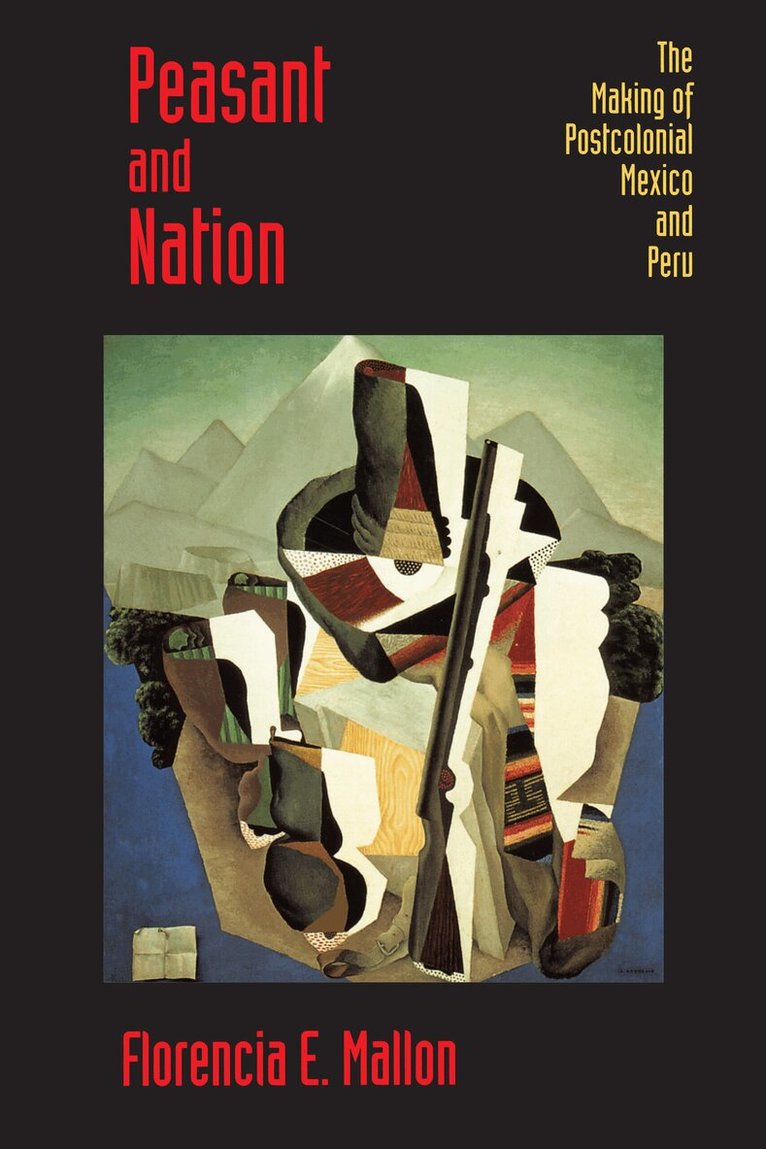
Peasant and Nation
The Making of Postcolonial Mexico and Peru
Häftad, 1995
471 kr
Lägg i varukorg
Peasant and Nation offers a major new statement on the making of national politics. Comparing the popular political cultures and discourses of postcolonial Mexico and Peru, Florencia Mallon provides a groundbreaking analysis of their effect on the evolution of these nation states. As political …
Peasant and Nation
The Making of Postcolonial Mexico and Peru
E-bok, 1995
553 kr
Lägg i varukorg
Peasant and Nation offers a major new statement on the making of national politics. Comparing the popular political cultures and discourses of postcolonial Mexico and Peru, Florencia Mallon provides a groundbreaking analysis of their effect on the evolution of these nation states. As political …
Defense of Community in Peru's Central Highlands
Peasant Struggle and Capitalist Transition, 1860-1940
Häftad, 2014
688 kr
Lägg i varukorg
Florencia E. Mallon examines the development of capitalism in Peru's central highlands, depicting its impact on peasant village economy and society. She shows that the region's peasantry divided into an agrarian bourgeoisie and a rural proletariat during the period under discussion, although the …
Defense of Community in Peru's Central Highlands
Peasant Struggle and Capitalist Transition, 1860-1940
Inbunden, 2016
2848 kr
Lägg i varukorg
Florencia E. Mallon examines the development of capitalism in Peru's central highlands, depicting its impact on peasant village economy and society. She shows that the region's peasantry divided into an agrarian bourgeoisie and a rural proletariat during the period under discussion, although the …
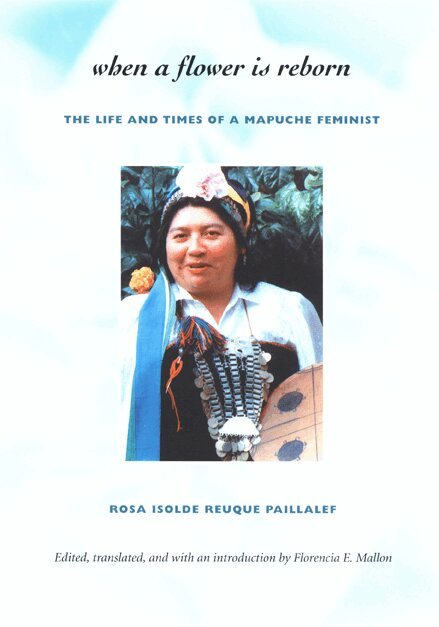
When a Flower Is Reborn
The Life and Times of a Mapuche Feminist
Av Rosa Isolde Reuque Paillalef, Florencia E. Mallon
Häftad, 2002
468 kr
Lägg i varukorg
A pathbreaking contribution to Latin American testimonial literature, When a Flower Is Reborn is activist Rosa Isolde Reuque Paillalef’s chronicle of her leadership within the Mapuche indigenous rights movement in Chile. Part personal reflection and part political autobiography, it is also the …
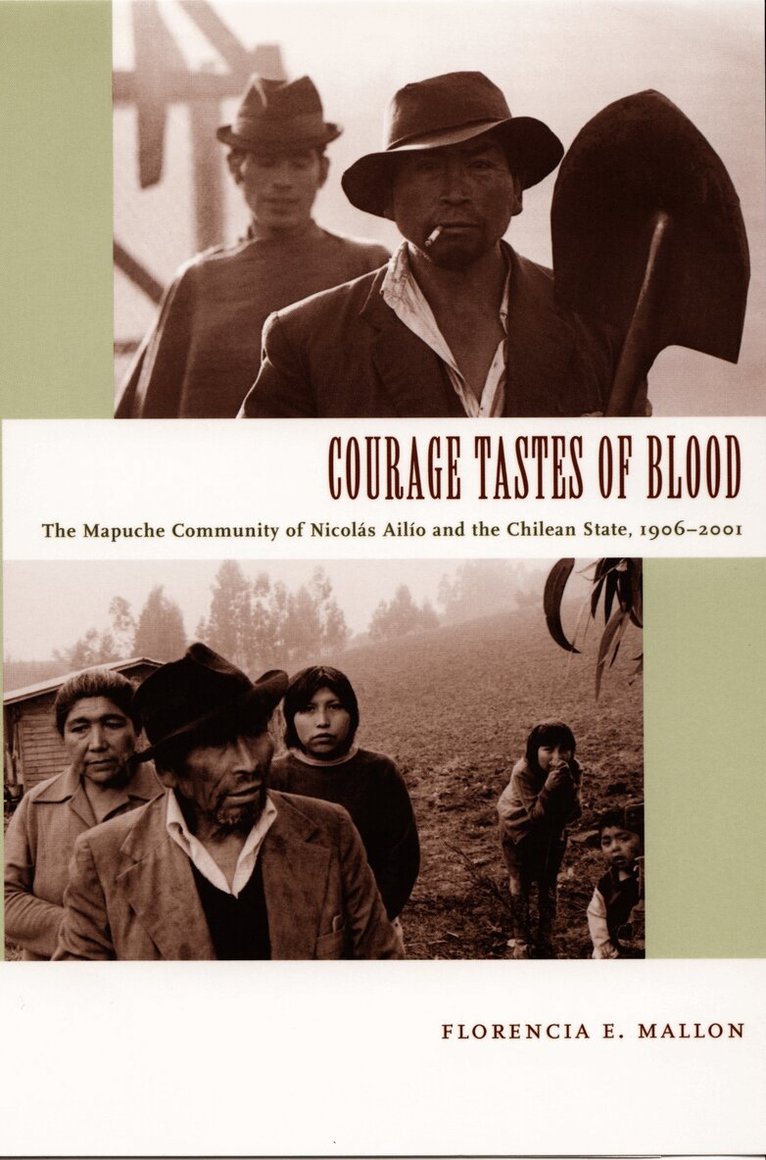
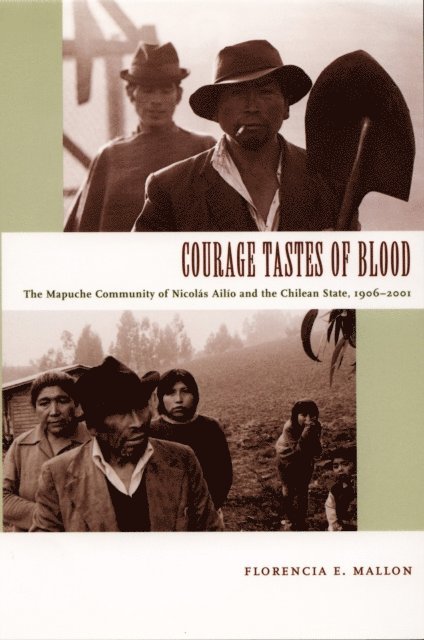
Courage Tastes of Blood
The Mapuche Community of Nicolás Ailío and the Chilean State, 1906-2001
Häftad, 2005
563 kr
Lägg i varukorg
Until now, very little about the recent history of the Mapuche, Chile’s largest indigenous group, has been available to English-language readers. Courage Tastes of Blood helps to rectify this situation. It tells the story of one Mapuche community-NicolÁs AilÍo, located in the south of the …
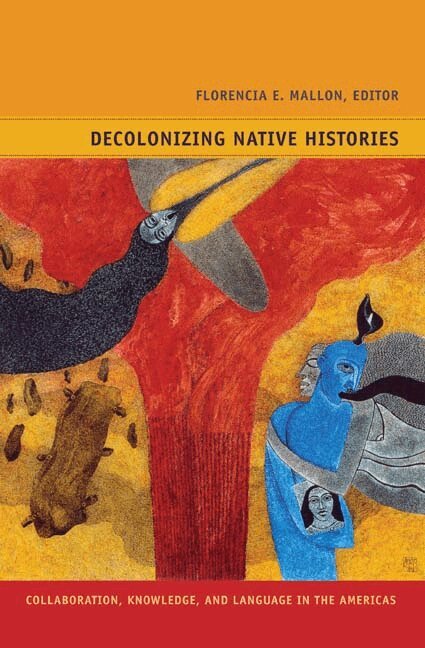
Decolonizing Native Histories
Collaboration, Knowledge, and Language in the Americas
Häftad, 2011
385 kr
Lägg i varukorg
Decolonizing Native Histories is an interdisciplinary collection that grapples with the racial and ethnic politics of knowledge production and indigenous activism in the Americas. It analyzes the relationship of language to power and empowerment, and advocates for collaborations between community …
When a Flower Is Reborn
The Life and Times of a Mapuche Feminist
Av Rosa Isolde Reuque Paillalef, Florencia E. Mallon
E-bok, 2002
692 kr
Lägg i varukorg
A pathbreaking contribution to Latin American testimonial literature, When a Flower Is Reborn is activist Rosa Isolde Reuque Paillalef’s chronicle of her leadership within the Mapuche indigenous rights movement in Chile. Part personal reflection and part political autobiography, it is also the …
Courage Tastes of Blood
The Mapuche Community of Nicolás Ailío and the Chilean State, 1906-2001
E-bok, 2005
570 kr
Lägg i varukorg
Until now, very little about the recent history of the Mapuche, Chile’s largest indigenous group, has been available to English-language readers. Courage Tastes of Blood helps to rectify this situation. It tells the story of one Mapuche community—Nicolás Ailío, located in the south of the …
Defense of Community in Peru's Central Highlands
Peasant Struggle and Capitalist Transition, 1860-1940
E-bok, 2014
934 kr
Lägg i varukorg
Florencia E. Mallon examines the development of capitalism in Peru's central highlands, depicting its impact on peasant village economy and society. She shows that the region's peasantry divided into an agrarian bourgeoisie and a rural proletariat during the period under discussion, although the …