Florian Rappl – författare
145 kr
Läs direkt efter köp
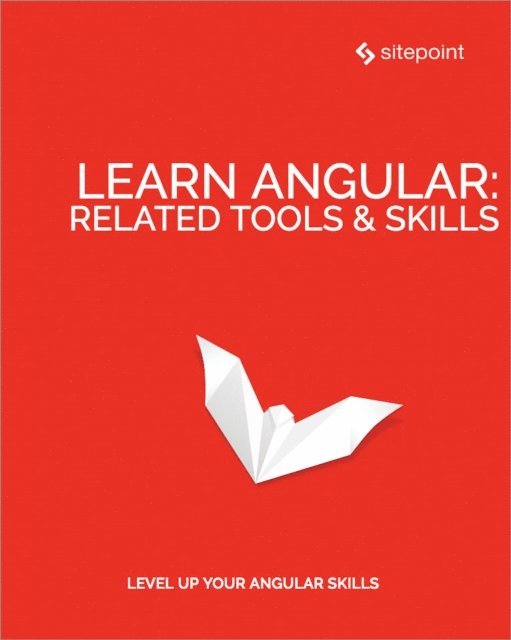
Angular is not just a framework, but rather a platform that empowers developers to build applications for the web, mobile, and the desktop.
This book provides an overview of some essential Angular tools--such as Angular CLI, Angular Augary, and Sublime Text--as well as outlining some must-have TypeScript tips.
This book is for all front-end developers who want to become proficient with Angular and its related tools. You''ll need to be familiar with HTML and CSS and have a reasonable level of understanding of JavaScript in order to follow the discussion.
628 kr
Skickas inom 5-8 vardagar
443 kr
Läs direkt efter köp
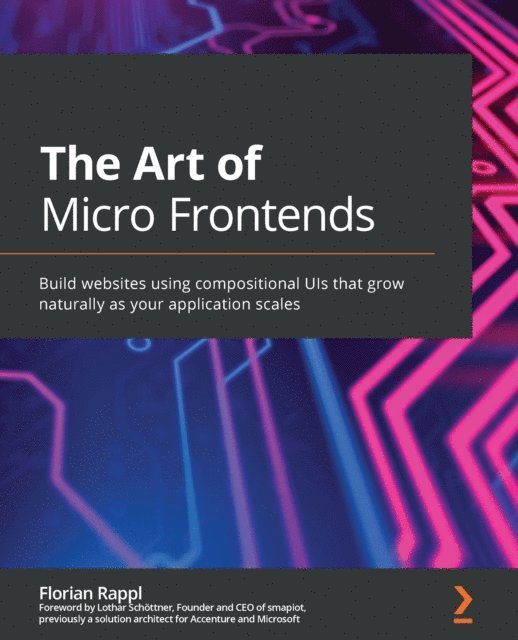
Apply your experience of web development with HTML and JavaScript to build micro frontends for large-scale web projects using frameworks such as React and popular web tooling such as Node.js with Express or webpack
Key Features
Cut through the complexities of designing a monolithic web architecture using micro frontend architectureExplore architecture patterns for building large-scale applicationsLearn how to build, test, and secure your micro frontends efficientlyBook Description
Micro frontend is a web architecture for frontend development borrowed from the idea of microservices in software development, where each module of the frontend is developed and shipped in isolation to avoid complexity and a single point of failure for your frontend.Complete with hands-on tutorials, projects, and self-assessment questions, this easy-to-follow guide will take you through the patterns available for implementing a micro frontend solution. You’ll learn about micro frontends in general, the different architecture styles and their areas of use, how to prepare teams for the change to micro frontends, as well as how to adjust the UI design for scalability. Starting with the simplest variants of micro frontend architectures, the book progresses from static approaches to fully dynamic solutions that allow maximum scalability with faster release cycles. In the concluding chapters, you''ll reinforce the knowledge you’ve gained by working on different case studies relating to micro frontends.By the end of this book, you''ll be able to decide if and how micro frontends should be implemented to achieve scalability for your user interface (UI).What you will learn
Understand how to choose the right micro frontend architectureDesign screens for compositional UIsCreate a great developer experience for micro frontend solutionsAchieve enhanced user experiences with micro frontendsIntroduce governance and boundary checks for managing distributed frontendsBuild scalable modular web applications from scratch or by migrating an existing monolithWho this book is for
This book is for software/solution architects or (mostly lead) developers as well as web developers and frontend engineers. Beginner-level knowledge of HTML and CSS along with a solid understanding of JavaScript programming and its ecosystem, including Node.js and NPM, is assumed.
504 kr
Skickas inom 5-8 vardagar
487 kr
Skickas inom 5-8 vardagar
344 kr
Läs direkt efter köp
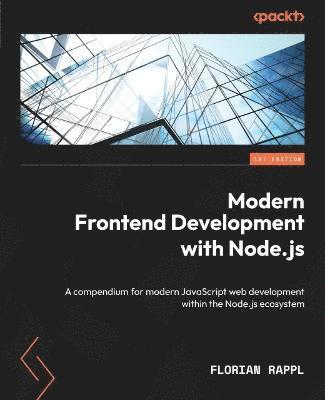
Apply your web development experience with HTML and JavaScript to build micro frontends for large-scale web projects, independent of frameworks and tooling
Key Features
Cut through the complexities of designing a monolithic web architecture using micro frontend architectureExplore architecture patterns and their areas of use for building large-scale applicationsLearn how to build, test, and secure your micro frontends efficientlyPurchase of the print or Kindle book includes a free PDF eBookBook Description
The organizational pattern of micro frontends allows you to split web applications into multiple parts, where each part can be owned by an autonomous team. Each team can have its own development and deployment life cycle, allowing every part of an application to be shipped in isolation. Following the strategies outlined in this book, you can avoid complexity while increasing resilience for your frontend. This updated second edition will guide you through the patterns available to implement a micro frontend solution. You’ll learn about micro frontends, the different architecture styles, and their areas of use. Then, you’ll learn how to prepare teams for the change to micro frontends, as well as how to adjust the user interface (UI) design and your CSS styles for scalability. Starting with the simplest variants of micro frontend architectures, the book progresses from static approaches to fully dynamic solutions that allow maximum scalability with faster release cycles. In the concluding chapters, you’ll strengthen the security level of your micro frontend solution, while reinforcing your overall knowledge with real-world case studies relating to micro frontends. By the end of this book, you’ll be able to decide whether and how micro frontends should be implemented to achieve high scalability for your web app.What you will learn
Understand how to choose the right micro frontend architectureUse screen designs and isolated styles for compositional UIsCreate outstanding developer experiences for micro frontend solutionsIntroduce governance and boundary checks to manage distributed frontendsShare dependencies and expose micro frontends with module federationBuild scalable modular web applications from scratch or by migrating an existing monolithWho this book is for
This book is for software architects, lead developers, senior web developers, and frontend engineers. Beginner-level knowledge of HTML and CSS, as well as a solid understanding of JavaScript programming and its ecosystem, including Node.js and npm, is assumed.