Fouad Ajami – författare
Visar alla böcker från författaren Fouad Ajami. Handla med fri frakt och snabb leverans.
5 produkter
5 produkter
175 kr
Skickas inom 11-20 vardagar
1 303 kr
Skickas inom 7-10 vardagar
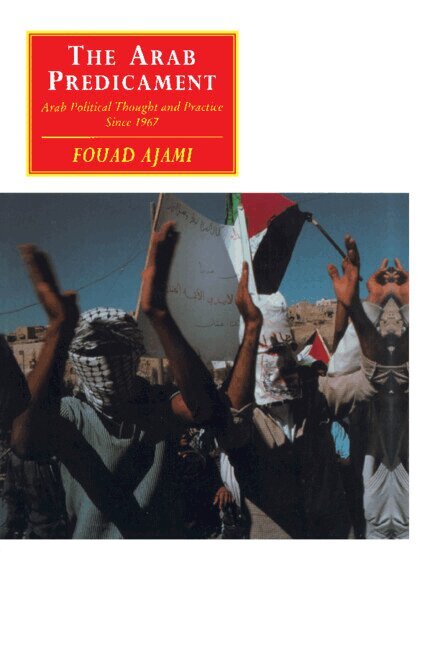
How have Arab political ideas and institutions evolved since the 1967 War? How have the Arabs contended with the external influences to which their wealth has exposed them? What are the implications of the rise of Islamic fundamentalism? Fouad Ajami seeks to answer these and related questions in his illuminating study of the constraints and possibilities facing the Arab world. The book documents the political and intellectual response to the defeat of 1967 and surveys the choices facing the Arab world as exemplified by the case of Egypt. It seeks to explain the resurgence of Islamic fundamentalism and locates its roots in the failures of the dominant political order, and the stalemate of secular political ideas. This revised edition, first published in 1992, was updated and renewed the book's status as an indispensable guide to the politics of the Arab world.
304 kr
Skickas inom 7-10 vardagar
How have Arab political ideas and institutions evolved since the 1967 War? How have the Arabs contended with the external influences to which their wealth has exposed them? What are the implications of the rise of Islamic fundamentalism? Fouad Ajami seeks to answer these and related questions in his illuminating study of the constraints and possibilities facing the Arab world today. This book documents the political and intellectual response to the defeat of 1967 and surveys the choices facing the Arab world as exemplified by the case of Egypt. It seeks to explain the resurgence of Islamic fundamentalism and locates its roots in the failures of the dominant political order, and the stalemate of secular political ideas. This revised 1992 edition of Ajami's acclaimed study has been updated and renews the book's status as an indispensable guide to the politics of the Arab world.
658 kr
Skickas inom 10-15 vardagar
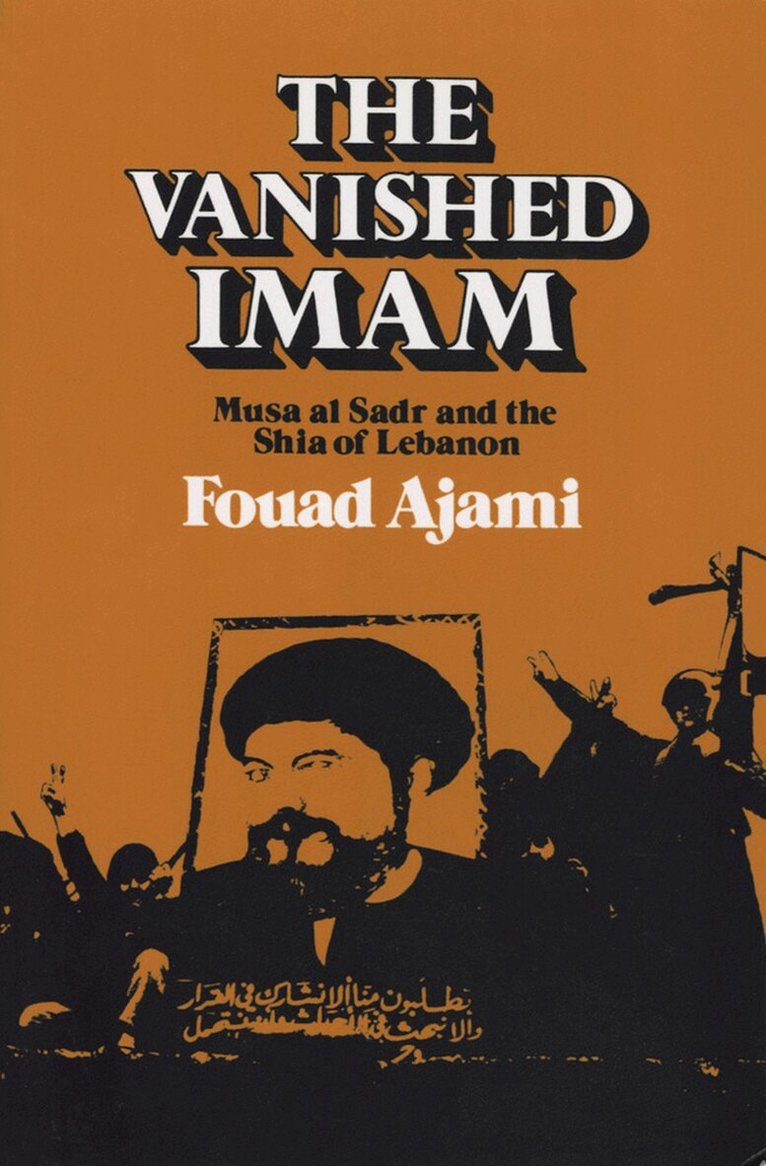
In the summer of 1978, Musa al Sadr, the spiritual leader of the Muslim Shia sect in Lebanon, disappeared mysteriously while on a visit to Libya. As in the Shia myth of the "Hidden Imam," this modern-day Imam left his followers upholding his legacy and awaiting his return. Considered an outsider when he had arrived in Lebanon in 1959 from his native Iran, he gradually assumed the role of charismatic mullah, and was instrumental in transforming the Shia, a quiescent and downtrodden Islamic minority, into committed political activists. What sort of person was Musa al Sadr? What beliefs in the Shia doctrine did his life embody? Where did he fit into the tangle of Lebanon's warring factions? What was behind his disappearance?In this fascinating and compelling narrative, Fouad Ajami resurrects the Shia's neglected history, both distant and recent, and interweaves the life and work of Musa al Sadr with the larger strands of the Shia past.
325 kr
Skickas inom 10-15 vardagar
In the summer of 1978, Musa al Sadr, the spiritual leader of the Muslim Shia sect in Lebanon, disappeared mysteriously while on a visit to Libya. As in the Shia myth of the "Hidden Imam," this modern-day Imam left his followers upholding his legacy and awaiting his return. Considered an outsider when he had arrived in Lebanon in 1959 from his native Iran, he gradually assumed the role of charismatic mullah, and was instrumental in transforming the Shia, a quiescent and downtrodden Islamic minority, into committed political activists. What sort of person was Musa al Sadr? What beliefs in the Shia doctrine did his life embody? Where did he fit into the tangle of Lebanon's warring factions? What was behind his disappearance?In this fascinating and compelling narrative, Fouad Ajami resurrects the Shia's neglected history, both distant and recent, and interweaves the life and work of Musa al Sadr with the larger strands of the Shia past.