Frances Garrett - Böcker
Visar alla böcker från författaren Frances Garrett. Handla med fri frakt och snabb leverans.
3 produkter
3 produkter
2 307 kr
Skickas inom 10-15 vardagar
This book explores the cultural history of embryology in Tibet, in culture, religion, art and literature, and what this reveals about its medicine and religion. Filling a significant gap in the literature this is the first in-depth exploration of Tibetan medical history in the English language. It reveals the prevalence of descriptions of the development of the human body – from conception to birth – found in all forms of Tibetan religious literature, as well as in medical texts and in art. By analysing stories of embryology, Frances Garrett explores questions of cultural transmission and adaptation: How did Tibetan writers adapt ideas inherited from India and China for their own purposes? What original views did they develop on the body, on gender, on creation, and on life itself? The transformations of embryological narratives over several centuries illuminate key turning points in Tibetan medical history, and its relationship with religious doctrine and practice. Embryology was a site for both religious and medical theorists to contemplate profound questions of being and becoming, where topics such as pharmacology and nosology were left to shape secular medicine. The author argues that, in terms of religion, stories of human development comment on embodiment, gender, socio-political hierarchy, religious ontology, and spiritual progress. Through the lens of embryology, this book examines how these concerns shift as Tibetan history moves through the formative 'renaissance' period of the twelfth through to the seventeenth centuries.
746 kr
Skickas inom 10-15 vardagar
This book explores the cultural history of embryology in Tibet, in culture, religion, art and literature, and what this reveals about its medicine and religion. Filling a significant gap in the literature this is the first in-depth exploration of Tibetan medical history in the English language. It reveals the prevalence of descriptions of the development of the human body – from conception to birth – found in all forms of Tibetan religious literature, as well as in medical texts and in art. By analysing stories of embryology, Frances Garrett explores questions of cultural transmission and adaptation: How did Tibetan writers adapt ideas inherited from India and China for their own purposes? What original views did they develop on the body, on gender, on creation, and on life itself? The transformations of embryological narratives over several centuries illuminate key turning points in Tibetan medical history, and its relationship with religious doctrine and practice. Embryology was a site for both religious and medical theorists to contemplate profound questions of being and becoming, where topics such as pharmacology and nosology were left to shape secular medicine. The author argues that, in terms of religion, stories of human development comment on embodiment, gender, socio-political hierarchy, religious ontology, and spiritual progress. Through the lens of embryology, this book examines how these concerns shift as Tibetan history moves through the formative 'renaissance' period of the twelfth through to the seventeenth centuries.
Del 46 - Brill's Tibetan Studies Library
Hidden Lands in Himalayan Myth and History
Transformations of sbas yul through Time
Inbunden, Engelska, 2020
1 858 kr
Skickas inom 5-8 vardagar
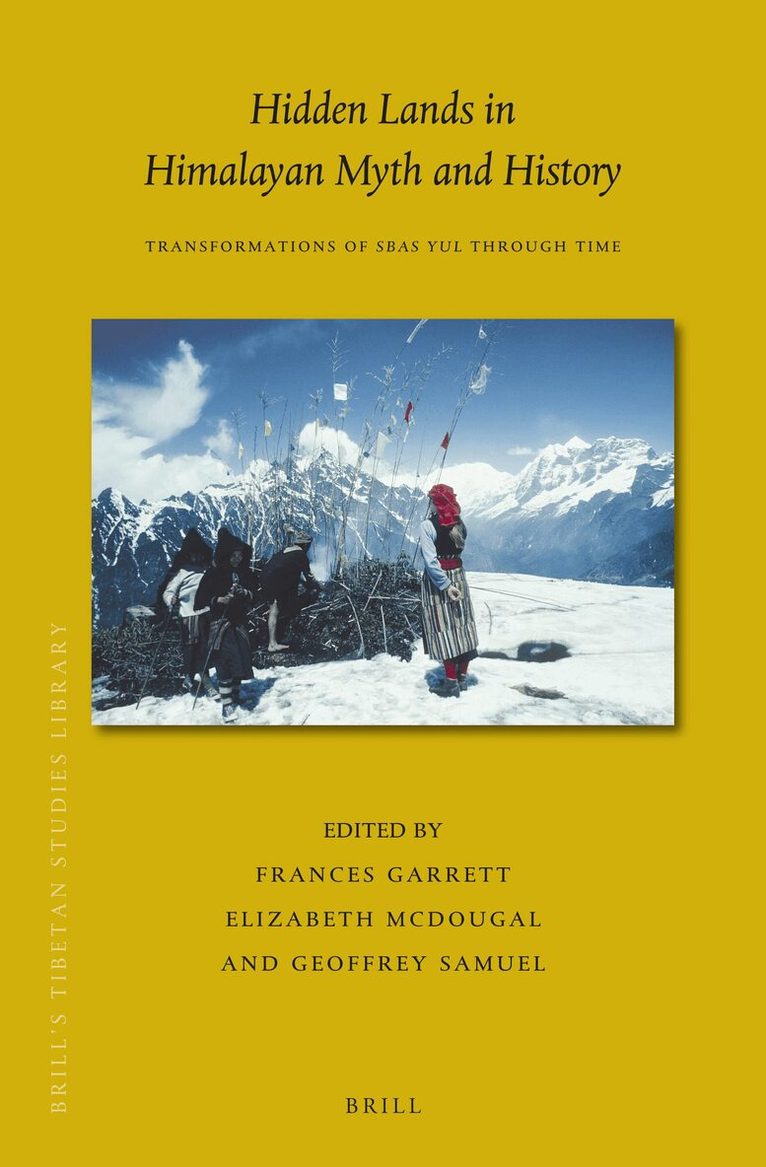
In an era of environmental crisis, narratives of ‘hidden lands’ are resonant. Understood as sanctuaries in times of calamity, Himalayan hidden lands or sbas yul have shaped the lives of many peoples of the region. Sbas yul are described by visionary lamas called ‘treasure finders’ who located hidden lands and wrote guidebooks to them. Scholarly understandings of sbas yul as places for spiritual cultivation and refuge from war have been complicated recently. Research now explores such themes as the political and economic role of ‘treasure finders’, the impact of sbas yul on indigenous populations, and the use of sbas yul for environmental protection and tourism. This book showcases recent scholarship on sbas yul from historical and contemporary perspectives.