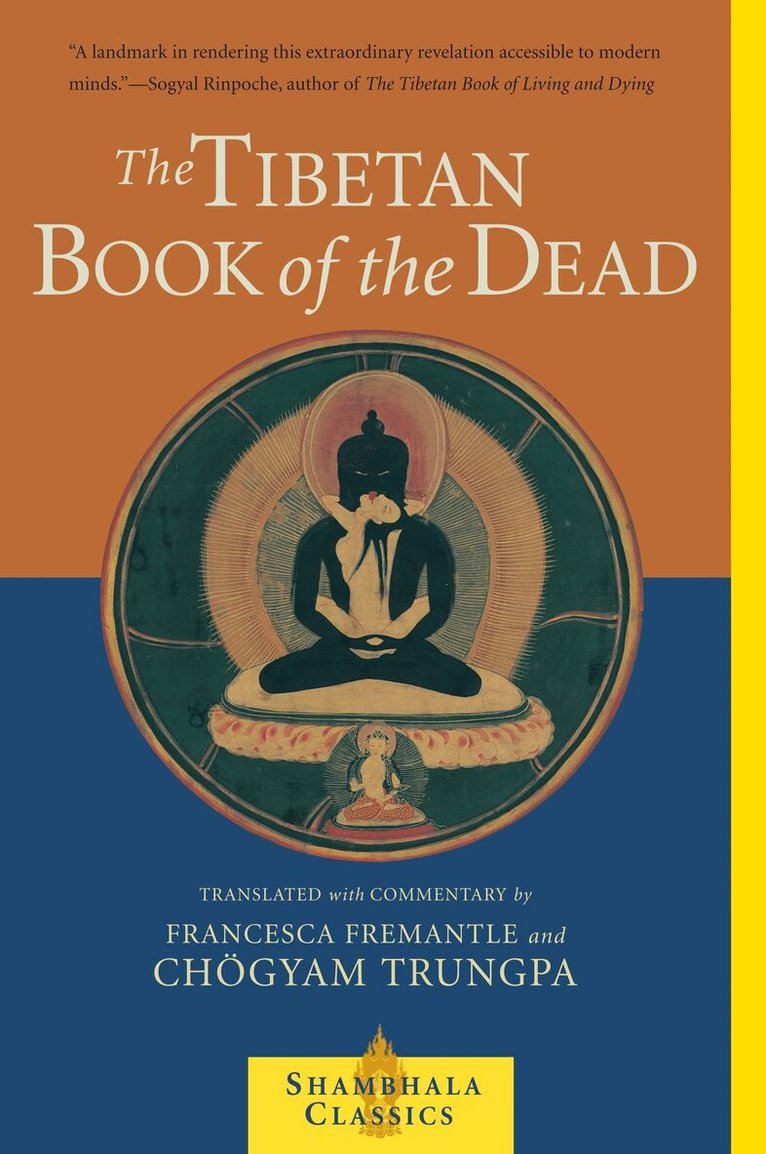
In this classic scripture of Tibetan Buddhism—traditionally read aloud to the dying to help them attain liberation—death and rebirth are seen as a process that provides an opportunity to recognize the true nature of mind. This translation of The Tibetan Book of the Dead emphasizes the practical advice that the book offers to the living. The insightful commentary by Chögyam Trungpa, written in clear, concise language, explains what the text teaches us about human psychology. This book will be of interest to people concerned with death and dying, as well as those who seek greater spiritual understanding in everyday life.
The Tibetan Book of the Dead, a best-seller for three decades, is one of the most widely read texts of Tibetan Buddhism. Over the years, it has been studied and cherished by Buddhists and non-Buddhists alike. Luminous Emptiness is a detailed guide to this classic work, elucidating its mysterious concepts, terms, and imagery. Fremantle relates the symbolic world of the Tibetan Book of the Dead to the experiences of everyday life, presenting the text not as a scripture for the dying, but as a guide for the living.According to the Buddhist view, nothing is permanent or fixed. The entire world of our experience is constantly appearing and disappearing at every moment. Using vivid and dramatic imagery, the Tibetan Book of the Dead presents the notion that most of us are living in a dream that will continue from lifetime to lifetime until we truly awaken by becoming enlightened. Here, Fremantle, who worked closely with Chögyam Trungpa on the 1975 translation of the Tibetan Book of the Dead (Shambhala), brings the expertise of a lifetime of study to rendering this intriguing classic more accessible and meaningful to the living.Luminous Emptiness features in-depth explanations of: • The Tibetan Buddhist notions of death and rebirth • The meaning of the five energies and the five elements in Tibetan Buddhism • The mental and physical experience of dying, according to the Tibetan Buddhist tradition
The Tibetan Book of the Dead, a best-seller for three decades, is one of the most widely read texts of Tibetan Buddhism. Over the years, it has been studied and cherished by Buddhists and non-Buddhists alike. Luminous Emptiness is a detailed guide to this classic work, elucidating its mysterious concepts, terms, and imagery. Fremantle relates the symbolic world of the Tibetan Book of the Dead to the experiences of everyday life, presenting the text not as a scripture for the dying, but as a guide for the living. According to the Buddhist view, nothing is permanent or fixed. The entire world of our experience is constantly appearing and disappearing at every moment. Using vivid and dramatic imagery, the Tibetan Book of the Dead presents the notion that most of us are living in a dream that will continue from lifetime to lifetime until we truly awaken by becoming enlightened. Here, Fremantle, who worked closely with Chögyam Trungpa on the 1975 translation of the Tibetan Book of the Dead (Shambhala), brings the expertise of a lifetime of study to rendering this intriguing classic more accessible and meaningful to the living. Luminous Emptiness features in-depth explanations of: • The Tibetan Buddhist notions of death and rebirth • The meaning of the five energies and the five elements in Tibetan Buddhism • The mental and physical experience of dying, according to the Tibetan Buddhist tradition
A classic of Tibetan Buddhism brought to life with insightful commentary by a modern master.In this classic scripture of Tibetan Buddhism—traditionally read aloud to the dying to help them attain liberation—death and rebirth are seen as a process that provides an opportunity to recognize the true nature of the mind. This translation, with insightful and concise commentary, emphasizes the practical advice that the book offers to the living, making this edition of interest to people concerned with death and dying, as well as those who seek greater spiritual understanding in everyday life.This book is part of the Shambhala Pocket Library series.The Shambhala Pocket Library is a collection of short, portable teachings from notable figures across religious traditions and classic texts. The covers in this series are rendered by Colorado artist Robert Spellman. The books in this collection distill the wisdom and heart of the work Shambhala Publications has published over 50 years into a compact format that is collectible, reader-friendly, and applicable to everyday life.