
Francesca Giglio – författare
Visar alla böcker från författaren . Handla med fri frakt och snabb leverans.
4 produkter
4 produkter
Inbunden, Engelska, 2020
1 225 kr
Skickas inom 10-15 vardagar
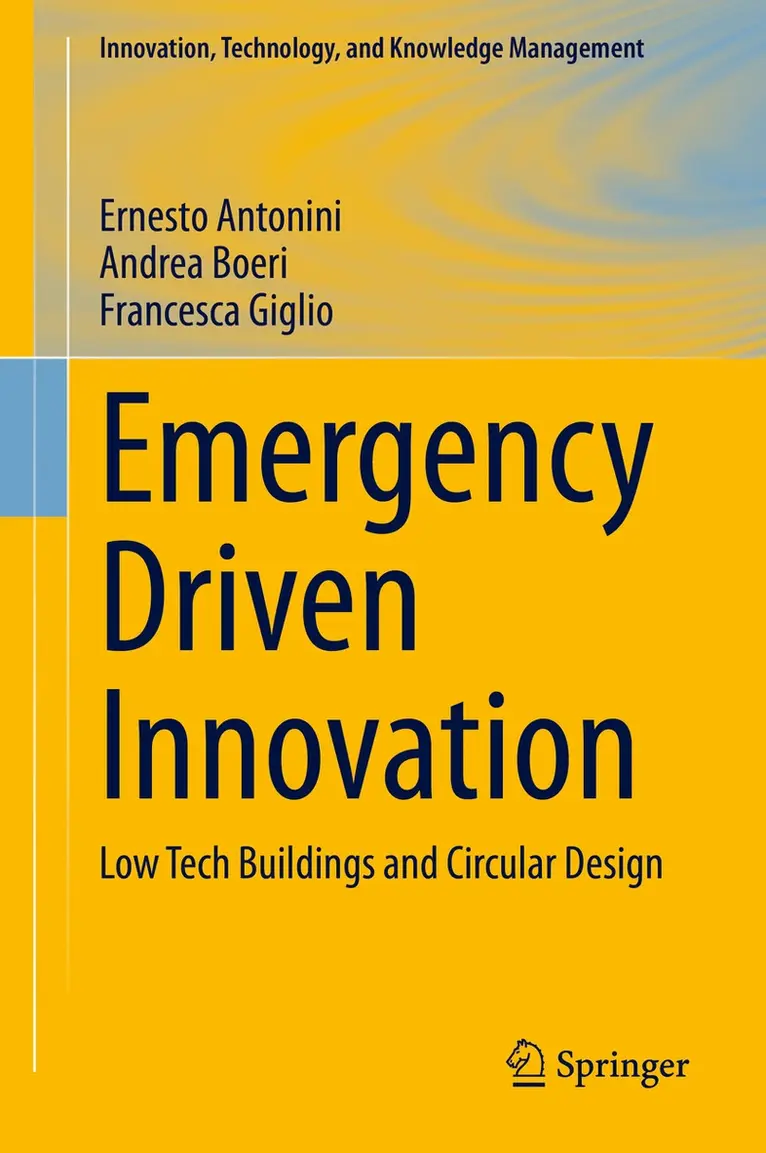
This book explores the relationship between the circular economy and the building technologies within the quintuple helix innovation model. The main question the book answers is whether and how the conversion of sustainable construction processes can be a powerful engine of innovation for the industry. The post-disaster settlements and temporary shelters are assumed as examples of what can be defined as circular buildings in regards to the technical arrangements and features, material and process reversibility, as the social and participative dimensions.Several cases of these interventions are documented and classified by three thematic axes: design, building and living. This highlighted new trajectories for innovation in building technology, consistent with the social, economic and productive dynamics that no longer allows for growing performance by increasing the resource demand. A theoretic framework is traced supporting this vision, which shows how the low technologies can respond to the transition of the economic model from linear to circular. Within this trajectory, the low-tech design for remanufacturing represents a reference framework and a promising tool applicable to the building processes.The enabling technologies and new paradigms for the transition to circular economy emerging from the European research scenario are also mapped, outlining z`the possible future developments in line with open technical and societal challenges.
E-bok
Engelska, 20201 622 kr
Läs direkt efter köp
This book explores the relationship between the circular economy and the building technologies within the quintuple helix innovation model. The main question the book answers is whether and how the conversion of sustainable construction processes can be a powerful engine of innovation for the industry. The post-disaster settlements and temporary shelters are assumed as examples of what can be defined as circular buildings in regards to the technical arrangements and features, material and process reversibility, as the social and participative dimensions.Several cases of these interventions are documented and classified by three thematic axes: design, building and living. This highlighted new trajectories for innovation in building technology, consistent with the social, economic and productive dynamics that no longer allows for growing performance by increasing the resource demand. A theoretic framework is traced supporting this vision, which shows how the low technologies can respond to the transition of the economic model from linear to circular. Within this trajectory, the low-tech design for remanufacturing represents a reference framework and a promising tool applicable to the building processes.The enabling technologies and new paradigms for the transition to circular economy emerging from the European research scenario are also mapped, outlining z`the possible future developments in line with open technical and societal challenges.
Häftad, Engelska, 2021
1 225 kr
Skickas inom 10-15 vardagar
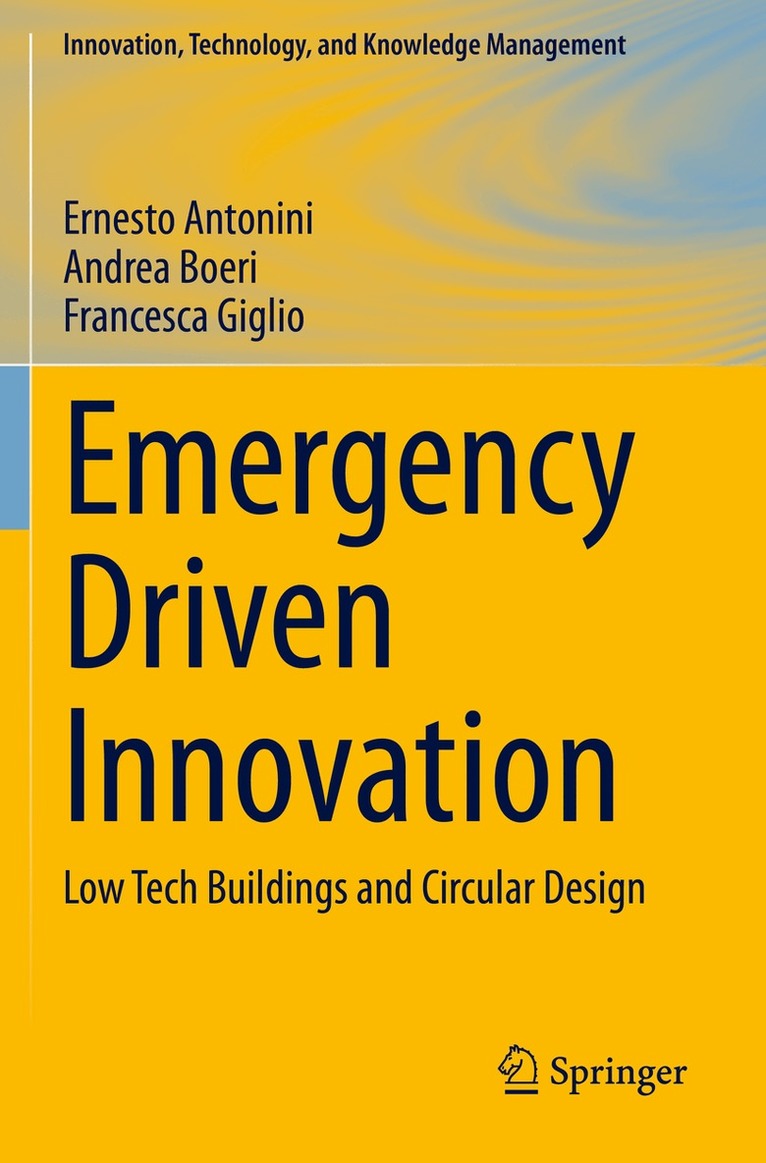
This book explores the relationship between the circular economy and the building technologies within the quintuple helix innovation model. The main question the book answers is whether and how the conversion of sustainable construction processes can be a powerful engine of innovation for the industry. The post-disaster settlements and temporary shelters are assumed as examples of what can be defined as circular buildings in regards to the technical arrangements and features, material and process reversibility, as the social and participative dimensions.Several cases of these interventions are documented and classified by three thematic axes: design, building and living. This highlighted new trajectories for innovation in building technology, consistent with the social, economic and productive dynamics that no longer allows for growing performance by increasing the resource demand. A theoretic framework is traced supporting this vision, which shows how the low technologies can respond to the transition of the economic model from linear to circular. Within this trajectory, the low-tech design for remanufacturing represents a reference framework and a promising tool applicable to the building processes.The enabling technologies and new paradigms for the transition to circular economy emerging from the European research scenario are also mapped, outlining z`the possible future developments in line with open technical and societal challenges.
Inbunden, Engelska, 2026
339 kr
Skickas inom 10-15 vardagar
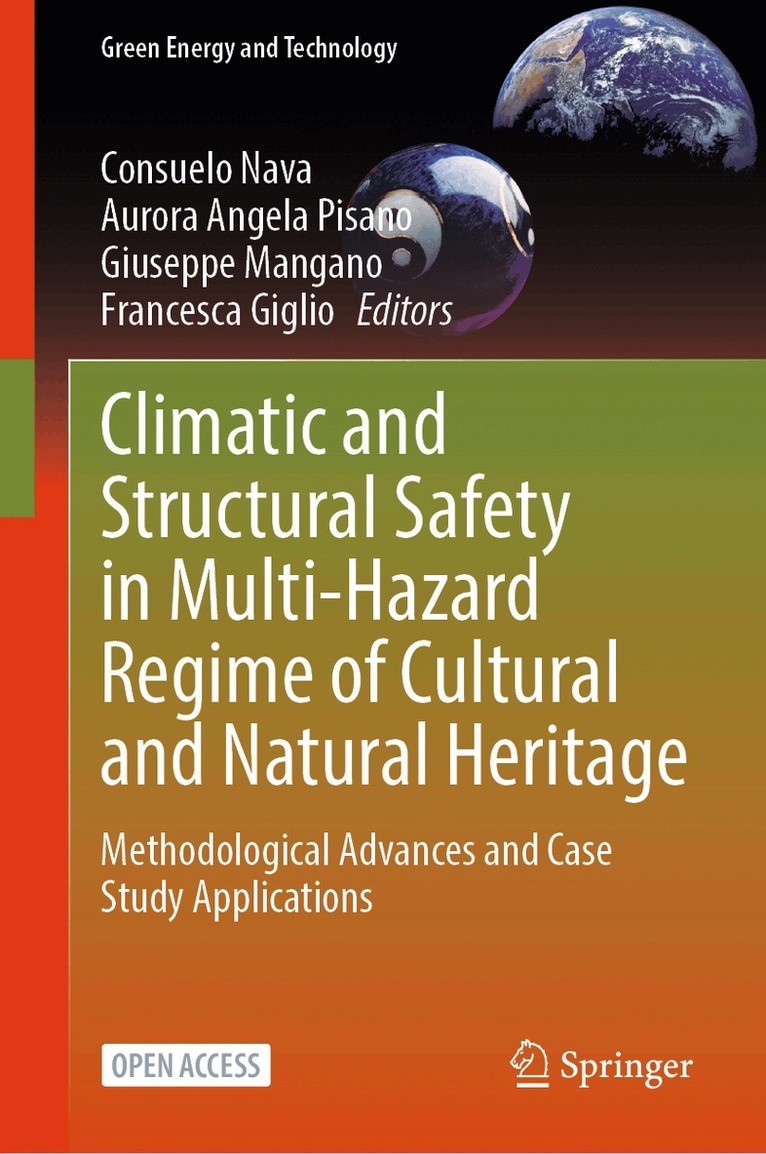
This open access book presents the outcomes of the research developed within the PNRR T4Y PP 4.7.1 technology transfer project entitled “Open Phigital Platform (physical and digital) for user profiling and advanced, dynamic co-design of interventions on existing and new built environments.” The topics are of interest to the scientific community, as they concern the management of structural and environmental safety information related to cultural heritage. The first chapters in the book deepen the theoretical knowledge concerning cultural heritage analysis, proposing advanced models for damage assessment on structures and their surrounding environments. These models also incorporate uncertainties related to material properties and consider different environmental stressors under three projected climate scenarios for the years 2030, 2050, and 2085.This book also presents some final chapters having a more applicative slant, in which, also thanks to the help of some large-scale case studies, a digital platform will be proposed, to support all the meta-files relating to the security data collected, and this, together with the creation of a Living Lab (physical platform), will allow to propose a methodology for the transfer of digitalized data to different stakeholders: institutions, professionals and local communities.