

Inbunden, Italienska, 2023
345 kr
Skickas inom 5-8 vardagar
345 kr
Skickas inom 5-8 vardagar

173 kr
Skickas inom 5-8 vardagar
2 542 kr
Läs direkt efter köp
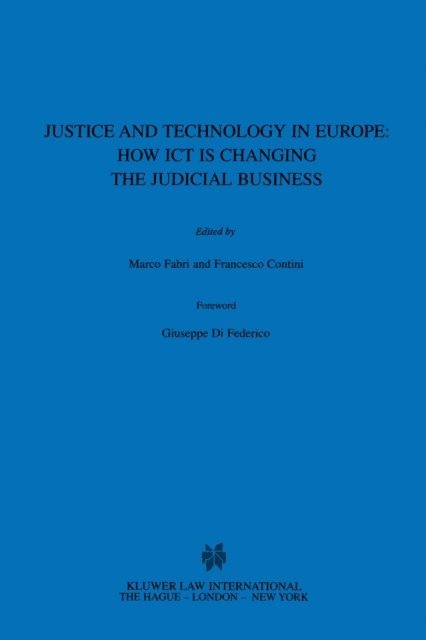
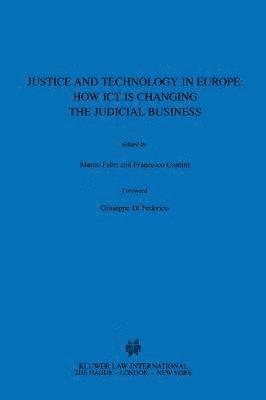
Like systems and procedures in most areas of modern society, the functioning of courts throughout the world has been enormously affected by information and communication technologies (ICT). It has become crucial for lawyers to keep pace with technical changes in judicial systems, especially in international cases where an understanding of procedural variations from one system to another could spell the difference between success and failure.
This immensely valuable book has been written by experts who, in various ways, have actually been engaged in the planning and implementation of ICT in the courts of their respective countries. To ensure information that is as homogeneous as possible, and to facilitate cross-border comparisons, the authors have followed a common and detailed ''blueprint'' which includes a brief description of the judicial system under discussion.
The papers were originally prepared for presentation at the first European Seminar on Court Technology, held in September 2000, at the Research Institute on Judicial Systems (IRSIG–CNR) in Bologna, Italy. The Seminar brought together delegates from the fifteen member countries of the European Union, the Court of Justice of the European Communities, Norway, Venezuela, and The World Bank, to discuss topics related to court technology.
Specific areas of court technology covered include case management systems, electronic filing, and electronic data interchange. Although the emphasis is on EU Member States, a general overview of ICT applications in some Latin American judiciaries is also provided.
1 523 kr
Skickas inom 10-15 vardagar
1 900 kr
Läs direkt efter köp
This book contributes to an understanding of the dynamic complexities involved in the design of e-justice applications that enable online trans-border judicial proceedings in Europe. It provides answers to critical questions with practical relevance: How should online trans-border judicial proceedings be designed in order to deliver effective and timely justice to European citizens, businesses and public agencies? How can the circulation of judicial agency across Europe be facilitated? Based on extensive research, the book explores and assesses the complex entanglements between law and technology, and between national and European jurisdictions that emerge when developing even relatively simple e-services such as those supporting the European small claims procedure and European payment orders. In addition to providing a strong theoretical framework and an innovative approach to e-justice design, this book includes case studies that are based on a common methodology and theoretical framework. It presents original empirical material on the development of e-government systems in the area of European justice. Finally, it introduces the design strategies of Maximum Feasible Simplicity and Maximum Manageable Complexity and, based on them, it proposes architectural and procedural solutions to enhance the circulation of judicial agency.
Interoperability and Infrastructures for European Transborder Judicial Proceedings
1 523 kr
Skickas inom 10-15 vardagar
2 782 kr
Tillfälligt slut