Francesco Pellizzi – författare
Visar alla böcker från författaren Francesco Pellizzi. Handla med fri frakt och snabb leverans.
6 produkter
Problem of the Fetish
Av William Pietz, Francesco Pellizzi m. fl.
Häftad, 2022
328 kr
Lägg i varukorg
A groundbreaking account of the origins and history of the idea of fetishism. In recent decades, William Pietz’s innovative history of the idea of the fetish has become a cult classic. Gathered here, for the first time, is his complete series of essays on fetishism, supplemented by three texts on …
Problem of the Fetish
Av William Pietz, Francesco Pellizzi m. fl.
Inbunden, 2022
864 kr
Lägg i varukorg
A groundbreaking account of the origins and history of the idea of fetishism. In recent decades, William Pietz’s innovative history of the idea of the fetish has become a cult classic. Gathered here, for the first time, is his complete series of essays on fetishism, supplemented by three texts on …
Problem of the Fetish
Av William Pietz, Ben Kafka m. fl.
E-bok, 2022
524 kr
Lägg i varukorg
A groundbreaking account of the origins and history of the idea of fetishism. In recent decades, William Pietz’s innovative history of the idea of the fetish has become a cult classic. Gathered here, for the first time, is his complete series of essays on fetishism, supplemented by three texts on …
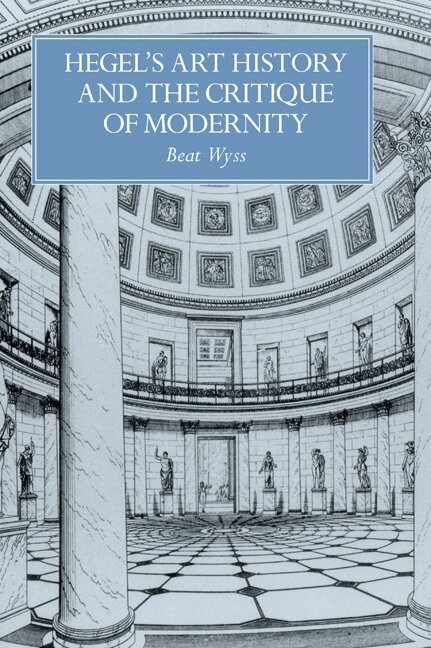
Hegel's Art History and the Critique of Modernity
Av Beat Wyss, Francesco Pellizzi
Inbunden, 1999
1481 kr
Lägg i varukorg
In this 1999 study, Beat Wyss provides a critical analysis of Hegel's theories of art history. Analogous to his philosophy of history, Hegel viewed the history of art in dialectical terms: with its origins in the Ancient Near East, Western art culminated in Classical Greece, but began its decline …
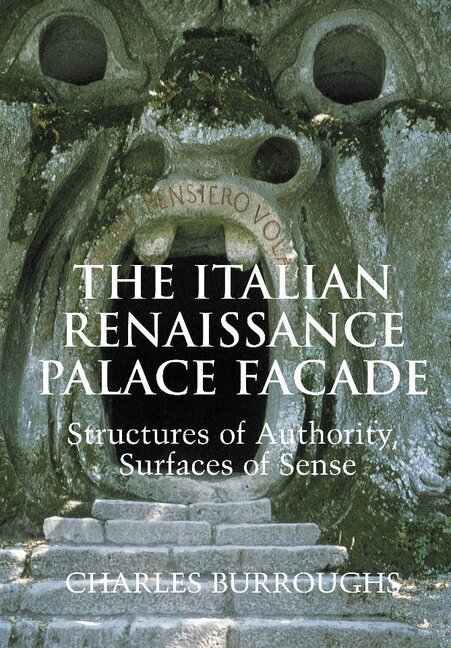
The Italian Renaissance Palace Façade
Structures of Authority, Surfaces of Sense
Av Charles Burroughs, Francesco Pellizzi m. fl.
Inbunden, 2002
1828 kr
Lägg i varukorg
The architectural facade addresses and enhances the space of the city, while displaying, or dissembling, interior arrangements. In this book, Charles Burroughs tracks the emergence of the facade in late medieval Florence and then follows the sharply diverging reactions of Renaissance architects to …
Salvador Dalí's Art and Writing, 1927-1942
The Metamorphosis of Narcissus
Av Haim Finkelstein, Francesco Pellizzi m. fl.
Häftad, 1998
1005 kr
Lägg i varukorg
This book examines the evolution of Dalí's art during the 1920s and 1930s when he was associated first with the Catalan avant-garde and then with the Surrealist group in Paris. During this period, Dalí's painting style changed radically, a phenomenon which has never been fully accounted for in the …