Francesco Salvatore – författare
Visar alla böcker från författaren Francesco Salvatore. Handla med fri frakt och snabb leverans.
3 produkter
3 produkter
E-bok
PDF, Engelska, 2013354 kr
Läs direkt efter köp
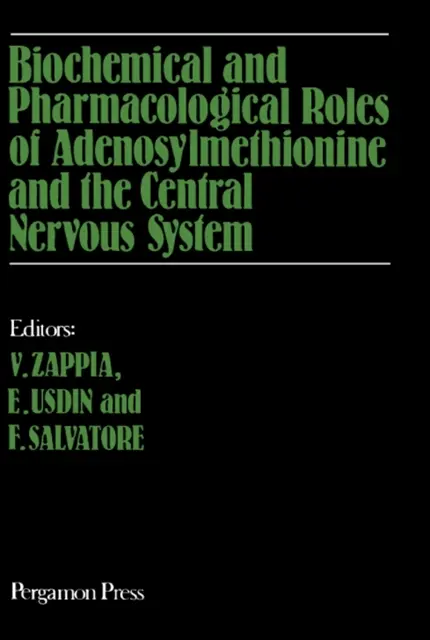
Biochemical and Pharmacological Roles of Adenosylmethionine and the Central Nervous System contains the proceedings of an International Round Table on Adenosylmethionine and the Central Nervous System held in Naples, Italy, on May 2, 1978. The papers explore the biochemical and pharmacological roles of S-adenosylmethionine (SAM), with particular emphasis on its functions in the central nervous system (CNS). This book consists of 13 chapters and opens with an introduction to some novel biochemical aspects of SAM and related sulfur compounds, paying particular attention to transmethylation reactions; polyamine biosynthesis and unusual biological roles of adenosylmethionine; metabolic pathways related to adenosine-sulfur compounds; and transport of adenosylmethionine. The following chapters discuss a number of chemical and biochemical properties of SAM as well as its pharmacological aspects within the CNS. The relation between folate and adenosylmethionine metabolism in the brain is examined, along with the effect of SAM administration on noradrenaline and serotonin metabolism in rat brain; cerebral utilization of adenosylmethionine and adenosylhomocysteine; and antidepressant effects of adenosylmethionine. Methylation in schizophrenia is also considered. This monograph will be a valuable source of information for biochemists and pharmacologists.
E-bok
PDF, Engelska, 20131 459 kr
Läs direkt efter köp
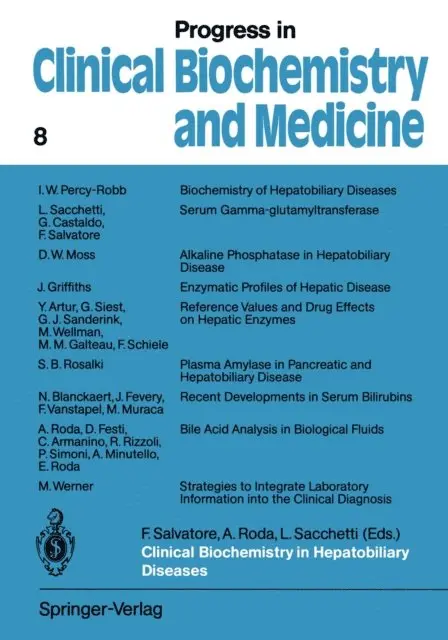
The clinical biochemistry ofhepatobiliary diseases is very widely studied, and publica tions abound on this topic. However, there is no recent publication that provides a comprehensive collection of the various leading aspects that go to make up this complex theme. Therefore, we thought it useful to gather together a few scientists whose work has focused on the various clinical biochemistry-aspects of these disorders in order that they might discuss their experience and expertise. The aim of the International Satellite Symposium on Clinical Biochemistry in Hepatobiliary Disease, in addition to reviewing the individual aspects, was to describe the state-of-the-art so as to provide useful data for laboratory scientists and also for physicians working in the field of hepatobiliary diseases, and these two aims are clearly reflected in the chapters of this volume. The volume opens with an introductory chapter that gives a general overview of the various aspects of the clinical biochemistry of these disorders, while the closing chapter deals with an important aspect that deserves to be increasingly emphasized in laboratory medicine, i.e., strategies to integrate information coming from the laboratory to make them more useful for clinical diagnosis.
Häftad, Engelska, 2011
1 125 kr
Skickas inom 10-15 vardagar
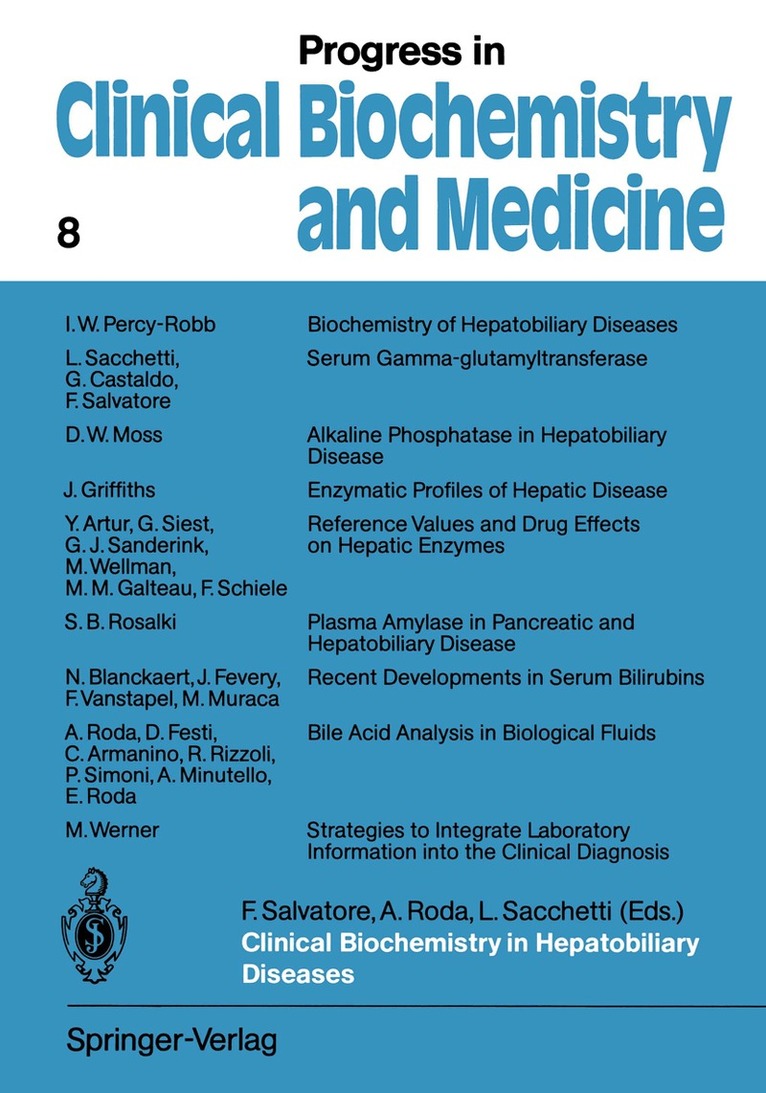
The clinical biochemistry ofhepatobiliary diseases is very widely studied, and publica tions abound on this topic. However, there is no recent publication that provides a comprehensive collection of the various leading aspects that go to make up this complex theme. Therefore, we thought it useful to gather together a few scientists whose work has focused on the various clinical biochemistry-aspects of these disorders in order that they might discuss their experience and expertise. The aim of the International Satellite Symposium on Clinical Biochemistry in Hepatobiliary Disease, in addition to reviewing the individual aspects, was to describe the state-of-the-art so as to provide useful data for laboratory scientists and also for physicians working in the field of hepatobiliary diseases, and these two aims are clearly reflected in the chapters of this volume. The volume opens with an introductory chapter that gives a general overview of the various aspects of the clinical biochemistry of these disorders, while the closing chapter deals with an important aspect that deserves to be increasingly emphasized in laboratory medicine, i.e., strategies to integrate information coming from the laboratory to make them more useful for clinical diagnosis.