Francisco J. Sánchez - Böcker
Visar alla böcker från författaren Francisco J. Sánchez. Handla med fri frakt och snabb leverans.
3 produkter
3 produkter
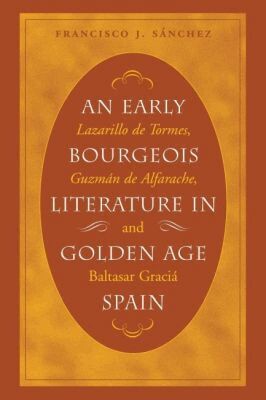
Early Bourgeois Literature in Golden Age Spain
Lazarillo De Tormes, Guzmán De Alfarache and Baltasar Gracián
Häftad, Engelska, 2003
360 kr
Skickas inom 10-15 vardagar
Tracing the beginnings of a bourgeois literature in Golden Age Spain, Francisco Sanchez examines works by Baltasar Gracian (1601-1658), major picaresque texts--particularly Lazarillo de Tormes (1554) and Mateo Aleman's Guzman de Alfarache (1599-1604)--and contemporary writings in which political economists and jurists look at new economic and political circumstances. Using the term republica to describe an economic sphere of social life under the constrictions of both the monarchy and the privileges of the seignorial system, Sanchez investigates notions of person, culture, and life in these texts. He also analyzes the formation of a private sphere of social action and the emergence of a literary sphere to represent early bourgeois values and sensibilities. Sanchez argues that this literature represents culture as intellectual and verbal skills for the social and economic advancement of a Christian but secularized person. |Tracing the beginnings of a bourgeois literature in Golden Age Spain, Francisco Sanchez examines works by Baltasar Gracian, major picaresque texts, and contemporary writings in which political economists and jurists look at new economic and political circumstances. Sanchez argues that this literature represents culture as intellectual and verbal skills for the social and economic advancement of a Christian but secularized person.
2 419 kr
Skickas inom 10-15 vardagar
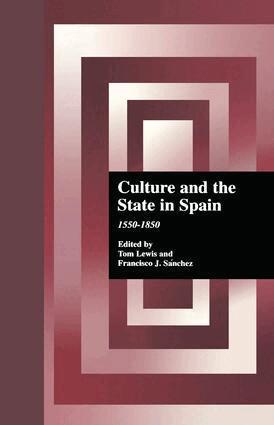
This volume address the role of literature in the formation of cultural notions of 'state,' 'nation,' 'subject,' and 'citizen' in Spain from the Renaissance to the Romantic period. It brings together literary scholars and historians of the Golden Age and the eighteenth and nineteenth centuries in a dialog framed by the rise and dissolution of the Absolutist state. Individual essays attempt to understand relationships between subjectivity and the state in Spain from the earliest articulations of the subject to the consolidation of an array of bourgeois subjectivities. The major argument running throughout the volume is that literary discourse, from the time it emerges in the sixteenth century to the time it coheres within a wholly modern concept of the aesthetic, actively develops forms of subjectivity in relation to institutions of class power. The intention of the volume is to clarify central problems regarding the emergence and function of literature across distinct modes of production, state formations, and hegemonic cultures. This book keeps open a debate on the long process through which literature and the aesthetic come to be constituted as a complex arena in which-sometimes directly, more often indirectly-the struggle for state power unfolds.
646 kr
Skickas inom 10-15 vardagar
This volume address the role of literature in the formation of cultural notions of 'state,' 'nation,' 'subject,' and 'citizen' in Spain from the Renaissance to the Romantic period. It brings together literary scholars and historians of the Golden Age and the eighteenth and nineteenth centuries in a dialog framed by the rise and dissolution of the Absolutist state. Individual essays attempt to understand relationships between subjectivity and the state in Spain from the earliest articulations of the subject to the consolidation of an array of bourgeois subjectivities. The major argument running throughout the volume is that literary discourse, from the time it emerges in the sixteenth century to the time it coheres within a wholly modern concept of the aesthetic, actively develops forms of subjectivity in relation to institutions of class power. The intention of the volume is to clarify central problems regarding the emergence and function of literature across distinct modes of production, state formations, and hegemonic cultures. This book keeps open a debate on the long process through which literature and the aesthetic come to be constituted as a complex arena in which-sometimes directly, more often indirectly-the struggle for state power unfolds.